
Continuity and Transformation: Pandemic Legacies in Muhammadiyah and NU’s Elite on Religious Practices
contributed by Wahyudi Akmaliah, 14 May 2025
The COVID-19 pandemic significantly transformed religious practices, shifting from in-person gatherings to online participation via social media platforms to mitigate the rapid spread of infections. In response to the health crisis, religious authorities in Indonesia issued fatwas requiring most Muslims to perform prayers at home, including the traditionally obligatory Friday prayers (salat Jum‘at), which are typically practiced in mosques. As a result, many religious activities moved to digital platforms, including Qur'anic recitation sessions (pengajian), congregational prayers (tahlilan), and condolence gatherings (takziyah).
Worldwide, numerous Islamic communities adapted by utilizing platforms such as Zoom to facilitate online congregational worship for Friday prayer, leading to new interpretations of Islamic teachings. Nevertheless, this shift sparked debates over the legitimacy of online Friday prayers, with critics arguing that such practices did not align with traditional Islamic sources, including the Qur'an and Hadith. Similar debates also emerged within the Indonesian Muslim context.
In 2023, the World Health Organization (WHO) announced the transition from a pandemic to an endemic phase relative to COVID-19. Regarding this status, the question arose about the religious practices of Indonesian Muslim society: will they fully return to offline religious practices or continue incorporating digital religious engagements? Through a case study that integrates ethnographic observations of online religious spaces and interviews with religious elites from Indonesia’s two largest Islamic organizations, Muhammadiyah and Nahdlatul Ulama (NU), I examine the question by exploring the three significant points below.
Changing Religious Practice Without Altering the Fundamental Principles
In early February 2023, I met with Ustadz Wawan Gunawan Abdul Wahid at the Sofyan Hotel in Tebet, South Jakarta. He was a proponent of the ijtihad, an effort to engage in independent reasoning by integrating interpretations of the Qur’an, Sunnah, and other Islamic sources to formulate judicial decisions regarding the practice of online Friday prayers (Jumatan Online) during the COVID-19 pandemic. This proposition ignited considerable controversy within public Islamic discourse. One of the Islamic organizations that challenged his proposal was Muhammadiyah, which issued a fatwa prohibiting Jumatan Online. Meanwhile, Wawan Gunawan himself was a board member of Muhammadiyah's auxiliary organization, the Majelis Tarjih of the Central Leadership of Muhammadiyah. The Majelis Tarjih serves as an authoritative institution for producing religious knowledge through the issuance of fatwas, which act as religious guidelines for the Muhammadiyah community. Nevertheless, the Institute of Public Virtue, led by Usman Hamid as a prominent Human Rights Activist, responded positively, specifically in adopting Wawan’s ijtihad by organizing virtual Friday prayers while enhancing technological management, resulting in a more efficient and well-structured implementation compared to Wawan’s Jumatan Online as I have observed intensively during Covidian times.
Although the COVID-19 outbreak had been largely controlled through widespread vaccination and the relaxation of public health regulations in Indonesia, Jumatan Online continued. According to Ustadz Wawan, this continuity was a part of persistent demand, particularly from elderly individuals and those with comorbidities. Nevertheless, this online religious practice was officially discontinued in mid-March 2023, following an announcement in the Jumatan Online WhatsApp group that I followed. The primary reason for its cessation was the return to normal conditions, which allowed all Muslims to resume attending Friday prayers in person.
Nonetheless, not all aspects of religious practice have returned to pre-pandemic norms. As religious observance continues to intersect with cultural practices, certain elements of worship have remained in the online space. In the case of Nahdlatul Ulama (NU), Tahlilan Online persists, though the sessions are typically not recorded or uploaded to social media. My conversations with several NU elites residing overseas have provided deeper insight into this phenomenon. Hijroatul Maghfiroh, a board member of Lakpesdam NU (Nahdlatul Ulama Institute for Human Resource Study and Development), the Special Branch of Nahdlatul Ulama in Australia (PCINU Australia), explained in an interview on February 3, 2025. She argues that Tahlilan Online has become a primary tradition among members in the post-COVID-19 period, particularly when a family member passes away. In this context, the practice not only reinforces their traditional religious orientation but also serves as a medium for fostering communal solidarity, bridging the geographical distance between their home country and their current place of residence abroad. Through this practice, nahdliyyin (a term referring to NU followers) establish a structured sense of intimacy that transcends physical boundaries. With the increasing presence of NU special branches in various countries, tahlilan online is becoming an increasingly common religious practice among NU diaspora communities.
The Expansion Influence of Religious Authority in Digital Sphere
Although online Islamic study sessions (pengajian online) existed before the COVID-19 pandemic—evidenced by the rise of Ngaji Ihya, an Islamic teaching initiative streamed on Facebook that focuses on the classical text Ihya Ulumuddin (The Revival of Religious Sciences) by the scholar Muhammad Al-Ghazali, led by Ulil Abshar Abdalla, a former Islamic intellectual of the Liberal Islam Network (Jaringan Islam Liberal)—many Islamic boarding schools (pesantren) in Indonesia have since expanded their engagement in digital religious education. These online religious activities have continued beyond the pandemic, with many pesantren seemingly competing to showcase their intellectual contributions among NU elites and members within the digital sphere. Imam Malik, an NU-affiliated academic currently pursuing a career at an Australian university, emphasized this transformation in an interview on February 4, 2025. He noted that “COVID-19 not only forced NU communities to adapt to new digital technologies but also compelled them to become more strategic in delivering Islamic knowledge within this evolving digital environment.” Surely, this transformation of Islamic teaching is in line with the NU’s elite struggling to strengthen their religious authority amidst the rise of the new Islamic revivalist group with the various groups predominantly that proposed the new alternative to Islamic teaching due to cause fragmentation of Islamic reference among Indonesian Muslims of ummah. The COVID-19 situation then accelerated this Islamic teaching transformation into a digital platform which directly reclaimed NU’s religious authority in the digital sphere.
Concerning Muhammadiyah, the impact of COVID-19 on religious practices continues to be evident in the two ways. First, the shift of monthly Islamic study sessions (pengajian bulanan online) from in-person gatherings to digital platforms—integrating YouTube and Zoom—has become a lasting transformation at the national level within Muhammadiyah’s central leadership. This transition has significantly expanded outreach, allowing Muhammadiyah followers across various Indonesian provinces to participate without geographical barriers. For members residing in suburban or rural areas, these online sessions provide an accessible means of staying informed about Muhammadiyah’s activities at the grassroots level. Additionally, the ability to re-watch recorded sessions offers greater flexibility for engagement. However, this shift has also introduced certain dilemmas. As Arif Nurcholish, the manager of Muhammadiyah’s digital da’wa center, explained to me in an interview on February 1, 2025. For him, Pengajian Online sessions tend to be overly formal and serious, reducing the sense of intimacy between Muhammadiyah elites and their members compared to traditional offline gatherings. Nonetheless, Arif acknowledges that Pengajian Online has strengthened Muhammadiyah’s da‘wa (Islamic propagation) in the digital sphere, an area where the organization had previously lagged behind more dominant religious revivalist groups. To some extent, this digital imbalance has posed a challenge to Muhammadiyah’s religious authority, as many of its members increasingly turn to Salafi groups for religious teachings—some of which share similarities with Muhammadiyah’s own doctrinal perspectives.

Figure 1. Flyers for Muhammadiyah’s Pengajian Bulanan Online. Source: PP Muhammadiyah, 2023
This pengajian online initiative has also been adopted by the Aisyiyah Central Leadership in West Java (Pimpinan Wilayah Aisyiyah Jawa Barat) as the women’s wing of Muhammadiyah, which has continued its online activities from the COVID-19 period to the present. Ia Kurniawati, the leader of Aisyiyah in West Java, explained to me in Bandung in April 2023 on why she established the pengajian online. For her, the COVID-19 pandemic forced Muhammadiyah members to stay at home. However, they remained committed to reciting the Qur’an. Despite their limited technological capabilities, Ia and her teams persevered in holding daily dawn recitation sessions, inviting Muhammadiyah leaders and preachers at both local and national levels. This online recitation initiative became widely known as Gerakan Aisyiyah Mengaji (Aisyiyah Qur’an Recitation Movement, or GSM). Within GSM, discussions extend beyond Qur’anic recitation to encompass a wide range of topics, including Islamic principles, social and political issues, and Muhammadiyah’s religious guidelines. These guidelines are derived from Himpunan Putusan Tarjih (HPT), a compilation of Muhammadiyah’s fatwas addressing various religious and social matters in accordance with the organization’s interpretations of Islam.
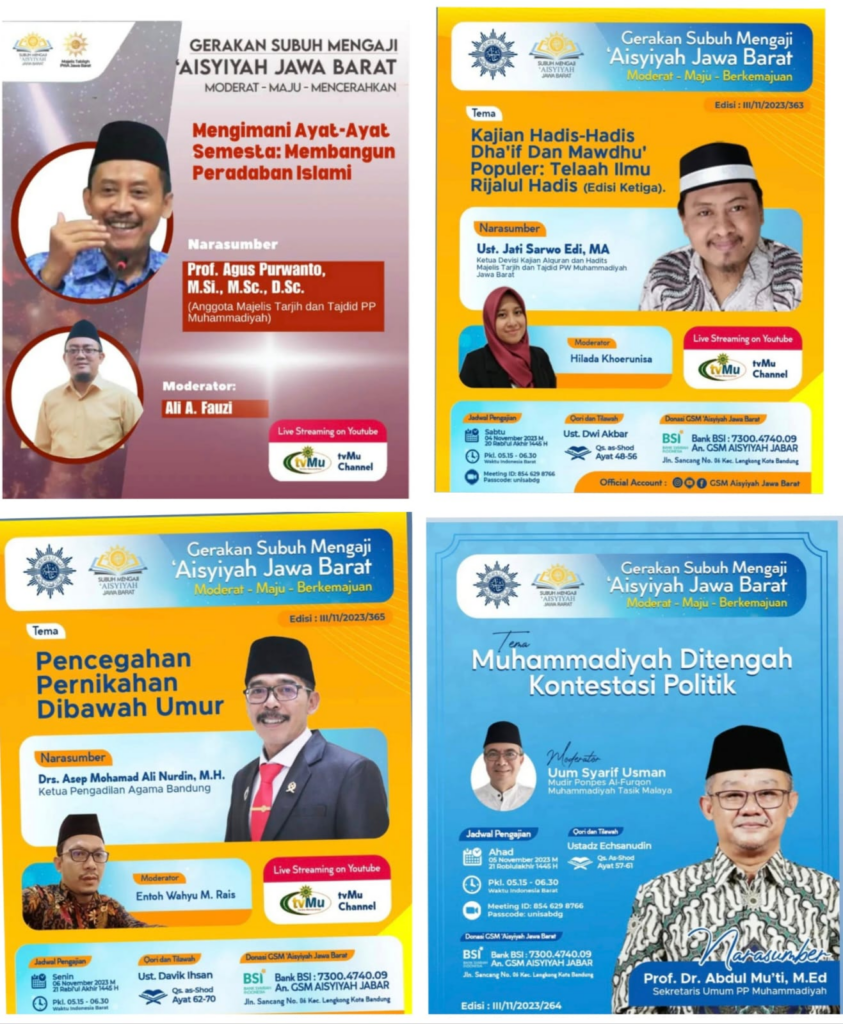
Figure 2. Flyers for Gerakan Aisyiyah Jawa Barat Mengaji. Source: PP Aisyiyah, Jawa Barat, 2023
Secondly, the practice of online condolence gatherings (takziyah virtual) has persisted beyond the COVID-19 pandemic. Before the pandemic, takziyah was a common practice among Indonesian Muslims, particularly within Muhammadiyah and NU communities, in which individuals would visit the homes of the bereaved to offer condolences and provide emotional support. However, during the pandemic, these gatherings shifted to virtual platforms such as Zoom, with some sessions being recorded and uploaded to YouTube for those unable to attend in real-time. During the COVID-19 crisis, Muhammadiyah institutionalized takziyah virtual to commemorate the passing of two of its most prominent intellectuals: Syafi’i Maarif (1935–2022) in May 27, 2022 and Azyumardi Azra (1955–2022) on September 18, 2022. Even in the post-pandemic period, this virtual practice has continued, particularly among Muhammadiyah elites across various Indonesian provinces.
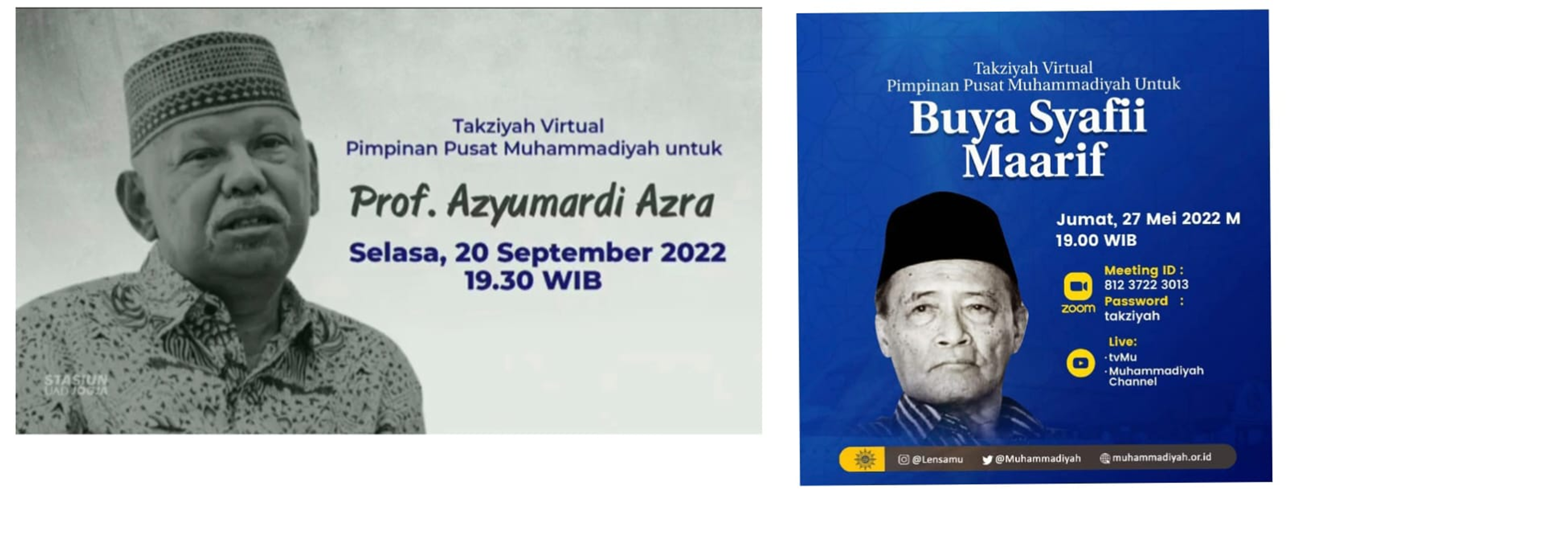 Figure 3. Takziyah Virtual Event Posters for Azyumardi Azra and Syafi’i Maarif. Source: PP Muhammadiyah, 2022
When I observed the deployment of the term “takziyah virtual” on Youtube channels, it associates strongly with Muhammadiyah circles, although some other communities have also adopted it. The continued use of takziyah virtual underscores Muhammadiyah’s distinct religious orientation, which contrasts with NU’s tradition of conducting tahlilan online. Historically, tahlilan—a communal prayer gathering held after someone’s passing—represents a synthesis of Islamic teachings and local cultural traditions, making it an important practice within NU communities. In contrast, Muhammadiyah, as a modernist Islamic organization, has promoted takziyah as a counter-narrative, emphasizing the purification of religious practices by distancing them from local cultural influences. Nevertheless, in light of shifting political dynamics and the emergence of new religious revivalist movements following the fall of the Suharto regime, both Muhammadiyah and NU have increasingly recognized the need to navigate their theological differences while maintaining their respective religious boundaries in the name of a moderate Islam alliance.
Blended Approach of Religious Practices in the Post-Pandemic
From the discussion above, it can be concluded that the impact of the COVID-19 pandemic on religious practices within Indonesian Muslim society remains significant, even though it has ultimately not changed the fundamental principles and obligatory aspects of Islam. Muhammadiyah and NU serve as key examples of how the pandemic’s influence has persisted through the continued use of digital platforms for religious activities, such as tahlilan online, takziyah virtual, and pengajian online. On one hand, the continuation of these digital religious practices has enabled both Muhammadiyah and NU to expand their da’wa efforts and reinforce their religious authority in the face of rising Islamic revivalist movements that increasingly offer alternative Islamic references through digital content, particularly in the form of video-based and visual materials across various platforms. Additionally, virtual religious gatherings, such as tahlilan online and takziyah virtual, have fostered a sense of religious solidarity that transcends geographical boundaries. On the other hand, the reliance on digital platforms alone poses challenges, particularly in maintaining the depth of personal connections and spiritual intimacy within religious communities. If these virtual practices are not integrated with in-person religious teachings, the structure of religious engagement may weaken over time. Therefore, adopting a blended approach—combining online and offline religious practices—emerges as a crucial strategy for sustaining both religious authority and communal bonds in the post-pandemic era.
Disclaimer: The views and opinions expressed in this article are those of the authors and do not necessarily reflect the position of the blog editorial team or the Asia Research Institute.
South Asia | Southeast Asia | East Asia | Other Places | Hinduism | Buddhism | Islam | Christianity | Other Religions | Pandemic Leftovers | All Posts
Wahyudi Akmaliah is a researcher at the Research Centre of Society and Culture, National Research and Innovation Agency (PMB-BRIN), and a PhD candidate at the Department of Malay Studies, National University of Singapore (NUS). His research interests are the Sociology of Knowledge and Cultural Studies, focusing on Islam, Religious Orientation, Identity, and Popular Culture. Some of his works are published in Indonesian Journal of Islam and Muslim Societies (IJIMS), Al-Jāmi‘ah, Studia Islamika, Journal of Indonesian Islam (JIIS), Southeast Asian Social Science Review, Studies in Conflict and Terrorism, Journal of Indonesian Islam (JIIS), BKI-Bijdragen tot de taal-, land- en volkenkunde/Journal of the Humanities and Social Sciences of Southeast Asia, and Oxford Bibliographies in Islamic Studies. Email: wahyudi@u.nus.edu