Events
One Village, One Temple: A Window into Early Everyday Life in Singapore
| Date | : | 23 Apr 2025 |
| Time | : | 14:00 – 16:00 (SGT) |
| Venue | : | Hybrid (Online via Zoom & AS8 04-04) |
| Contact Person | : | LIM, Zi Qi |
This roundtable discussion is jointly organized by the Asia Research Institute and the Wan Boo Sow Research Centre for Chinese Culture, National University of Singapore. The exhibition is co-sponsored by the National Heritage Board, NUS Central Library, Wan Boo Sow Research Centre, and Singapore University of Social Sciences.
CHAIRPERSON
Prof Kenneth Dean, Asia Research Institute and Department of Chinese Studies, National University of Singapore
PROGRAMME
| 14:00 |
WELCOME REMARKS |
| 14:05 |
PRESENTATIONS |
| 15:05 | QUESTIONS & ANSWERS |
| 15:25 | GUIDED TOUR OF EXHIBITION AT NUS CENTRAL LIBRARY |
| 16:00 | END |
ABSTRACT
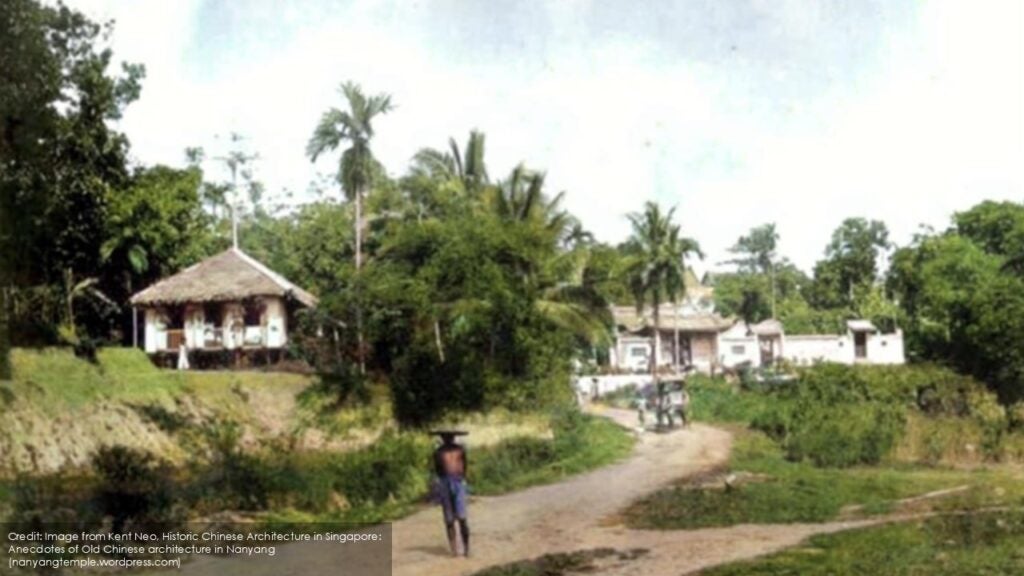
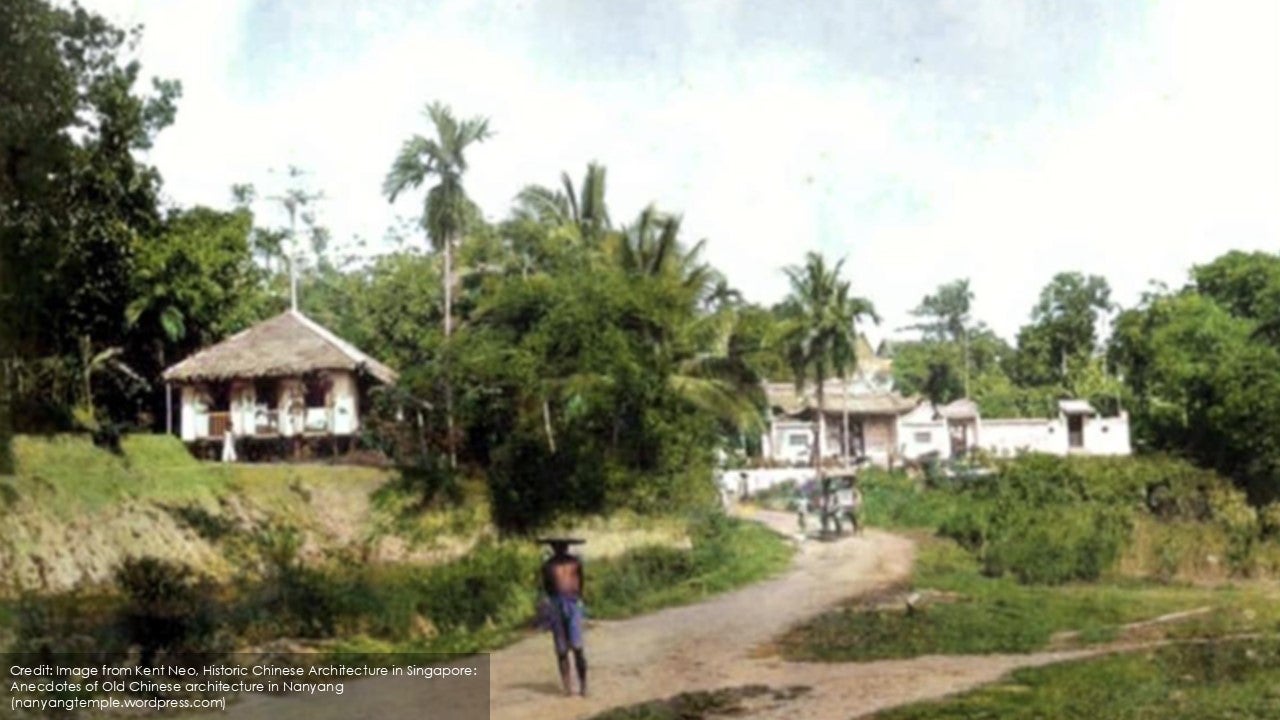
Many Chinese temples now based in United Temples in Singapore originated in rural kampong. These temples could provide a window into the past life of those kampong through their inscriptions, oral histories, old photographs and other sources. From the first temples set up along the Singapore river and the coast along Telok Ayer Street, to the temples in every kampong (over 200), these institutions were the heart and soul of each community. Different ethnic groups also built mosques, churches and Indian temples to hold their communities together. People in the kampong gathered in kopitiam and in general stores, but they went regularly to their temples to ask for the blessings of their gods. Many migrant groups carried incense and small statues of gods from their ancestral communities in Fujian and Guangdong to Singapore. Spirit mediums helped concentrate the energies and resources of the migrant groups by commanding the building of temples to these gods. The spread of the HDB in the 80s and 90s led to the elimination of these original village temples, but many survived by moving their gods and incense into Joint or United Temples all across Singapore. We visited these temples to ask about their memories of kampong life and to view their photos of rituals held then and now, that still bring the kampong community together. This roundtable discussion provides brief case studies of several kampong temples that moved into United Temples and still are active today.
After the roundtable discussion, there will be a guided tour of an exhibition in the Wan Boo Sow Chinese Library at the sixth floor of the NUS Central Library.
ABOUT THE SPEAKERS
Kenneth Dean is Kwan Im Thong Hood Cho Professor in Yale-NUS College, Research Cluster Leader for Religion and Globalisation in Asia Research Institute at National University of Singapore (NUS), and Director of Wan Boo-Sow Centre for Chinese Culture in Department of Chinese Studies at NUS. He is the author of several books on Taoism and popular religion in Southeast China. He has published several volumes of epigraphic sources on the history of religion in Fujian and Singapore. He directed Bored in Heaven: A Film about Ritual Sensation (2010) and has developed websites and digital platforms including the Singapore Historical GIS and the Singapore Biographical Databases.
Gandimathy Durairaj is the Head of Special Collections at NUS Libraries and collaborates on research projects related to special collections. Her aim is to develop outstanding and meaningful collections that are accessible and valuable to the NUS community.
Qi Wu is a lecturer in the Chinese Studies Department at the Singapore University of Social Sciences. She previously served as a research fellow at the Asia Research Institute of the National University of Singapore (NUS) and as an adjunct lecturer in the Chinese Studies Department at NUS. Dr Wu’s research focuses on overseas Chinese society and Chinese religions, with a keen interest in the transregional network of Chinese religious and charity organizations. Her new project on kampong heritage and local Chinese temples in Singapore has been funded by the National Heritage Board. Dr Wu’s book, Looking at the Flying Clouds from the South: Transregional Network of the Dejiao Charity Organization in Southeast Asia, has just been published in 2024.
Kang Yu is Postdoctoral Fellow in the Religion and Globalisation Cluster at the Asia Research Institute in the National University of Singapore (NUS). He obtained his PhD in Chinese Studies at NUS with a thesis focusing on Huizhou merchants and their transregional trade institutions. His current research interests include business history and overseas Chinese.
Sisi Wang obtained a PhD in Chinese Studies at the National University of Singapore (NUS) and was previously a Postdoctoral Fellow in Buddhist Studies at the Department of History, NUS. She is currently the George Lyndon Hicks Fellow (2024) at the National Library of Singapore where she is developing its collections on Singapore and Southeast Asia. Her research interests include Chinese Buddhism, sacred space, pilgrimage, social history of late imperial and modern China, and overseas Chinese. Recently, she has published an article in Asian Theatre Journal. Her Chinese translation of Jack Meng-Tat Chia’s book Monks in Motion: Buddhism and Modernity Across the South China Sea, titled Lisan Fayuan: Hengkua nanhai zhi fojiao jiqi xiandai zhuyi, has also been released.
Ruo Lin is a doctoral candidate in the Department of Chinese Studies at the National University of Singapore. Her research focuses on the social history of overseas Chinese communities, with particular attention to religious practices and lineage networks. She draws on approaches from historical anthropology and historical geography to examine how these communities navigate and shape their socio-cultural landscapes.
Xincheng Hong is PhD candidate at the Department of Chinese Studies, National University of Singapore. His research interests lie at the intersection of South China and Southeast Asian history with special focus on multidirectional migration across the Hokkien maritime world. Combining historical and anthropological works from Fujian, Hong Kong to Singapore, his ongoing PhD thesis traces the history of internal and external migration to and from southern Fujian, as well as the interrelated changing local landscapes, ecology and socio-economic life back at the land-sea transition area of Quanzhou since late imperial China.
REGISTRATION
Registration is closed, and instructions on how to participate in this hybrid talk has been sent out to registered attendees. Please write to ziqi@nus.edu.sg if you would like to attend the event.