Events
Doing Ocean Governance: Approaches in and from Singapore and Southeast Asia
| Date | : | 26 Feb 2026 - 27 Feb 2026 |
| Venue | : | Hybrid (Online via Zoom & AS8 04-04) |
| Contact Person | : | TAY, Minghua |
| Programme | ||
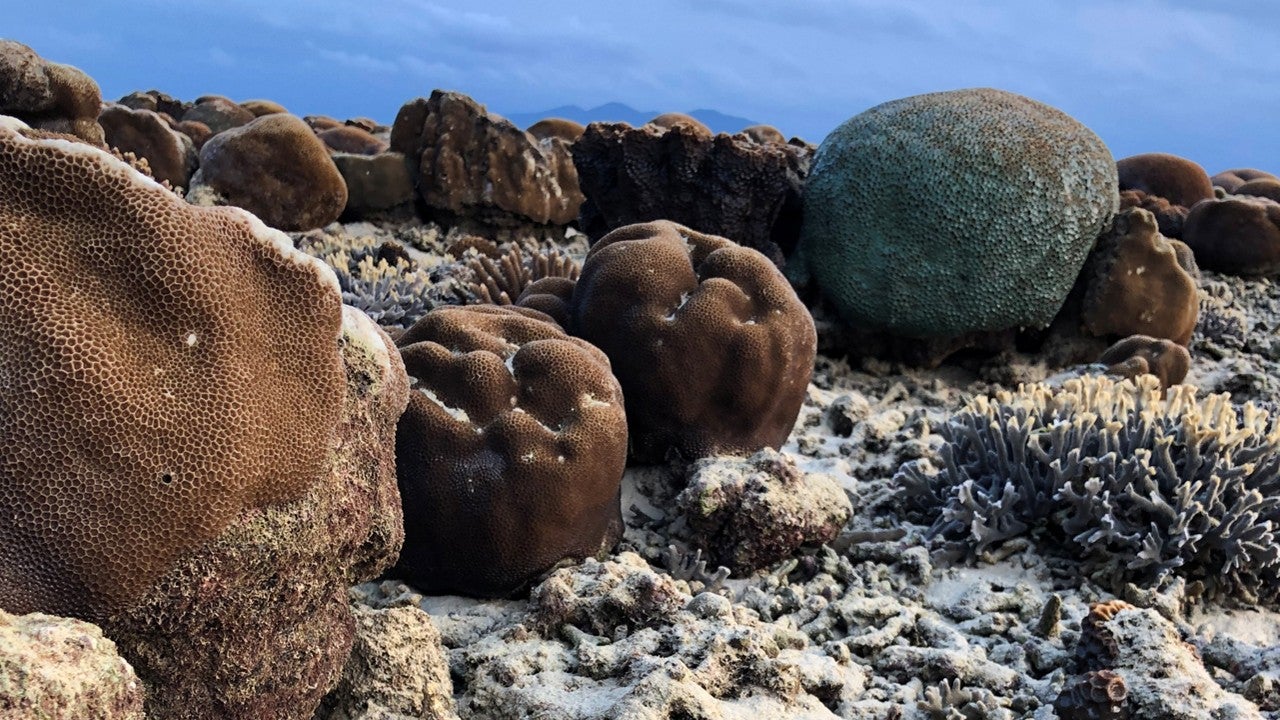
Global oceans are in crisis. Oceanic places and processes are increasingly flashpoints in global political economy where ocean resources including fish, hydrocarbons, and minerals, and ocean infrastructures including ports, ships, cables, and pipelines are figured at the center of narratives around national security, migration, unfree and coerced labor, and conflict. These trends challenge the conception, implementation, and enforceability of ocean governance regimes, underscoring how persistent ambiguities around the ownership of ocean resources and the management of ocean spaces offer opportunities for creative rethinking.
Yet, while some scholars of maritime and ocean governance have increasingly found it useful to historicize, emplace, and otherwise situate law as one technology among many used to apprehend and order ocean space, ecologies, labor, and resources, it remains the case that ocean governance is often treated as a static frame in which science and technology operate, rather than being conceived as historically contingent and mutually interdependent.
Consequently, there remains much work to be done in bringing critical approaches to ocean science and technology into denser dialogue with law and policymaking. In part, this entails the meaningful integration of customary, vernacular, and other locally situated approaches to ocean science and ocean management in wider schemes for ocean management that are rooted in approaches from Western technoscience and lawmaking. It also means attending to diverse cultural imaginaries of the ocean and the tensions between local and global knowledges of the sea, by remaining open to new methods of inquiry including embodied and multispecies approaches.
In the spirit of the Pacem in Maribus conferences, which after 1970 were organized by Elisabeth Mann Borgese and colleagues with the International Ocean Institute to address thematic and regional facets of rapidly evolving global ocean policy, this workshop aims to deepen the synthesis of critical accounts of ocean technoscience and ocean governance, broadly construed.
Singapore is an excellent place to undertake this work. The history of global ocean governance is deeply tied to local and regional histories, beginning with the Sultanate of Johor’s role in the maritime conflict that eventually shaped the Doctrine of the Freedom of the Seas, to the Singaporean Diplomat Tommy Koh’s shepherding of the 1982 UN Convention on the Law of the Seas to its conclusion. The years after UNCLOS have seen Singapore play important roles in maritime arbitration and high seas treaty-making. Singapore is situated amid multiple, overlapping geographies, from the historic Nanyō and Nanyang, to the contemporary Indo-Pacific and South China Sea, which bind together shared histories spanning the Eastern Indian Ocean, archipelagic Southeast Asia, and the Pacific Islands. And furthermore, Singapore’s modern history at the ocean-land interface distills anxieties around human mobility, logistics, trade patterns, environmental transformation, ecological degradation, and resource extraction, that together ramify outward with planetary effects.
We need new methods and metrics for being with the ocean. This workshop stages a provocation to think how to recontour wider ways of understanding, managing, sharing, and relating to oceans across scales, by beginning from the situated specifics of place.
WORKSHOP CONVENORS
Dr Jonathan GALKA
Asia Research Institute, National University of Singapore
Dr Canay ÖZDEN-SCHILLING
Department of Sociology and Anthropology, National University of Singapore
Assoc Prof Jiat Hwee CHANG
Asia Research Institute & Department of Architecture, National University of Singapore
REGISTRATION
Registration is closed, and instructions on how to participate in this workshop has been sent out to registered attendees. Please write to aritm@nus.edu.sg if you would like to attend the event.