

Arabia Asia Archives
Arabia Asia Archives is a flagship project of the Arabia Asia Studies Programme. Since its establishment, our Programme has collaborated with researchers, affiliates, and students to build an archive of primary materials in Arabia Asia studies. We have jointly scanned manuscripts and documents from important, yet previously neglected indigenous sources held in private collections, including mosque libraries, institutions, and overlooked locations across Arabia and Asia. Unsurprisingly, we have found rich historical troves in places off the global arteries of major cities connected by air travel -sites once linked to distant regions by the sea, deserts, and mountain passes. We have also conducted ethnographic fieldwork, collected materials, and recorded inscriptions found at tombs, monuments, and mosques. More...>
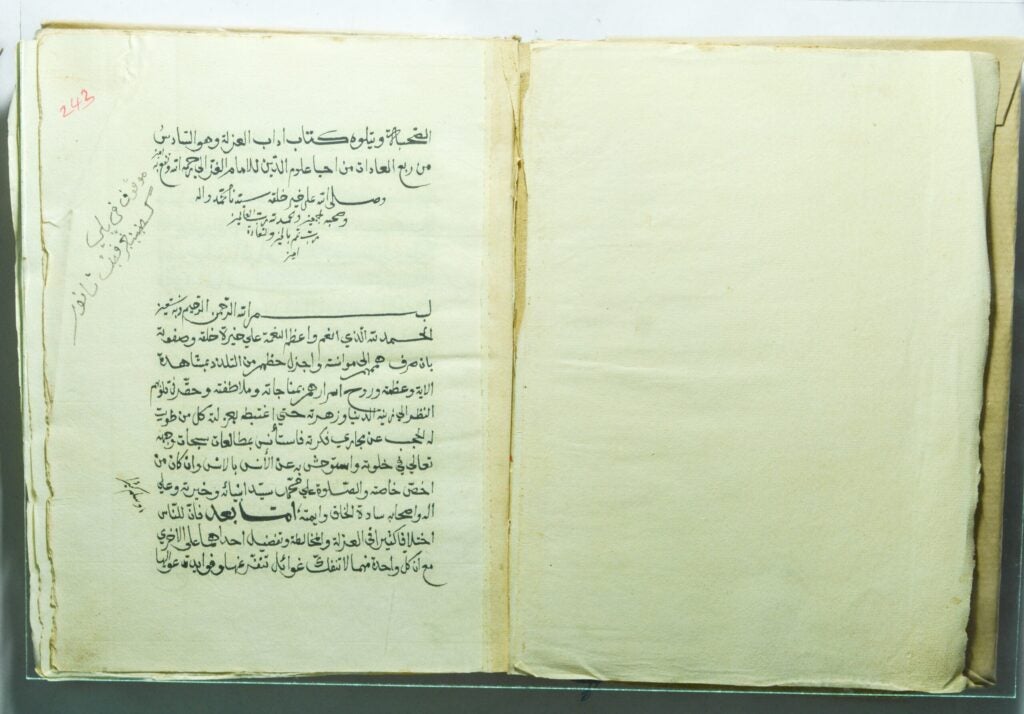
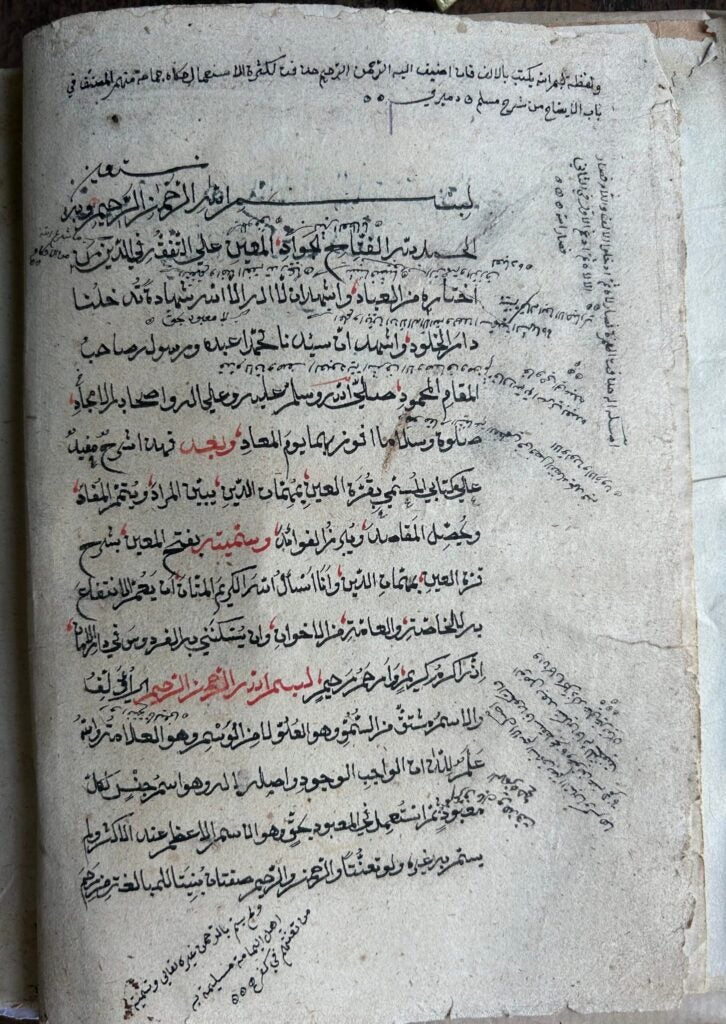
This manuscript is one of the most significant and renowned works of jurisprudence in the Shāfiʿī school of law, written in the Malabar region. The text is considered a primary authority for legal opinions and scholarly instruction among later Shāfiʿī scholars, serving as a cornerstone for issuing fatwas and guiding students through complex legal reasoning. As a foundational reference, it systematically presents legal rulings, methodologies, and principles that shaped the school’s doctrinal development. Its enduring authority within the Shāfiʿī tradition underscores its role in standardizing legal education and practice, making it indispensable for the study of Islamic legal history and the evolution of school-specific jurisprudence. For researchers, this manuscript offers direct access to a seminal source that influenced generations of jurists.
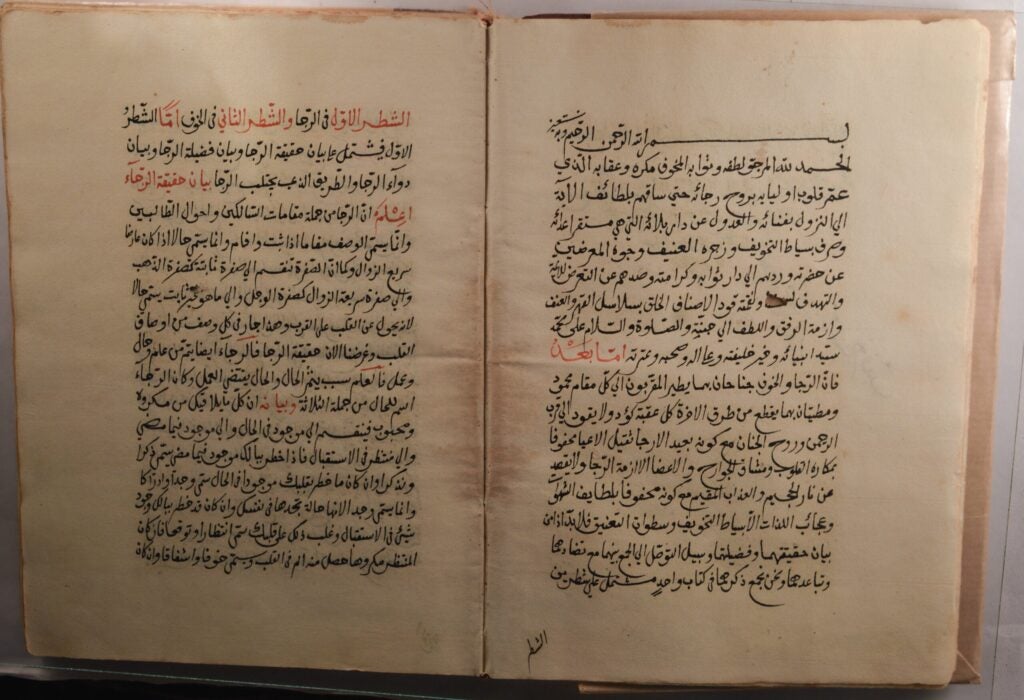
This manuscript examines fear and hope as complementary pillars of faith, alongside poverty, asceticism, and reliance on God. From ff. 3v–58v, Kitāb al-khawf wa-al-rajāʼ explores how fear restrains sin and hope inspires righteous action; from ff. 59r–121v, Kitāb al-faqr wa-al-zuhd develops the themes of poverty and ascetic renunciation; and from ff. 122r–185r, Kitāb al-tawakkul wa-al-tawḥīd reflects on complete trust in God and the affirmation of divine unity. Together, these sections present poverty as a spiritual condition, asceticism as a deliberate turning away from worldly attachment, and true belief as surrender to God’s will. The manuscript thus offers a sustained meditation on the balance between moral restraint and spiritual aspiration, showing how creed, ethics, and Sufi practice converge in a single vision of devotion
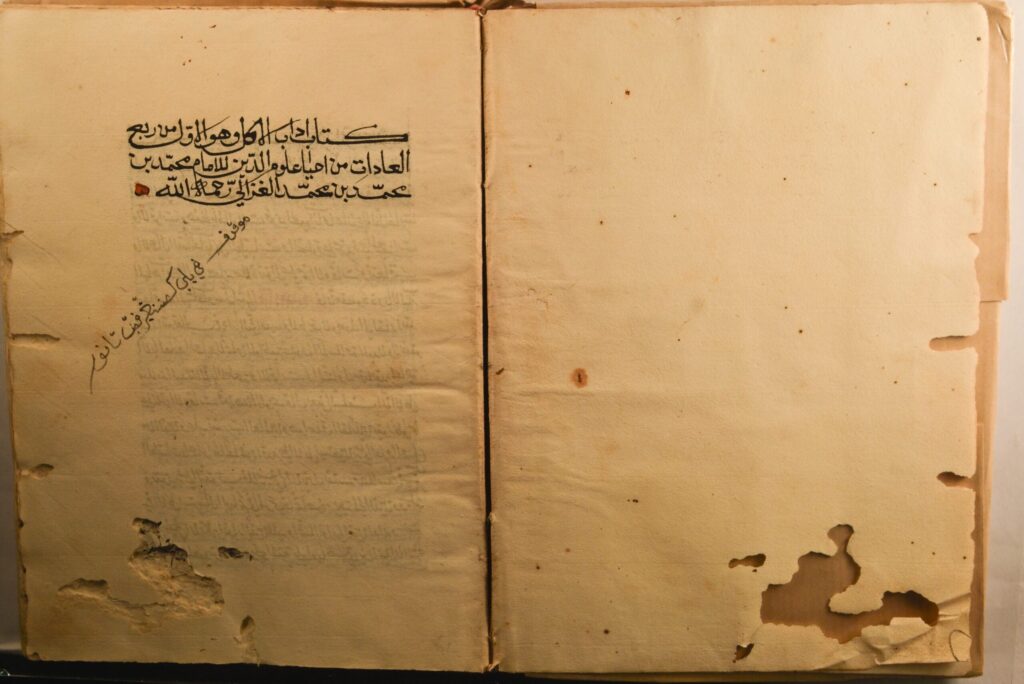
This manuscript covers the etiquette of eating, marriage, and earning. From ff. 3v–25r, Kitāb al-akl presents eating as both physical nourishment and spiritual discipline, shaped by outward manners and inward intentions; from ff. 27r–75v, Kitāb Asrār al-nikāḥ explains marriage as a means of preserving lineage, safeguarding faith, and grounding spousal conduct in rights, kindness, and cooperation; and from ff. 77r–114v, Kitāb Ādāb al-kasb shows that earning, when guided by lawful and ethical principles, becomes moral accountability rather than a worldly distraction. Together, these sections present ordinary acts as pathways to worship, social order, and divine proximity.
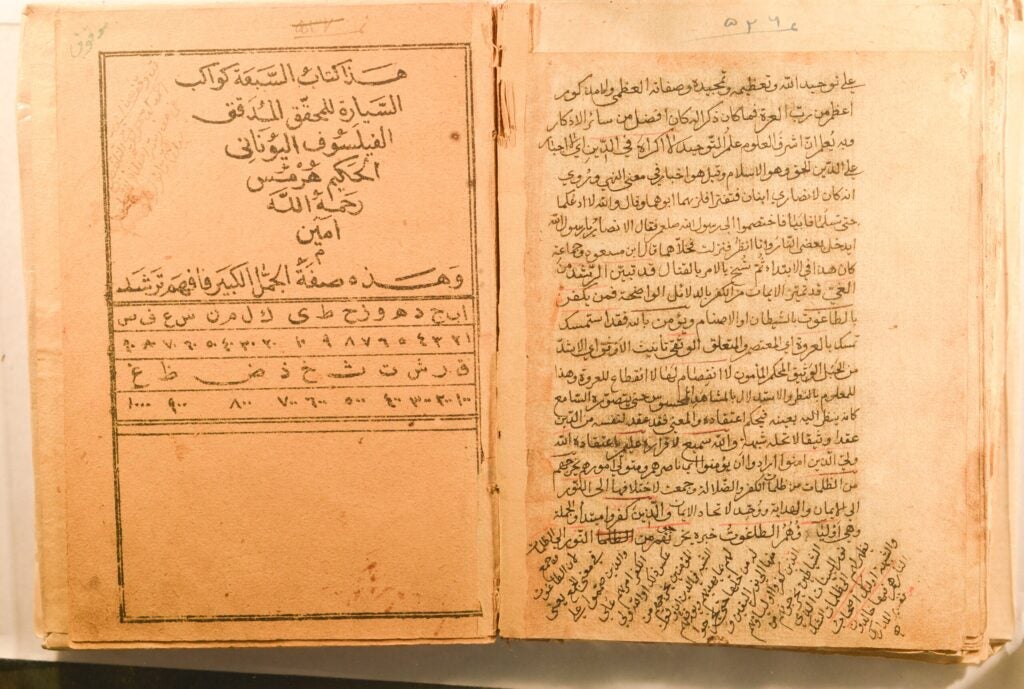
A printed version of Kawākib al-Sayyāra, bound together with other manuscripts. This text discusses the seven planets and is considered one of the most prominent works on astrology and planetary magic in the ancient heritage. The work integrates Hermetic philosophy with ancient astronomical beliefs, positing that each wandering planet possesses a specific spiritual influence and energy. The text systematically examines each of the seven celestial bodies, detailing their distinctive metaphysical properties and the nature of their influence on terrestrial events and human affairs. Rooted in the Hermetic tradition, which emphasizes the correspondence between the macrocosm of the heavens and the microcosm of earthly existence, the manuscript presents planetary magic as a disciplined practice for channeling these energies. This work represents a significant synthesis of astrological theory, magical practice, and philosophical cosmology from the ancient and medieval periods.
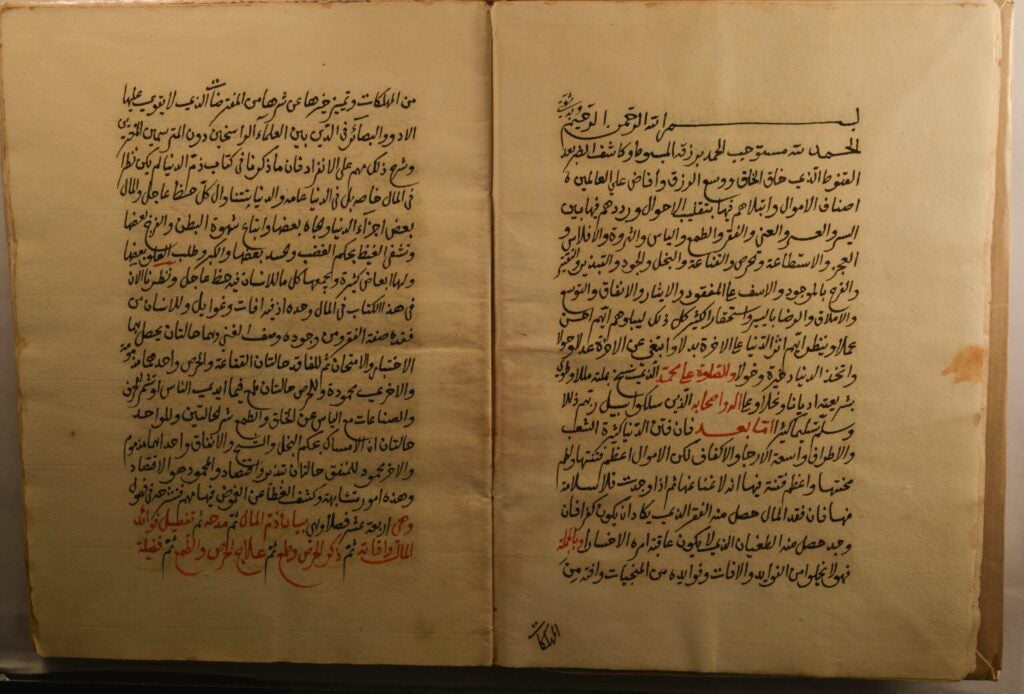
From ff. 4r–56v, Kitāb Dhamm al-Māl wa-al-Bukhl examines the dangers of wealth, greed, and stinginess, showing how attachment to material possessions distracts the heart from the Hereafter and leads to moral and spiritual ruin. From ff. 57r–133r, Kitāb Dhamm al-Jāh wa-al-Ribā criticizes the love of status, hypocrisy, and the pursuit of fame, arguing that the desire for reputation corrupts sincerity and is often more insidious than wealth. Together, these sections present greed, stinginess, and ambition as spiritual diseases that distort intention, weaken humility, and foster competition for worldly gain. The manuscript underscores that true success lies not in possession or prestige, but in detachment from both and steadfast awareness of divine accountability.