
Events
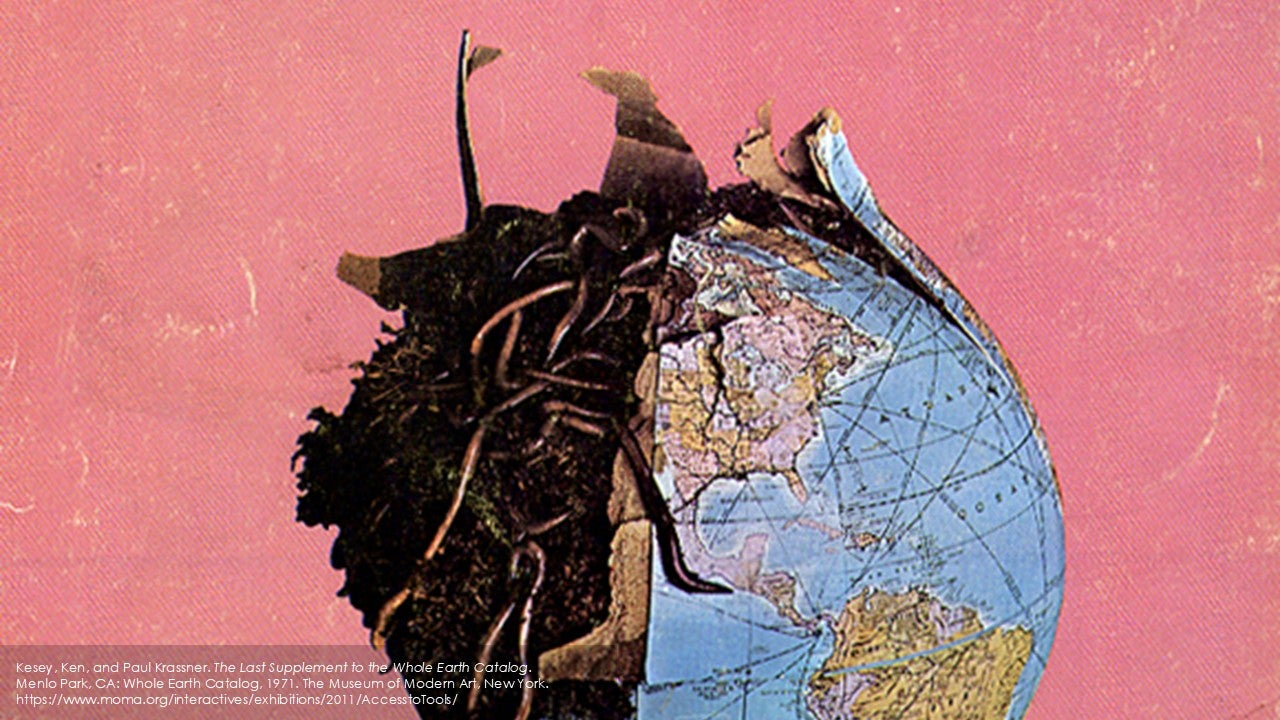
Planetary Experiments: Notes to a Theory of Technospheric Governance | Orit Halpern
| Date | : | 12 Mar 2026 |
| Time | : | 16:00 – 17:30 (SGT) |
| Venue | : | Hybrid (Online via Zoom & AS8 04-04) |
| Contact Person | : | LIM, Zi Qi |
Jointly organised by Asian Urbanisms, and Science Technology and Society clusters at the Asia Research Institute, National University of Singapore.
CHAIRPERSON
Assoc Prof Jiat Hwee Chang, Asia Research Institute, and Department of Architecture, National University of Singapore
ABSTRACT
This talk develops the concept of “technospheric governance” to analyze how contemporary AI platforms for climate modeling, military operations, and logistics constitute an emerging episteme with significant implications for geo- politics. Drawing on case studies of digital twinning initiatives—including the European Union’s Destination Earth, NVIDIA’s Earth-2, Alibaba’s City Brain and Huawei’s Global City Intelligent Twins, and Palantir’s enterprise platforms—the talk traces three interrelated transformations. First, an epistemic shift from causal, explanatory models to non-causal “generative” inference reorganizes what counts as knowledge and who qualifies as expert. Second, a temporal displacement inverts the traditional sequence of deliberation and deployment, with technologies assessed through continuous “learning” rather than prior democratic or scientific debate. Third, planetary-scale experimentation produces not unified global governance but fragmented data spaces serving competing political-economic blocs. By situating these developments within a genealogy extending from Cold War systems modeling to contemporary AI infrastructures, the talk argues that experimentation itself has become infrastructuralized, demanding urgent attention to the politics of technological testing.
ABOUT THE SPEAKER
Orit Halpern is Lighthouse Professor and Chair of Digital Cultures at Dresden University of Technology, where she directs the Digital Cultures Research Group and the Schaufler Lab—two interdisciplinary research groups bridging the arts, environmental sciences, media, and social sciences to envision non-catastrophic futures. Her work traces how computational systems have reshaped decision-making, knowledge, and political life from the mid-twentieth century to the present. She is currently pursuing two major projects: a history of automated decision-making and its transformation of concepts of freedom and the human, and an investigation of planetary-scale experimentation across design, science, and engineering. Her most recent book, The Smartness Mandate (MIT Press, 2023) asks how digital computing came to be seen as essential to human survival—and how “smart” technologies and ideologies are remaking planetary futures. Her first book, Beautiful Data: A History of Vision and Reason since 1945 (Duke University Press, 2015), offers a genealogy of big data, interactivity, and their politics. Her writing has also appeared in numerous venues including New Media and Society, Grey Room, Critical Inquiry, Journal of Visual Culture, E-Flux, and Art in America, and she has also featured numerous times at the Venice Biennial for Architecture and other artistic venues.
REGISTRATION
Registration is closed, and instructions on how to participate in this hybrid talk has been sent out to registered attendees. Please write to aritm@nus.edu.sg if you would like to attend the event.