Events
Remapping Manuscripts in the Indian Ocean: Textual Cultures, Knowledge Practices, and Alternative Epistemologies
| Date | : | 06 Aug 2026 - 07 Aug 2026 |
| Venue | : | Hybrid (Online via Zoom & AS8 04-04) |
| Contact Person | : | TAY, Minghua |
| Programme & Abstracts (Finalized) | ||
This conference is organized by the Muhammad Alagil Distinguished Professorship in Arabia Asia Studies at the Asia Research Institute, National University of Singapore.
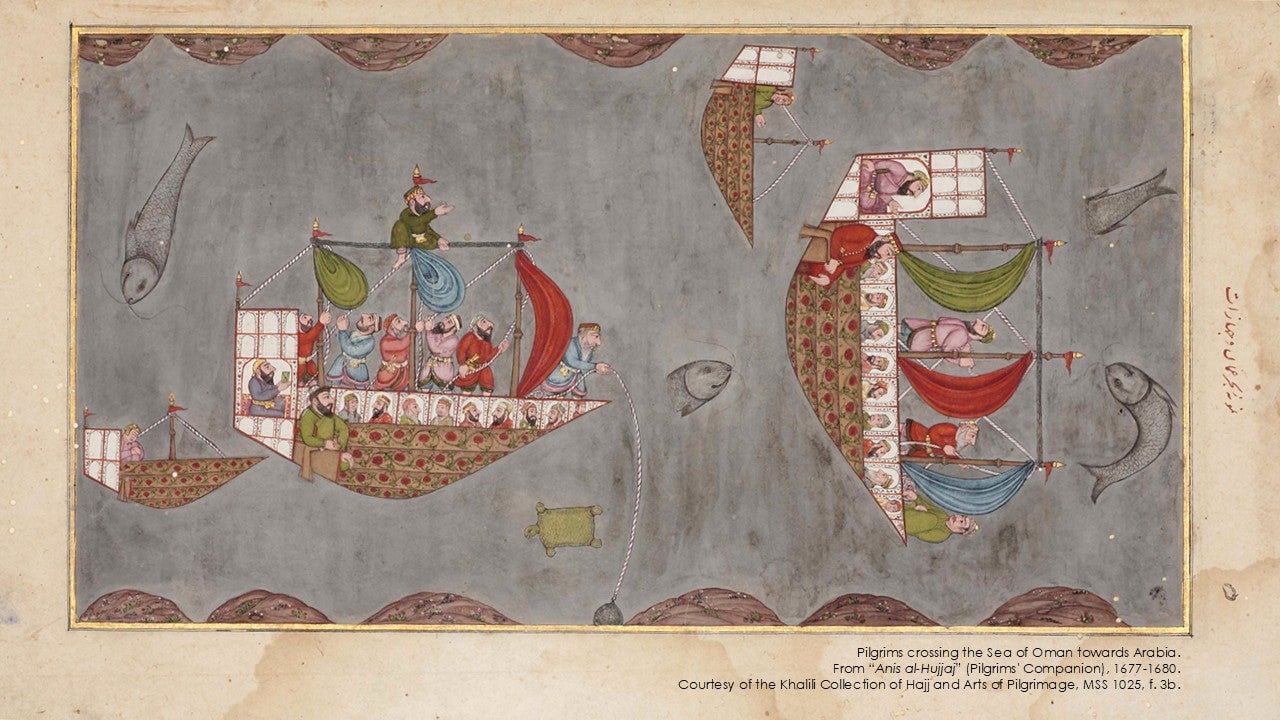
With a focus on manuscripts produced or circulated in the Islamic Indian Ocean, this conference revisits the cultures, knowledge practices, and social lives of texts by highlighting neglected and indigenous sources and reflecting on the larger epistemological breaks they may provide. As a major corridor of global trade, the Indian Ocean has long served as an artery of intellectual exchange among Asian societies through which handwritten sources were produced and transported across regions as well as reproduced and reworked locally. The conference approaches such manuscripts not only as sources capable of challenging dominant narratives and reshaping historiographical and sociological understandings of human and non-human lives. It also treats manuscripts—in their material, ritual, oral, and immaterial forms—as entities with social lives that were shaped and sustained through interactions with the communities and individuals who produced, transmitted, and engaged with them (Olly Akkerman, 2024). In examining these textual and knowledge practices, the conference explores the socio-historical dimensions of knowledge practices in the Indian Ocean and considers how Islamic and Asian epistemological traditions may broaden, negotiate with, or diversify our approaches to knowledge production.
Growing global geopolitical and environmental challenges today are also the byproducts of epistemological practices associated with modernity and its Enlightenment origins and have often been averse to ethical religious traditions of knowledge (Wael Hallaq, 2018). In the service of capitalist, colonial, and imperial agendas, these practices have also long sidelined Asian knowledge traditions as remnants of a supposedly obsolete past and dismissed textual sources as lacking real historiographical and intellectual agency. The emerging crisis surrounding artificial intelligence—whose development some fear could become existentially catastrophic—alongside the destructive militarisation of knowledge and harmful uses of science and technology underscore the urgency of broadening our epistemological concerns.
Large bodies of handwritten documents and texts produced by Asian communities have long offered their own readings of history along with valuable insights into knowledge, culture, and society. Owing to the geopolitical and imperial contexts of the past few centuries, colonial official sources often travelled easily to metropolitan capitals, while Asian manuscript cultures were consigned to scholarly obscurity—effectively denying these textual traditions and indigenous knowledge systems a wider public. Nonetheless, diverse efforts to digitise manuscripts in the region have brought renewed attention to materials preserved in family collections and in the libraries of religious and educational centres such as mosques, madrasas, and other local institutions.
In conjunction with the launch of the Alagil Arabia Asia Archives at the Asia Research Institute, National University of Singapore, the conference proposes moving beyond familiar decolonial critiques in manuscript studies and textual cultures to seek methodologically grounded approaches that draw on traditions of knowledge practices in Asia. In this spirit, we invite scholars across disciplinary boundaries who share a strong interest in Indian Ocean manuscript cultures and epistemological questions to submit research papers. We seek contributions that address (but are not limited to) the following key questions on indigenous handwritten sources and the circulation of knowledge traditions:
- What new socio-historical insights and reappraisals emerge from studying knowledge practices, textual traditions, and scholarly networks across the Islamic Indian Ocean, particularly when situated within broader transregional frameworks of study such as Arabia Asia?
- What might more inclusive approaches to manuscript studies—especially in light of expanding digital infrastructures—offer for reshaping our understanding of textual cultures, knowledge practices, and broader historiographical and epistemological questions in Asian societies, past and present?
- How might we understand the historical and epistemological implications of Islamic knowledge practices in the context of contemporary global challenges in knowledge production and usage?
By drawing on the scholarly potential of manuscripts produced in the region, the conference proposes to remap Indian Ocean knowledge cultures, enrich manuscript studies, and advance scholarship in Arabia Asia studies.
CONFERENCE CONVENERS
Dr P. K. M. Abdul Jaleel
Asia Research Institute, National University of Singapore
Dr Sumit MANDAL
Asia Research Institute, National University of Singapore
REGISTRATION
Registration is closed, and instructions on how to participate in this workshop has been sent out to registered attendees. Please write to aritm@nus.edu.sg if you would like to attend the event.