

Smart Nusantara: Technological Worlding and the Overlooked Citizens?


Prologue
In his presidential address to the House of Representatives (DPR) on the eve of the 2019 Independence Day celebrations, Joko Widodo proposed relocating the capital city to East Kalimantan Province—a province which is situated in the Indonesian part of the island of Borneo, known as Kalimantan. This site was later named Ibu Kota Nusantara (IKN), or Nusantara for short. Although the technocratic rationale behind the move has been thoroughly explained to the public and an academic paper has been published in support of it, this hasty policy is undoubtedly closely related to the ambitious agenda of the elites, particularly Widodo's own agenda as part of his legacy-making process (Hudalah, 2023). Nusantara is seen as the ultimate materialisation of the National Strategic Project (PSN), i.e. initiated during Widodo's administration—and used as his flagship development agenda—and intended to transform the national economy by capitalising on opportunities arising from globalisation through the construction of large-scale infrastructure (Talitha, 2025). Given its magnitude, Nusantara is intended to serve as an inspiring model for cities in Indonesia and beyond (ADB, 2023).
However, the globality now being associated with Nusantara is not a new phenomenon. Nusantara's aspiration for global city status—in this case, through the implementation of a “smart city” label (Figure 1)—has therefore added a new layer to the region’s historical exposure to the global capitalist economy. East Kalimantan Province has long been subsumed under capital, serving as the resource frontier of the archipelagic nation even since the Dutch colonial period (Lindblad, 1985). The recent announcement of Nusantara as the new capital city signifies a pivotal shift in the strategic direction of the region’s global entanglement, transitioning it from being an intensively exploited peripheral part of Indonesia given its rich natural resources to becoming a more sophisticated, technology-driven urban hub (Batubara, 2025). In the following two brief sections, I sketch Nusantara’s smart city visioning and its somewhat overlooked social dimension, drawing on both primary data (i.e., visual observation, semi-structured interviews, and casual conversations) and secondary data (i.e., official documents and presentations, media coverage, and relevant studies).
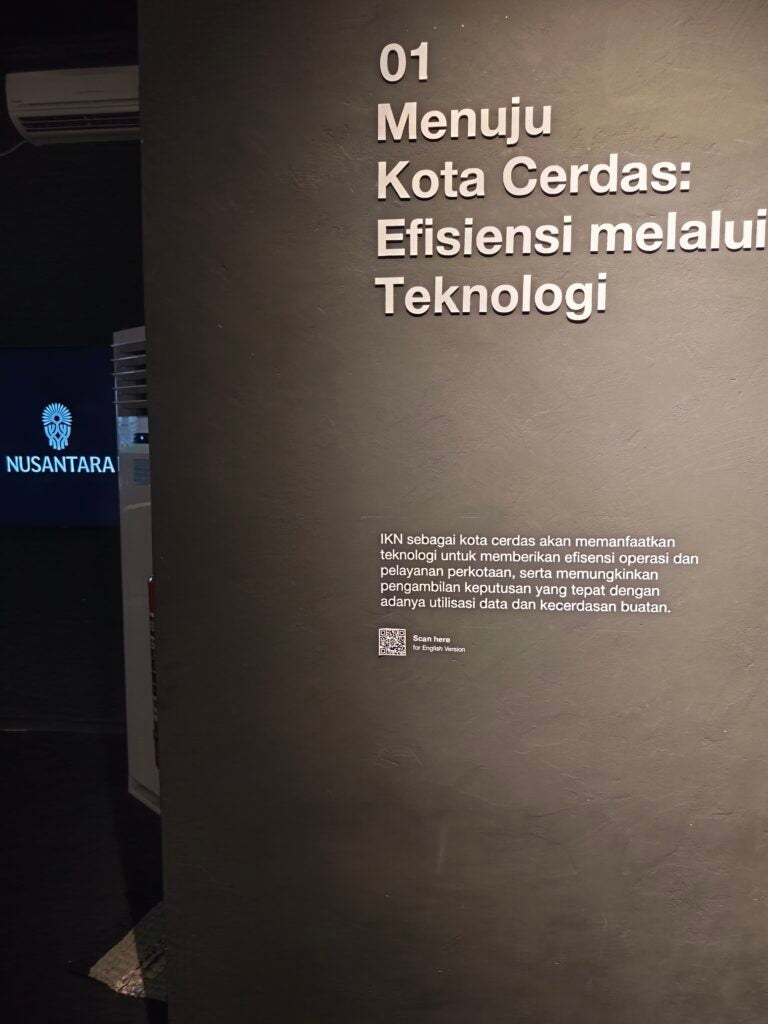 Figure 1. The smart city vision of Nusantara. Photo courtesy of the author.
Smart city as Nusantara’s globalising strategy
In urban studies, the concept of “worlding” is employed to understand cities as sites of world-making (Roy & Ong, 2011; Simone, 2001). Worlding involves devising strategies through which cities can globalise, or attain for a global city status. However, cities do not globalise randomly; rather, they draw on imaginaries of what a model city should look like. One key component of these strategies is inter-referencing, which describes how urban spaces are produced through references to models elsewhere (Roy, 2011). This mechanism enables cities to compare, compete with, and align themselves to global benchmarks. It is a practice involving citation, allusion and comparison between cities, and is often employed by developing cities seeking to emulate established centres such as New York, London, or Singapore in order to achieve global status.
Of the many labels, “smart city” has emerged as a prominent (global) urban imaginary over the last few decades. Cities have adopted smart city discourses and digital infrastructures as part of their efforts to present themselves to the world. The smart city is a form of “technological” worlding in which digital infrastructures redefine what constitutes knowledge, governance, efficiency and citizenship. Building a smart city therefore becomes a symbolic and material assertion of a city's place in a world of future-oriented, competitive and innovative urban centres.
While presenting itself as a model for others, Nusantara has also used established centres located elsewhere as aspirational references (Bunnell et al., 2022). In this regard, Singapore is probably the most obvious point of reference. Along with Shenzhen and Sejong, it is one of the urban centres that has signed a formal agreement with Nusantara and is expected to support the new capital’s technology-focused urban planning and development (Jeong, 2022; Susantono, 2024).
Alongside this avenue of inter-referencing, global tech companies have also become an integral part of Nusantara’s technological worlding, whether through city and country cooperation agreements (see, for instance, Jeong, 2022; USTDA, 2024) or via other channels, such as direct partnerships between business entities and the Nusantara’s authority (OIKN) (see, for instance, Hyundai, 2022). Indeed, more generally, it was the big tech companies that first promoted the smart city branding to the global audience around the mid-2000s, culminating in IBM’s “Smarter Planet” initiative in 2008, among other momentous events (Wu, 2025). These corporate actors later secured partnerships with cities (and other urban development actors) across the world to turn them into technological hubs (Huh et al., 2025).
Amid Nusantara’s ambitious plan to establish itself as a tech hub, a diverse range of companies from the United States, Japan, South Korea and China have pledged their support for the technological imaginary of the new capital city. During our field visit, a high-level OIKN official confirmed this ambition, stating that Nusantara’s technological future stands in a different league to that of other Indonesian cities and represents the country’s 2045 vision, also known as “Golden Indonesia”. To achieve this, and as our key informant further explained, Nusantara is departing from the usual way of doing things in order to become a hi-tech city that directly embodies this vision. Consequently, Nusantara should be able to attract many global tech companies and even become a global living laboratory for testing their latest products. Most notable examples that had received widespread media attention include the Autonomous Rapid Transit (ART) system—a trackless, sensor-guided tram developed by China Railway Rolling Stock Corporation (CRRC) and Norinco—which aimed to create a smart, low-emission public transport network. Another example is Hyundai’s flying taxi, intended to improve mobility (Figure 2).
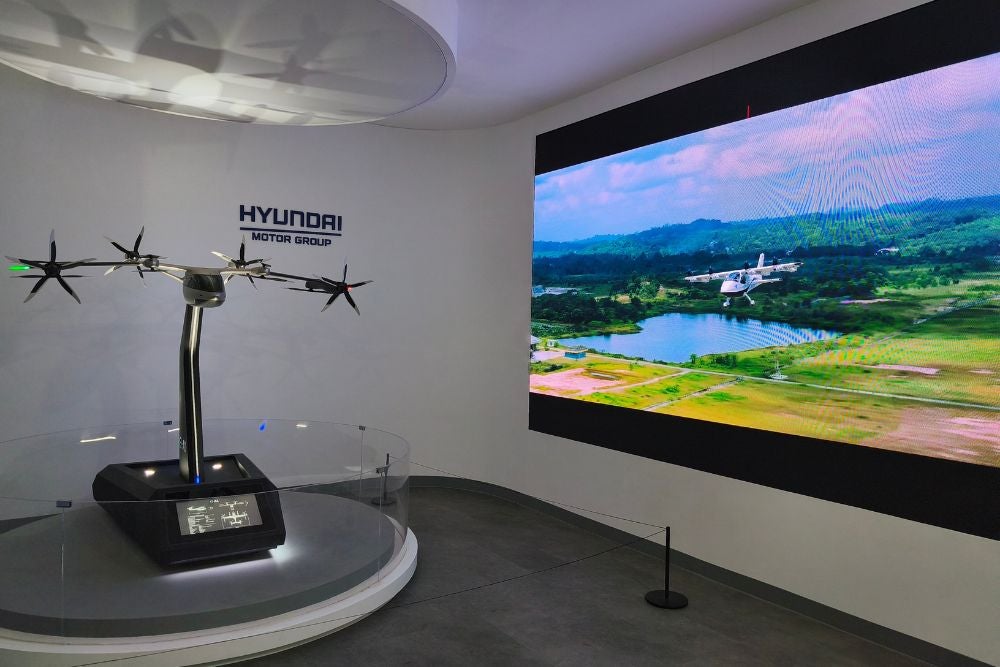 Figure 2. Hyundai’s flying taxi. Picture courtesy of the author.
Smart Nusantara for whom
Some aspirational cities and global tech companies have undoubtedly co-shaped Nusantara as a “worlded” smart city, i.e., influencing governance models and defining what smart looks like in practice, as well as shaping the system architecture. However, the adoption of a set of smart systems and technological solutions is not necessarily driven by their suitability to local needs and broader, more diverse demands, but rather by their availability and marketability. Critical urban scholars have indeed raised the tension between techno- and corporate-centric versus human-centric readings in the deployment of smart cities (e.g., Indraprahasta & Alamsyah, 2025; Wiig, 2015). Nusantara’s smart city development, particularly throughout 2024-2026, is a clear illustration of this tension, as it is heavily infrastructure- and technology-driven.
The tendency of techno-driven urbanism of Nusantara may jeopardise its purported vision of becoming a global city for all. This “techno-capture” is evident, amongst other things, in the exclusion of broader societal elements, including long-standing local communities and the diversity of future residents, from the discourse surrounding smart-related planning, policymaking and public communication. As a case in point, although the Blueprint for the Nusantara Smart City has been published, this document primarily outlines the ramifications of planned smart systems and solutions; it does not, however, address in detail how human elements and local specifics will fit into the future of smart Nusantara. At least as far as progress up to 2026 is concerned, Nusantara’s development, including the realisation of the smart city vision, has centred on the core government zone (KIPP). The KIPP is one of the three main zones in Nusantara and serves as the centre for national government administration, which includes the presidential palace, ministries and state agencies offices, and the OIKN office—the OIKN is currently responsible for managing planning and development across the entire Nusantara until the national government begins to operate fully in the new capital from 2028. Consequently, local residents living in the area surrounding the KIPP have not yet been considered as the main beneficiaries of the current smart city development, let alone as its development actors.
Furthermore, the ART and flying taxi, which had been promoted as symbols of a “futuristic city”, were not pursued due to cost considerations and lack of relevance to current conditions and needs (Alexander, 2025)—the latter, however, was still on display for promotional purposes during our field visit in mid-2025. Testbeds are essentially part of the experimental logic of urban planning, which is often characterised by temporary, fast-paced “tactical urbanism” or technology-driven projects (Berglund-Snodgrass & Mukhtar-Landgren, 2020). This is particularly relevant in the context of Nusantara, where the entire development process is taking place under “the politics of speed” (Bunnell et al., 2026). However, these experimental practices risk creating fragmented, unsustainable solutions rather than systemic change. Key dangers include overreliance on technological or quick-fix solutions, which often overlook deep-rooted social, political and economic challenges. Furthermore, without decent, context-sensitive, long-term planning, experiments have the potential to exacerbate social or ecological inequalities.
In the context of smart cities, worlding is a double-edged sword: it engenders novel manifestations of visibility, investment and prestige, while also perpetuating global hierarchies and excluding many local people. For example, India’s Smart Cities Mission, launched in 2015, is promoted by the Indian government as a project that will modernise the country and boost its global competitiveness. However, critics argue that it is a “worlding-from-above” process that favours corporate interests, displaces informal communities and encourages a technocratic form of citizenship (Datta, 2015; Ghosh & Arora, 2022). So, given the diverse alternative future outcomes that Nusantara might entail, it can learn from other places as part of an anticipatory truth-spot seeking process (Bunnell et al., 2022). This will ensure Nusantara remains committed to being socially inclusive for all groups of citizens, both present and future.
Acknowledgment
This article benefited from financial support provided by the Ministry of Higher Education, Science and Technology, Indonesia, through the Indonesia Research Collaboration (Riset Kolaborasi Indonesia) scheme for 2024-2025 and by the Urban Studies Foundation through the International Fellowship scheme for 2026. The views expressed in this material are those of the author and do not necessarily reflect the views of the funding bodies.
The views expressed in this forum are those of the individual authors and do not represent the views of the Asia Research Institute, National University of Singapore, or the institutions to which the authors are attached.

Galuh Syahbana Indraprahasta
Visiting Scholar at the Asian Urbanisms Cluster, as part of the International Fellowship funded by the Urban Studies Foundation (USF)
Galuh is Research Professor of Human Geography and the Chair of Urban-Rural Dynamics Research Cluster, Research Centre for Population, the National Research and Innovation Agency (BRIN), Indonesia. He holds a PhD in Geography from Ghent University, Belgium, and his research interests cover diverse topics in urban and regional studies. At ARI, his research focuses on the planning and imaginary aspects of Nusantara, the new Indonesian capital city, and its interlinked spaces.
Email: galuh.indraprahasta@gmail.com
LinkedIn: https://www.linkedin.com/in/galuh-syahbana-indraprahasta-a95b7136/
Instagram: https://www.instagram.com/galuh.indraprahasta/
doi.org/10.25542/1rbm-vf15
Recent Publications
Rahman, A., Rosandi, V. B., Indraprahasta, G. S., Prasetyadi, A., Saputra, A. Y., & Pravitasari, A. E. (2026). Rural transformation research: Current state, dynamics, and future directions. Area, 58(1), e70049. https://doi.org/10.1111/area.70049
Indraprahasta, G. S., & Alamsyah, P. (2025). Smart cities in developing countries: a review of research literature. International Journal of Urban Sciences, 29(sup1), 232-264. https://doi.org/10.1080/12265934.2024.2346153
Indraprahasta, G. S., Amir, S., Nastiti, A., & Ufaira, R. (2025). Governing climate mitigation in a megacity: Tapping opportunities in the multi-level governance system?. Journal of Urban Affairs, 47(6), 2240-2261. https://doi.org/10.1080/07352166.2023.2274554
Pribadi, D. O., Indraprahasta, G. S., Aziz, S. A., Farandy, A. R., Hidayatina, A., & Rosandi, V. B. (2025). Developing circular cities in emerging economies: Investigating circular economy initiatives in the urban food system of two Indonesian cities. Cities, 160, 105816. https://doi.org/10.1016/j.cities.2025.105816
Location: Nusantara, East Kalimantan, Indonesia. Visualisation via Google Earth Studio