
Discarding Thai Products: On-the-Ground Reactions to the Thai-Cambodia Border Conflicts


“Do you know the origin of Siem Reap?” Seyha (pseudonym) asked.
I was sitting at Brown Coffee, a locally-owned coffee chain with my schoolteacher friend, Seyha, on a Sunday morning in Phnom Penh in August 2025. He was catching me up on recent events along the Cambodia-Thailand border. Out of the blue, he brought up the topic of Siem Reap’s origin.
“Do tell me,” I said, intrigued by the detour in our conversation.
“Okay. It’s just a folktale. A long, long time ago the Thai army invaded the land that we now call Siem Reap. The King of Cambodia led an army to fight off the Thai. After days of battle, our soil was soaked in blood. Hundreds and thousands of people were killed. But we managed to hold our ground and crushed the entire Thai army. That’s the reason why it’s called ‘Siem Reap’. The Thai (Siem [i.e., Siam]) were cleared and flattened out (reap). Our feud with Thailand is as old as the story goes.”
***
On 24 July 2025, major armed conflicts broke out on the site of the disputed Ta Muen Thom temple along the Cambodia-Thailand border area, resulting in the deaths of more than 30 civilians and soldiers from both the Thai and Cambodian sides (Lukiv, 2025). Both countries accused the other of launching unprovoked assaults which led to at least 300,000 being displaced (Fulton & Coughlan 2025; Panarat & Orathai 2025). There has been a profusion of detailed media coverage of the Cambodia-Thailand conflicts (The Guardian 2025; The Straits Times, 2025a). As might be expected, most of this reporting focuses on the causes of the present conflict and the geopolitics of the Southeast Asia region at a macro scale.
This short essay takes a different route, treating Seyha’s account as an invitation to reflect upon the on-the ground sentiments about the border disputes in Cambodia. Writing from the position of a scholar who has conducted years of research in Cambodia, I seek to demonstrate how these sentiments are historicised, magnified, and utilised by the Cambodian state and local people differently. In tracing how the anti-Thai sentiment materialised on the ground through, for instance, the boycott of Thai goods, I suggest that Mary Douglas’ (1966) seminal work on symbolic classification may shed light on how the “Thai” is constructed as the “other” or as “matter out of place”. Such an attempt in turn preserves the nationalistic purity of the Cambodian order.
The Ancient Feud
Before we can delve into contemporary conflicts, it is necessary to lay out some historical context. The notion of Siamese invasions of the former lands of Angkor is rooted in centuries-long pre-colonial political struggles between the rising Ayudhya Kingdom and the declining Khmer Empire (Briggs, 1948; Evans et al. 2023). Between 1430–1431, the Siamese King Boromoraja II launched a major attack on Angkor Thom (the capital of Khmer Empire and present-day Siem Reap), seizing cultural artifacts and sacred statues from Angkor Thom (Briggs, 1948; Evans et al. 2023). Subsequently, the Khmer political centre has shifted southwards ever since with the establishment of new capitals in Phnom Penh, then Lovek and Oudong and back to Phnom Penh (Denes, 2022). The recurring Siamese invasions and political threats began to foster a narrative of Cambodia as a victim of Siamese theft. It continues to inform Cambodian nationalist discourse, framing the subsequent border conflicts as an ongoing struggle to protect the Khmer nation.
Scholars have often traced the Thai-Cambodian border conflicts back to 1863, when King Norodom solicited help from France to establish a protectorate to safeguard Cambodia against its neighbouring countries, namely Siam and Vietnam (Meskell, 2013; Pavin, 2012). Subsequently, the Franco-Siamese treaties of 1904 and 1907 demarcated the sovereign border between Siam and Cambodia. This border, which had not previously been surveyed, represented a new way of understanding sovereignty in the area following the introduction of Western mapping technologies from France (see Thongchai, 1997).
A map annexed to the 1907 treaty (i.e., Annex I map) placed the now-disputed area, notably the Preah Vihear Temple, within French Cambodia with no formal objection from Siam (Thailand) at that time (Meskell, 2013; Ngoun, 2017). While this map continues to form the basis of Cambodia’s claim of the sovereign boundary, Thailand later rejected it and insisted on its own cartographic interpretation, which placed the disputed land within Thai territory (Meskell, 2013; Ngoun, 2017). The issue of Preah Vihear Temple emerged as a major conflict in the 1950s since leaders in Cambodia and Thailand politicised the site for nationalist reasons to consolidate their authority and address domestic challenges.
In Cambodia, Prince Sihanouk sought to utilise the temple conflict to fill a power vacuum caused by the departure of France, consolidating his authority over competing political groups (Ngoun, 2018). Subsequently, the government advanced state-sponsored speaking theatre (lakhaon nyeay) as a critical propaganda tool to reach citizens via national radio broadcast (Ngoun 2018). These performances used historical legends such as the Legend of Preah Ko Preah Keo to portray Thai leaders as villains with the “evil intention of invading and capturing Cambodia’s territory and its national treasures” (Ngoun, 2018: 199). By framing Thailand as a “thief” driven by “ill intent and greed”, this propaganda was strategically designed to homogenise collective memories and propagate patriotism, creating a distinctive Khmer identity against Thai as the traditional enemy (Ngoun, 2018: 203).
In 1962, after the dispute first flared in the late 1950s, Cambodia brought the case to the International Court of Justice (ICJ). The ICJ awarded sovereignty over the land occupied by the Preah Vihear temple to Cambodia but did not rule on the ownership of the land surrounding the site (Wagener, 2011). The conflicts subsided but not for long. For instance, in 2001, the Thai army closed the border crossing and shut down tourism to the Preah Vihear Temple citing a “sewage problem” (Hinton, 2006). In response, Cambodia sent hundreds of troops to Preah Vihear; a patriotic song “Preah Vihear Temple” was produced and made popular in karaoke bars (Hinton, 2006). These events reinforced the narrative that “Thai were thieves”, building up the patriotic emotional ammunition that propped up the 2003 anti-Thai riot that saw the Thai embassy in Phnom Penh burned to the ground (Hinton, 2006).
In 2008, the conflicts flared once again when then prime minister Hun Sen nominated Preah Vihear temple as a UNESCO World Heritage Site, a political move he utilised to build political prestige and bolster nationalistic sentiment ahead of national elections (Rattanasengchanh, 2017). To cultivate a sense of patriotic nationalism, the Cambodian government employed visual and symbolic propaganda, distributing posters that featured Hun Sen’s portraits alongside the temple and the national flag (Rattanasengchanh, 2017). The recurring border clashes originated from the strategic instrumentalisation of the Preah Vihear temple for leaders on both sides to mobilise nationals against an external “other” and to strengthen political authority.
These earlier conflicts have built up nationalist rhetoric in both Thailand and Cambodia over the years, leading up to the latest 2025–2026 border dispute. In the recent clashes, both governments reproduced similar nationalist propaganda. In Cambodia, under the simmering anti-Thai sentiment, many citizens, in particular the younger generation, also actively shaped the nationalistic discourse by using social media platforms to launch diatribes against the Thai military for its invasion. Images of distressed evacuees and ruined temples from Cambodia were circulated widely. Seyha’s original story of Siam Reap, apocryphal or otherwise, is just the tip of the iceberg of the many accounts about Siam’s invasion of pre-colonial Cambodia and the more recent border conflicts.
These tales precisely reflect the mainstream narrative of conflicts in Cambodia’s social media as well as the intense dislike of Thais. Drawing on a particular event or scene, these stories are manipulated by both the government and the people to assert claims about the idea of the nation. The dualistic framing of the gruesome story pitches one country against the other, countries that have only taken shape owing to the colonial-era demarcation of borders. These narratives continue to be mobilised in service of present-day nationalism as straightforward empirical accounts of the past, overshadowing other players from the French colonial administration to the ICJ that largely shaped the conditions of the border conflict as they are now.
Billboarding the Cambodian State; Boycotting Thai Products
The Cambodian government has been fueling nationalist sentiments during the current period of tension to assert its governance and legitimacy. Soon after the outbreak of the recent border dispute, the government called for solidarity and harmony among Cambodians. In the city of Phnom Penh, large billboards and banners of the sitting prime minister Hun Manet and other high-ranking officials have been erected ubiquitously to showcase the government’s leadership and determination to fight against Thailand.
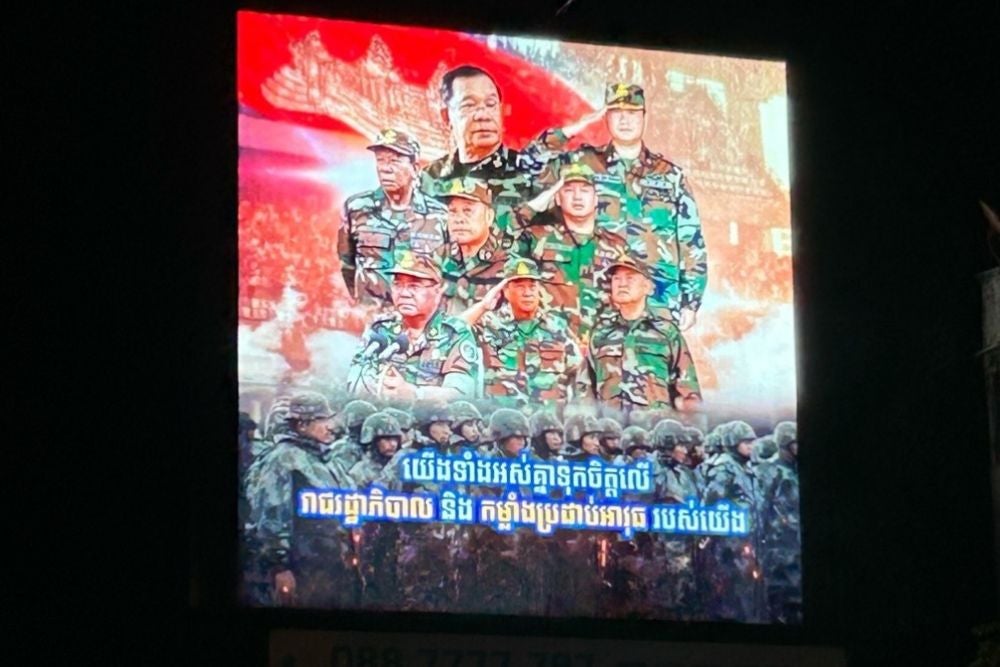 Figure 1. “Trust in Cambodian government and the army” on a roadside billboard in Phnom Penh City (10 August 2025). Photography courtesy of the author.
In addition, ex-prime minister Hun Sen has urged Cambodians to boycott Thai products as a gesture of national support (The Cambodian Daily, 2025). Hun Sen has historically instrumentalised the border conflicts to consolidate domestic power. His involvement in the 2025 conflict was purportedly triggered by his heated public row with Thaksin Shinawatra following a perceived betrayal by the Shinawatra family over unmet private business expectations and kleptocratic goals (Raymond, 2026). All of a sudden, Thai products, which were once considered superior to those from neighbouring countries, such as Vietnam, became social outcasts or a matter out of place—polluting objects that symbolised Thai violence and threatened the integrity of the nation.
The Internet was instantly flooded with lists of red-flagged Thai brands. Netizens went on to provide guidance to Cambodians on which products or services they should avoid. The famous hashtag #Don’tThaitome, a riff on “Don’t lie to me” popularised by Hun Sen, has been widely used in boycott campaigns on social media, expressing dislike of Thais (Khmer Times, 2025).
Interestingly, a significant proportion of Thai brands in the boycott list, such as CP Food and PTT petrochemical company have established deep-seated roots in Cambodia. Other Thai brands, such as Amazon Café were also once popular among Cambodians (Hydromi Cambodia 2025). Nonetheless, since the call for a boycott, these shops and petrol stations have seen a sharp decline in customers. Thai products have been shelved away from the Cambodian products and largely untouched.
Against this backdrop, many new local brands have sprung up to support Cambodia. Seyha took me to the AEON mall, one of the largest shopping mall chains in Phnom Penh, asking me to look out for the national flag. As it turns out, all the Cambodian products were grouped together in specific aisles marked with mini national flags, whereas the Thai products were deliberately labelled as Thai or printed with a Thai national flag, and put aside on other shelves.
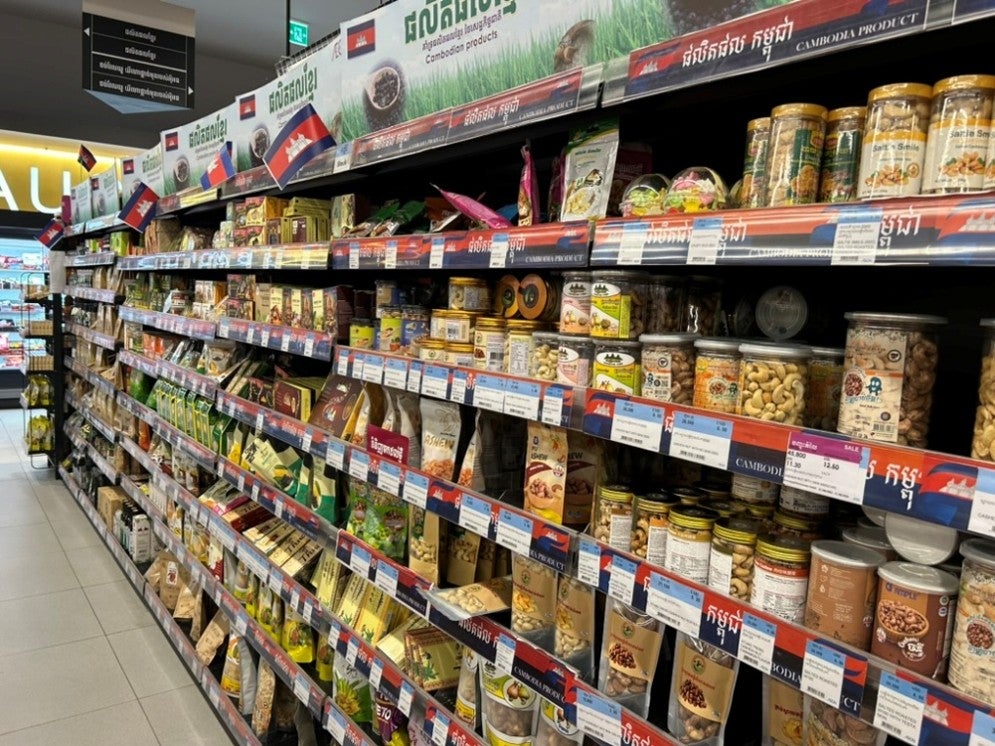 Figure 2. National flags on supermarket aisles (9 August 2025). Photography courtesy of the author.
Seyha admitted that in the past, he never paid attention to the origin of commodities. Now, for him, Thai products were like diseases that everyone wanted to keep at bay. Since the border disputes, he once unknowingly picked up a bottle of insect repellent made in Thailand. Immediately, he received death stares from the surrounding customers, prompting him to put it back immediately. Today, like many Cambodians, he is committed to boycott Thai products and corporations that have ties with Thailand.
It is one thing to promote and vitalise the local economy; however, it is a fallacy to equate the local economy with the nation-state. The re-categorization of commodities through national flags reframes Thai products as foreign and polluted “others” that need to be kept at bay and untouched. The focus on “made-in-Cambodia” creates a sense of bounded purity and unity that should be preserved and cherished.
In Mary Douglas’s (1966) analysis on pollution and taboos, the distinction between purity and impurity fundamentally is about the power of maintaining the nationalist stability of order. What is made polluted or “matter out of place” is deemed dangerous and risky as it has no place in a culturally specific classificatory system. The misfits must be disposed of for fear of disrupting the established structure. Considered in this light, the call to support Cambodian-flagged products is not merely taking a stance against the flagrant violence of Thai invasion through the renewed classification of enemy and allies. It is also a symbolic way of consolidating the purity and power of the Cambodian nation-state by keeping away these disease-like products.
Ambiguous Futures
While nationalistic sentiments are entrenched in Phnom Penh, it is worth noting that attitudes towards Thais are not uniform. Those who have a stronger connection with Thailand often exhibit more ambivalent views. It is estimated that before the current conflict broke out, over half-a-million Cambodians worked in Thailand as migrant workers, accounting for 12% of Thailand’s foreign workforce (The Straits Times, 2025b).
In my recent field trip in a rural site of southern Cambodia, villagers who once worked in Thailand often spoke of the economic opportunities they had gained. Many were able to accumulate savings and improve their livelihoods upon returning to their own village. Some of their family members also benefitted from their employment in nearby mining companies with strong ties to Thai corporations such as KCement and Chip Mong Insee Cement Corporation. Oftentimes, villagers expressed concerns about the war in relation to their livelihood and socioeconomic conditions rather than the assault on the nation-state.
Amid intense border conflicts, the anti-Thai sentiment in Cambodia is understandable. Nevertheless, reading such sentiments through the lens of Douglas’ structural analysis also reveals what has been disposed of, papered over, and maintained in such a nationalistic narrative. These dynamics not only bolster the authority of the Cambodian government but also displace complex historical and socioeconomic relationships between Cambodia and Thailand—relationships that cannot be easily disentangled or reduced to binary opposition.
The 2025–2026 border conflicts illustrate the continued strategic instrumentalisation of nationalism to consolidate state authority. By recategorising Thai goods as “polluted” or “matter out of place”, the Cambodian state and its citizens utilise symbolic classification to assert a sense of nationalistic purity. This nationalism is reinforced through propaganda such as ubiquitous billboards and social media campaigns—and find organic expression in less predictable ways like Seyha’s story about the name of Siem Reap. The region’s path forward lies in great measure in moving beyond binary oppositions of “us” and “them” to acknowledge the intertwined historical socioeconomic realities that shape lives in both countries.
The views expressed in this forum are those of the individual authors and do not represent the views of the Asia Research Institute, National University of Singapore, or the institutions to which the authors are attached.

Dr Lau Chun-Him Justin
Postdoctoral Fellow
Asia Research Institute
Dr Justin Chun-Him Lau commenced his appointment as a Postdoctoral Fellow with the Science, Technology and Society (STS) Research Cluster with effect from 28 February 2025.
Dr Lau received his PhD in Anthropology from the Australian National University in 2025. He is a social anthropologist interested in the culture of disposal and environmental anthropology. His main areas of research interest include discard studies, feminist STS, and disability studies. He is currently formulating a research project on limestone mining and critical minerals in Asia. Specifically, it examines the dynamics between extractivism and conservation in a limestone mountain in Cambodia. In broader terms, it asks how limestone elements may shape today’s climate politics and the pursuit of “sustainable” city.
https://doi.org/10.25542/w8y2-fj21