Events
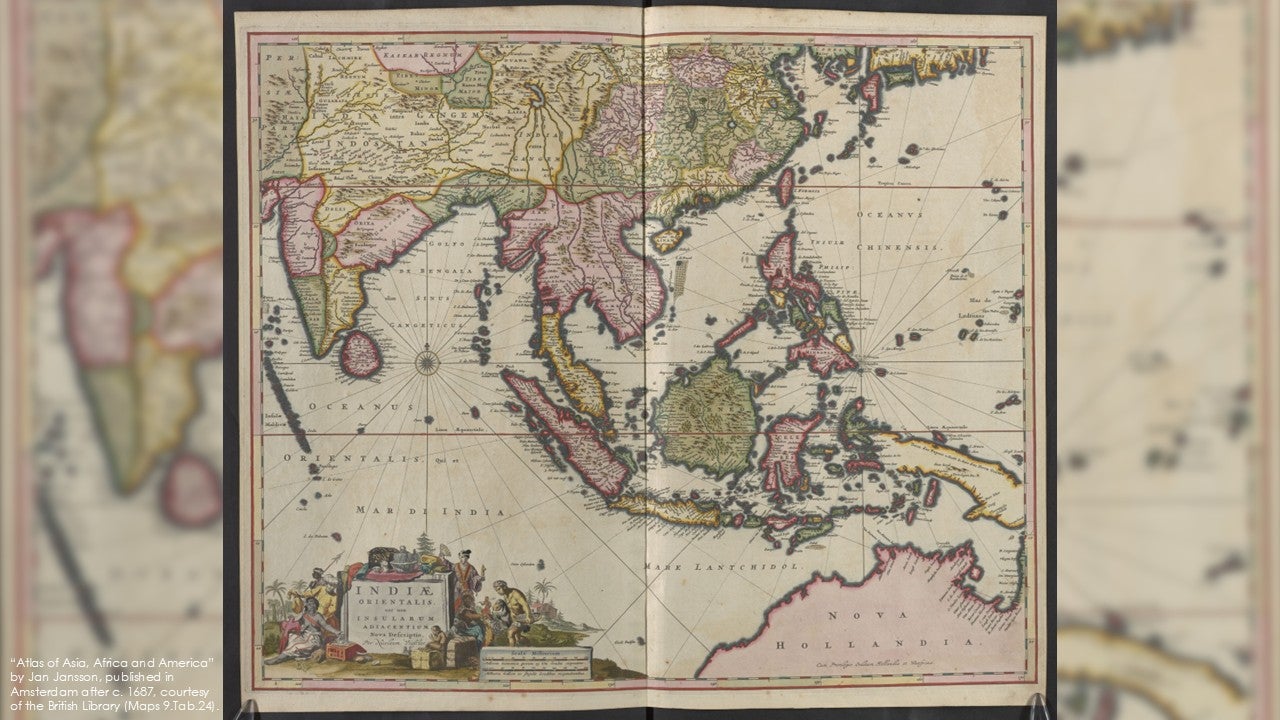
ARI 25TH ANNIVERSARY ROUNDTABLE – Asia: Borders and (Dis)Orders
| Date | : | 09 Sep 2026 |
| Time | : | 16:00 – 17:30 (SGT) |
| Venue | : | Hybrid (Online via Zoom & AS8 04-04) |
| Contact Person | : | LIM, Zi Qi |
| Register | ||
CHAIRPERSON
Prof Kishore Mahbubani, Asia Research Institute, National University of Singapore
PROGRAMME
| 16:00 | WELCOME REMARKS Prof Vineeta Sinha | National University of Singapore |
| 16:05 | INTRODUCTORY REMARKS Prof Kishore Mahbubani | National University of Singapore (Moderator) |
| 16:10 | ROUNDTABLE DISCUSSION Asst Prof Faizah Zakaria | National University of Singapore Asst Prof Sahana Ghosh | National University of Singapore Assoc Prof Sumit Mandal | National University of Singapore Prof Tansen Sen | NYU Shanghai & New York University Assoc Prof Taomo Zhou | National University of Singapore Dr Kesava Chandra Varigonda | National University of Singapore |
| 17:10 | QUESTIONS & ANSWERS |
| 17:30 | END |
ABSTRACT
By drawing on interactions and comparisons among people, goods and ideas emanating from Asia over the longue durée, this roundtable highlights problems and processes that have shaped and continue to shape the world on several fronts, including the environment, race, gender, religion, migration, heritage, securitisation, geopolitics, and the state of globalisation. Bringing together scholars in history, anthropology and international relations, the roundtable offers a grounded inter-disciplinary conversation. Colleagues from the research programmes at the Asia Research Institute, and the Faculty of Arts and Social Sciences at the National University of Singapore will jointly address two questions: How do we study Asia in this time of global uncertainty? Is Asia a region, network or method? Collectively, the roundtable will seek to underscore the importance of research on Asia at a time when the international order is said to be disintegrating.
ABOUT THE SPEAKERS
Kishore Mahbubani has dedicated three decades of his life to public service. In his 33 years as a Singapore diplomat, Kishore took on many challenging assignments. He also served two stints as Singapore’s Ambassador to the UN (1984-1989 and 1998-2004) and held the position of Permanent Secretary of the Ministry of Foreign Affairs from 1994 to 1998. Kishore had an equally illustrious career in academia. He was the Founding Dean of the Lee Kuan Yew School of Public Policy from August 2004 to December 2017. He has been a prolific author and has published ten books. His ninth book, The Asian 21st Century, is an open access volume which has been downloaded over 4.35 million times. His latest book, a memoir titled Living the Asian Century, was published in August 2024. Kishore has also been listed among the world’s top 100 public intellectuals by Foreign Policy and Prospect magazines and among the Top 50 individuals who would shape the debate on the future of capitalism by the Financial Times. He was inducted into the American Academy of Arts and Sciences in October 2019. More information can be found on http://www.mahbubani.net.
Faizah Zakaria is Assistant Professor holding a joint appointment in the Departments of Southeast Asian Studies and Malay Studies at the National University of Singapore. Her research interests center on religion and ecology, environmental justice and indigenous movements in island Southeast Asia. She is the author of The Camphor Tree and the Elephant: Religion and Ecological Change in Maritime Southeast Asia (University of Washington Press, 2023), which was awarded the Harry J. Benda Prize (2025) and was shortlisted for the Euroseas Social Science Book Prize (2024). Her work has been published in various journals including Indonesia and the Malay World, Journal of Social History and Isis: A Journal of the History of Science Society and she has contributed to several field-defining edited volumes including the upcoming New Cambridge History of Southeast Asia.
Sahana Ghosh is Assistant Professor with the Department of Sociology and Anthropology at the National University of Singapore. She received her PhD in Sociocultural Anthropology and Women’s, Gender and Sexuality Studies from Yale University. Her primary research interests are borders and borderlands, mobility, gender and sexuality, critical security studies, ethnography of the state, transnational and postcolonial feminism, South Asia, space and value, labor studies, and feminist and decolonial pedagogy. She is currently researching the gendered labors of soldiering in India and the transnational governance of labor migration through the prism of Bangladesh.
Sumit Mandal is Muhammad Alagil Chair in Arabia Asia Studies at the Asia Research Institute, National University of Singapore. He is a historian who researches the outcome of longstanding inter-cultural and inter-religious interaction in the Malay World—understood as a flexible and expansive cultural geography. His book Becoming Arab: Creole Histories and Modern Identity in the Malay World (Cambridge, 2018) reconsiders colonial and national understandings of the indigenous and foreign by substantiating what were significantly intermixed societies. He is currently doing research on keramat (Muslims shrines) in the Malay world as inscriptions on the landscape of a sacred history that provoke a reimagination of the Islamic Indian Ocean.
Tansen Sen is Professor of History and the Director of the Center for Global Asia at NYU Shanghai and Associated Full Professor of History at New York University. Previously, he was a faculty member at the City University of New York and the founding head of the Nalanda Sriwijaya Center at the Institute of Southeast Asian Studies, Singapore. He is the author of Buddhism, Diplomacy, and Trade: The Realignment of Sino-Indian Relations, 600-1400 (2003; 2016) and India, China, and the World: A Connected History (2017; 2018). He has co-authored (with Victor H. Mair) Traditional China in Asian and World History (2012), edited Buddhism across Asia: Networks of Material, Cultural and Intellectual Exchange (2014), and co-edited (with Burkhard Schnepel) Travelling Pasts: The Politics of Cultural Heritage in the Indian Ocean World (2019), and (with Brian Tsui) Beyond Pan-Asianism: Connecting China and India, 1840s-1960s (2021). With Adhira Mangalagiri he has co-edited a special issue of the International Journal of Asian Studies (July 2022) on “methods in China-India studies.” His current projects include a monograph on the Chinese admiral Zheng He and a book on Jawaharlal Nehru’s engagement with China.
Taomo Zhou is Associate Professor at the Department of Chinese Studies and Dean’s Chair in the Faculty of Arts and Social Sciences at National University of Singapore. Her book, Migration in the Time of Revolution: China, Indonesia and the Cold War (Cornell University Press, 2019) was named by Foreign Affairs as one of the “Best Books of 2020” and received Honourable Mention for the 2021 Harry J. Benda Prize awarded by the Association for Asian Studies. She is currently working on her next book, Made in Shenzhen: A Global History of China’s First Special Economic Zone, which is under advance contract with Stanford University Press. She is also doing research on motherhood during the Cold War.
Kesava Chandra Varigonda is Research Fellow at the Asia Research Institute. He is also Administrative Director of the Asian Peace Programme. He works under Distinguished Fellow, Prof Kishore Mahbubani, on a range of projects related to global geopolitics and the prospect for peace in Asia. Kesava completed his doctoral research at the South Asian Studies Programme, National University of Singapore in March 2020. His research, which is focused on anti-nuclear movements and their impact on the Indian state’s civil nuclear energy policy, has been published as a monograph: Society, Resistance and Civil Nuclear Policy in India: Nuclearising the State (Oxford & New York, Routledge: 2021). Kesava has an MSc (Asian Studies) degree from the S. Rajaratnam Institute of International Studies, Nanyang Technological University, and a BEng (Chemical Engineering) degree from the National University of Singapore. His research focus also includes India’s state-society relations, energy policies, identity-based majoritarianism and South Asian geopolitics. His papers have been published in Energy Policy, Third World Quarterly, India Review and Peace Review.
ABOUT THE ARI 25TH ANNIVERSARY EVENT SERIES
Marking twenty-five years of the Asia Research Institute (ARI) at the National University of Singapore, the ARI 25th Anniversary Event Series brings together scholars, public intellectuals, and partners to examine some of the most significant current and future issues facing Asia and their wider global implications. The anniversary program comprises three events: a public lecture and two thematic roundtables, each addressing a major set of contemporary and emerging questions that intersect with ARI’s research mission and open conversations between academic research and the wider public, policy, and professional communities in Singapore, across Asia, and internationally. Together, the events showcase ARI’s role as a platform that brings research into conversation with the questions that matter to Singapore, Asia, and the wider world.