

Events
Print Circulation and the Construction of Community Identity among Overseas Chinese in Late Colonial Southeast Asia | Robert Culp
| Date | : | 30 Sep 2026 |
| Time | : | 15:00 – 17:00 |
| Venue | : | AS8, Level 5, 05-49 Wan Boo Sow Research Centre |
| Contact Person | : | LIM, Zi Qi |
| Register | ||
Jointly organized by Department of Chinese Studies and the Asia Research Institute, National University of Singapore.
CHAIRPERSON
Prof Kenneth Dean, Asia Research Institute, and Department of Chinese Studies, National University of Singapore
ABSTRACT
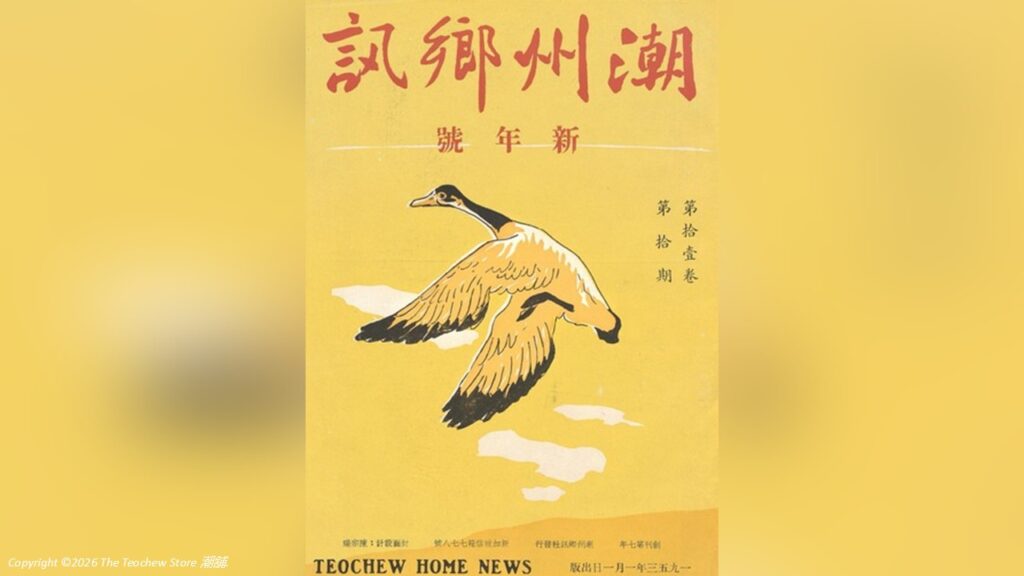
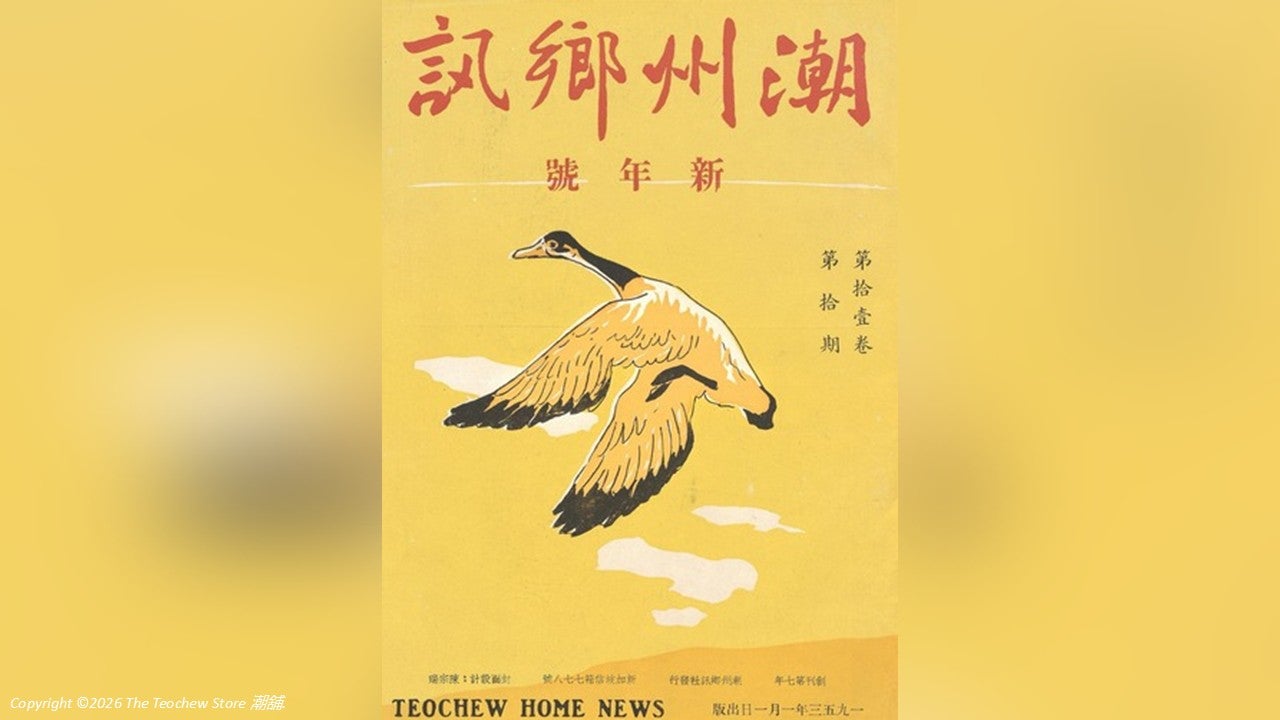
Publications from Shanghai and Hong Kong dominated overseas Chinese print markets in Southeast Asia from the 1910s into the 1940s. But after 1930 expanded printing capacity in Southeast Asian cities, especially Singapore, facilitated an explosion of local publications sponsored by schools, voluntary associations, business groups, and community organizations. In this talk, I use the innovative framework of “journal as method” to explore one dimension of this print proliferation—native place (tongxiang) publications—through a case study of the dynamic journal of Chao-Shan migrants in Southeast Asia, Teochew Home News (Chaozhou xiangxun, 1947-1962).
With correspondents across the Chao-Shan region and in cities throughout Southeast Asia, Teochew Home News was a clearing house for news and information for Teochew communities in China and abroad. Published in Singapore, the journal was disseminated to more than 20 cities across Malaya, Vietnam, and Thailand, as well as to home counties in China. By circulating between Chaozhou and various places in Southeast Asia, the journal sustained communication networks that consolidated native place affiliation by making “home” seem immediate and real while connecting transmigrants to it. Circulation throughout Chao-Shan transmigrant communities across Southeast Asia, though, also helped to constitute a Teochew diasporic identity centered on the experience of sojourning and building community overseas. When circuits for moving money, information, and people in and out of China became constrained after the founding of the People’s Republic in1949, circulation within and information about Southeast Asia was prioritized, fostering a Teochew diasporic identity that spanned the region.
ABOUT THE SPEAKER
Robert Culp is Professor of History and Asian Studies at Bard College. He holds an MA in Asian Studies from the University of Michigan and a PhD in history from Cornell University. He is the author of Articulating Citizenship: Civic Education and Student Politics in Southeastern China, 1912-1940 (Harvard University Asia Center, 2007) and The Power of Print in Modern China: Intellectuals and Industrial Publishing from the End of Empire to Maoist State Socialism (Columbia University Press, 2019). He is currently working on a book-length project on the distribution of Chinese-language publications in overseas Chinese communities in Southeast Asia from the 1910s into the 1950s that is tentatively called “Circuits of Meaning: Chinese Publishing Networks and the Sinophone Reader in Southeast Asia.”