
Haunted futures—Akai Chew’s artistic futuring techniques at SG60: To build a swing


In SG60: To Build a Swing, an exhibition at LOY Contemporary Art, Akai Chew confronts the complex temporalities of commemoration not by reproducing a linear historical arc, but by conjuring the spectral ruins of architectural memory. His works Dreams of Postmodern Ruins (2019), Reclamation and Redemption (2022), The City Of The Future (2025) series and Our Futures (2025)—stage what I call artistic futuring—i.e. a reimagination of futurities through creative interventions. In excavating the past and lost futures that were never realised, Chew’s artistic futuring is operationalised through Derrida’s (1994) notion of hauntology. Derrida (1994) argues that what is absent, such as ghosts of the future that never arrived, or the unresolved past continues to exert influence on the present. Accordingly, Chew positions figments of architectural memory not just as an invocation of the past, but as performative sites where heritage, absence, and prospective imagination collide.
In the field of futures studies, futuring generally refers to “the identification, creation and dissemination of [future imaginaries while] enacting relationships between [the] past, present and future” (Oomen, 2022: 253). Dominant state-driven techniques of futuring tend to be characterised as strategic, often expert-led methods that shape the ways in which purportedly progressive futures are envisioned and enacted. These techniques, ranging from predictive modelling, trend forecasting to scenario planning, often cast futures as abstract, disembodied and divorced from lived experiences. More specifically, urban futuring has emerged as an interdisciplinary area of inquiry concerned with embracing the city’s contingent trajectories under the conditions of disruptive changes and uncertainty. Rather than constituting a unified body of work, this nascent area of inquiry foregrounds (i) the importance of local, context-sensitive and inclusive accounts of urban futures (Fox & Garner 2022; Matos-Castaño & Baibarac-Duignan 2025); and (ii) an imperative for a shift away from deterministic planning models towards more adaptive strategies (Roggema, 2021).
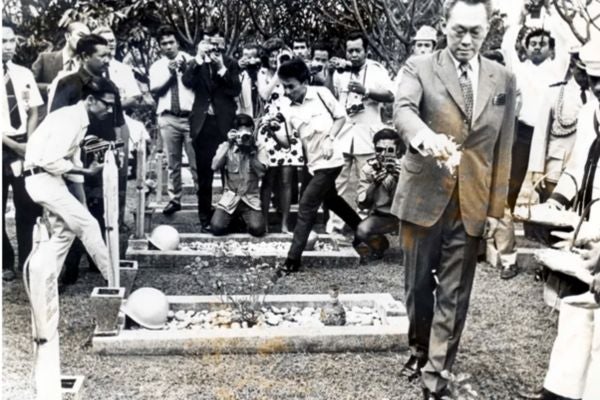
Recounting the History of Singapore through Psychogeography with Akai Chew. Courtesy of LaSalle College of the Arts.
In general, Chew offers an invaluable counterpoint to Singapore’s techo-rationalist futuring and its penchant for deterministic urban masterplans. He does so by remediating lost architectural past/after-lives, not just to restore them but to ask what haunts our built environments. Dreams of Postmodern Ruins (2019) is a photographic installation of Singapore’s abandoned or demolished buildings mediated by a CRT TV (see Figure 1)—one that mourns for the creative destruction of built environments that have been dissolved into a collective amnesia. Creative destruction refers to the process whereby newer cityscapes replace outdated ones (Batty, 2007; Avrami, 2020), and tends to be construed as a key driver of economic growth and urban development by powerful stakeholders. Dreams of Postmodern Ruins is a video-loop of 33 high-contrast digital photographs rendered in false colour depicting brutalist facades and deserted corridors. Tinged with an air of melancholy, these imageries serve as evidence and elegy of modernist urban forms that have fallen out of favour. In this case, Chew mythologises (creative) destruction as a speculative and spectral surface where past ambitions and foreclosed futures converge.
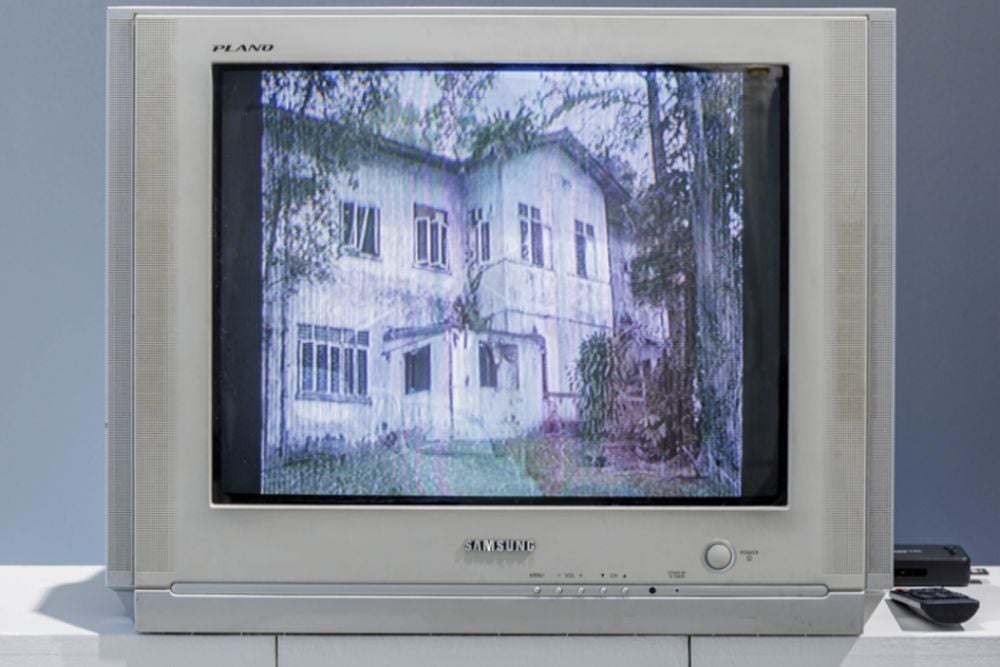 Figure 1: Dreams of Postmodern Ruins (2019). Photo: LOY Gallery
While Dreams of Postmodern Ruins spotlights built (infra)structures, Reclamation and Redemption (2022) focuses on the erasure of natural shorelines. Reclamation and Redemption relates to Chew’s previous work titled Fragment of a Shoreline (2022)—a site-specific installation at the Padang. Fragment of a Shoreline recreated a stretch of Singapore’s coastline in Singapore’s 1843, one that is out of place and out of time. In the same vein, Reclamation and Redemption juxtaposes footage of the city’s coastal transformations brought about by extensive land reclamation through a small LCD screen (see Figure 2). Chew collapses space and time with coastlines appearing as flickering thresholds that destabilises the viewer’s sense of spatial-temporal certainties. In this view, the future is not just a clear temporal horizon, but multi-layered sediments that are malleable.
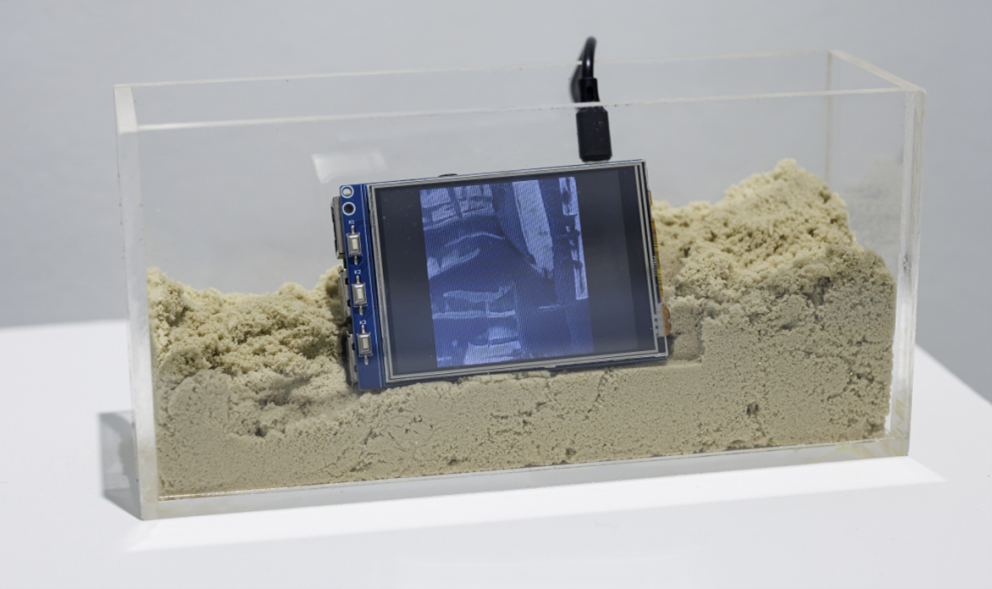 Figure 2: Dreams of Postmodern Ruins (2022). Photo: LOY Gallery
The City Of The Future series follows the theme on ruins. Both The City Of The Future (Lies In Ruins) (2025) and City of The Future: Marina Bay Sands (2025) are UV prints on PVC canvases (see Figures 3A and 3B). The City Of The Future (Lies In Ruins) (2025) references a dystopian poetic text written by a Japanese architect Arata Isozaki titled Incubation Process alongside his installation titled Re-Ruined Hiroshima (1968):
Incubated cities are destined to self-destruct
Ruins are the future of our cities
Future cities are themselves ruins
Our contemporary cities, for this reason,
are destined to live only a short ‘time’
Then give up their energy and return to inert material
All of our proposals and efforts will be buried
And once again the incubation mechanism is reconstituted
That will be the future (cited in Futerfas 2025: 60-61)
For Isozaki, the cyclical nature of urban (re)development implies that future cities, even their most iconographic, hyper-modern architectural landmarks (such as Marina Bay Sands), are destined to become obsolete over time. In photographing buildings that act as visual anchors in the city’s skyline, Chew appears to be pre-emptively preparing for their obituaries.
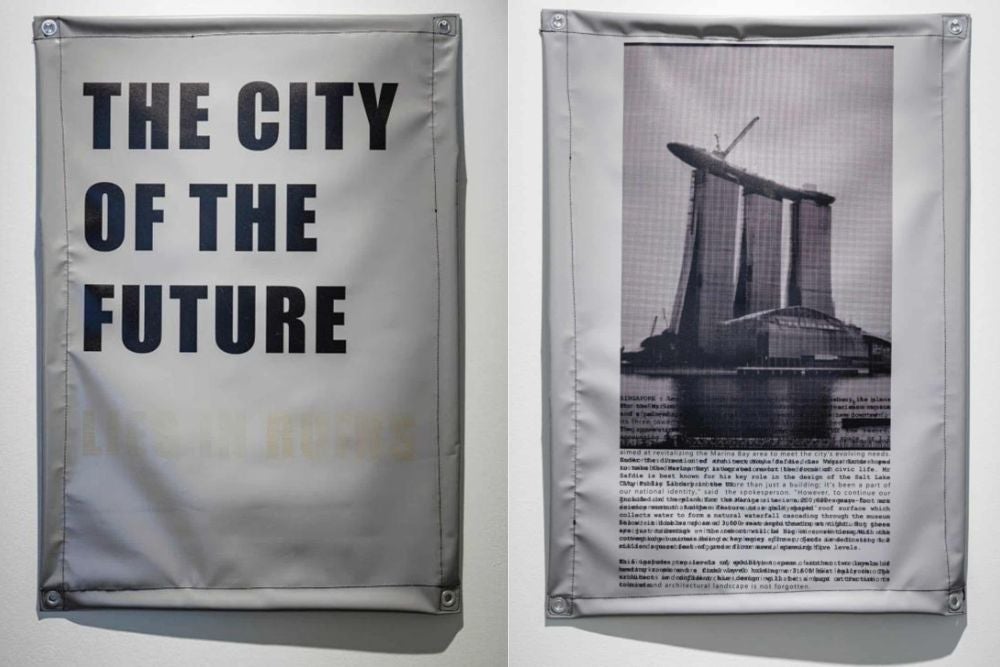
Figure 3A (left): The City Of The Future (Lies In Ruins) (2025), ‘lies in ruins’ in faded text. Figure 3B (right): City of The Future: Marina Bay Sands (2025)
Our Futures (2025) is a sculptural installation of stacked glass bricks in material limbo, holding up ‘the future’ etched on a gold brick (see Figure 4). Like Dreams of Postmodern Ruins, Chew’s work critiques the relentless destruction of urban landscapes alongside the valorisation of new architectural icons as gleaming symbols of progress. At the same time, he approaches demolition not just as destruction, but as an architectural form in its own right. As foundational units of an(y) urban structure—the glass bricks, with their fragility and transparency—allude to the ephemeral qualities of what we build and what we (forget to) remember. The bricks complicate simplistic interpretations of architectural remnants or historical artefacts by also embodying a recovery of forgotten futures-in-waiting. Taken together, Chew’s oeuvre invites viewers to ruminate on the socio-cultural costs of the city’s transformation.
Figure 4: Our Futures (2025). Photo: Akai Chew
Besides drawing on the hauntological, Chew’s art pieces elicit sensory-affective modalities of futuring. Sensory-affective futuring calls attention to how futures can be sensed and co-experienced—through an affective attunement to material textures, light and shadow, as well as in this case, hauntological atmospheres (see Jevtic & Park, 2021; Aranda-Munoz, 2025; Makinde et al., 2025). Chew asserts his unique style of artistic futuring, not through predictive foresight but by manifesting hauntological futures grounded in material, and spectral registers. In so doing, he opens a speculative, conceptual space where the future is not singular but plural, particularly in prompting viewers to imagine and inhabit different alternative timelines. Examples include “futures from the past—failed or untried futures that return in new shapes” (Ståhl, 2025: 2).
In sum, Chew’s (photographic) installations not only commemorate but reanimate futurescapes haunted by architectural detritus, nostalgia and foregone potentialities. His artistic practice also offers a compelling point of entry into how artists can deploy techniques of futuring from below, thereby making sense of possible tomorrows in postnormal times (Sardar & Sweeney 2016)—i.e. a period marked by complexity, and rapid changes.
Crucially, this article highlights the value of a mutually generative exchange between artistic and academic perspectives on futuring. The urban studies scholarship can provide conceptual tools for anchoring speculative artistic practices in broader spatio-economic dynamics such as creative destruction, thereby allowing these practices to engage more deeply with systemic patterns of urban transformation. Conversely, endeavours at artistic futuring can enrich the urban studies scholarship by (i) presenting novel methodological approaches that extend the ways in which urban knowledge can be produced; and (ii) inspiring non-conventional forms of academic ‘outputs’. Such methods can include imaginative exercises that spotlighting how the act of speculating urban futures, especially counterfactual ones, can produce insights by, for example, surfacing latent assumptions.
Alternative academic outputs may materialise as visuals, installations and performative works that challenge text-centric modes of scholarly communication. Taken together, the integration of artistic and academic modalities of futuring produces analytically rigorous and imaginatively expansive modes of inquiry that attend to the complexity of contemporary cities and the multiplicity of their possible futures.
The views expressed in this forum are those of the individual authors and do not represent the views of the Asia Research Institute, National University of Singapore, or the institutions to which the authors are attached.

Tan Qian Hui
Postdoctoral Fellow
Asia Research Institute
Dr Tan Qian Hui ARI commenced her appointment as Postdoctoral Fellow in the Migration and Mobilities Cluster, with effect from 15 August 2022.
Dr Tan obtained her PhD in Geography from NUS and her dissertation examined how the spatio-temporalities of single individuals in Singapore could be queered or problematised. Her research interests in intimate relationalities, embodiment and more recently, sustainability politics are often informed by critical feminist as well as queer theoretical perspectives. As a socio-cultural geographer by training, her work has been published in Gender, Place & Culture, and Social & Cultural Geography. At ARI she will extend her investigations on intimate geographies and work in an interdisciplinary project on plastic waste management within households across Singapore and Australia.
https://doi.org/10.25542/dby6-2y53
Recent publications
Tan, Q. H., & Yeoh, B. S. A. (2025). Circular sharing: Community-initiated free (cycling) markets/workshops encouraging reuse in Singapore. Journal of Cleaner Production, 493, 144740. https://doi.org/10.1016/j.jclepro.2025.144740
Tan, Q. H., & Yeoh, B. S. A. (2025). Everyday circular literacy in Singaporean households: Informal relational pedagogies in teaching and learning about circular R behaviours. Cleaner and Responsible Consumption, 100256. https://doi.org/10.1016/j.clrc.2025.100256
Tan, Q. H., & Yeoh, B. S. A. (2024). Freecycling markets as sustainable materialist movements? Closing reuse circularity loops in Singapore. Worldwide Waste, 7(1), 1–14. https://doi.org/10.3197/whpww.63857928646673