

Rethinking Labour Migration Regimes Through Embodied Experience—A Research Project Among Indonesian Migrant Workers in Taiwan


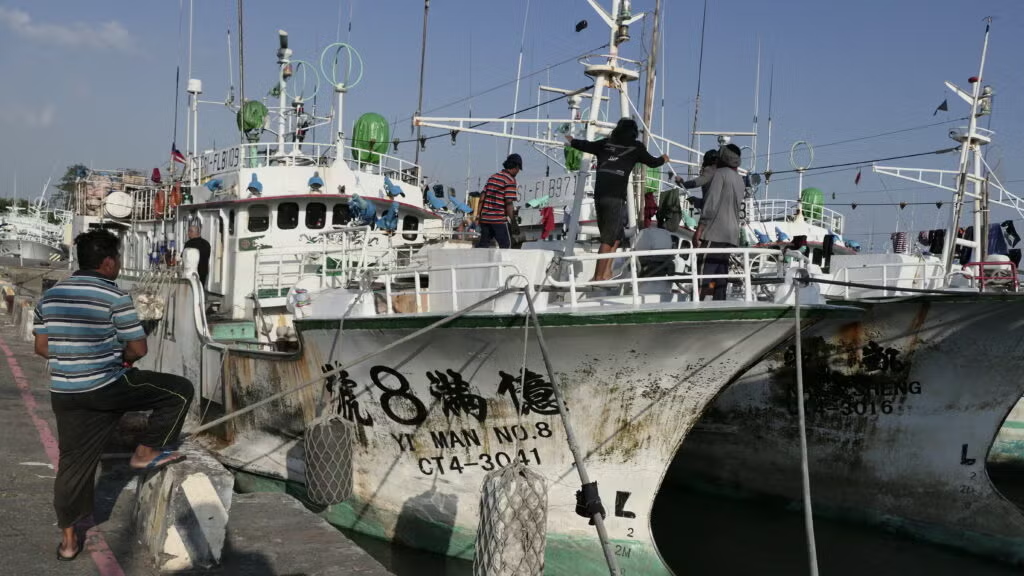
A fishing vessel in Donggang Port, southern Taiwan (photo courtesy: Ralf Ruckus)
“I only reluctantly go out on the sea again,” said Harjo, an Indonesian migrant fisher who has worked for a decade for his Taiwanese captain.[1] I was visiting Harjo on the small boat on which he works and lives, now docked to the wharf of a fishing port in Southern Taiwan. Harjo had just recently come back from a visit with his family back in his Javanese hometown. I asked him whether he looked forward to being back at sea. “When we haven’t been at sea for a while, many of us get seasick.”
This was not the first time Harjo reminded me that not even experienced fishers can resist the debilitating symptoms of seasickness. Moving on the waves and the strong odour of diesel fumes cause nausea, headaches, vomiting, and a loss of appetite. “You cannot do anything against it, your body can only adapt,” he had told me before.
I got to know Harjo during my fieldwork in Taiwanese fishing ports and factory zones that I and my partner carried out between 2022 and 2024 to study the work and lives of mainly male Indonesian migrant workers.[2]
More than thirty years ago, the Taiwanese government introduced its “guest worker” program. Ever since, employers and private brokers have recruited temporary Southeast Asian migrants to work in jobs classified as dirty, dangerous, and demanding, which Taiwanese increasingly avoided doing. Today, about 830,000 Southeast Asian men and women work in private homes and nursing institutions, in factories, on fishing vessels, at construction sites, and in the fields.
The conditions of Southeast Asian migrant workers have drawn criticism from NGOs, journalists, and academic researchers who condemn wage theft, exorbitant brokerage fees, or violations of health and safety standards. Most often, their criticism targets formal conditions: regulations concerning workers’ rights, migrants’ precarious legal status, or unfair recruitment practices.
There is no doubt that these aspects fundamentally shape migrants’ situations. Conspicuously, however, this kind of criticism rarely reflects upon migrant workers’ own accounts of how they experience their labour and lives on an immediate, every day, and sensory level. Pointing out how fishers become seasick again and again, Harjo alluded to such embodied experience.
Based on Harjo’s and other migrants’ concrete experiences of their work and lives, this short article proposes to rethink migrant labour and criticisms of its regulation, both in Taiwan and elsewhere.
Experiencing Migrants’ Work and Lives
Embodied experiences came up time and again in our conversations with Indonesian migrant workers.
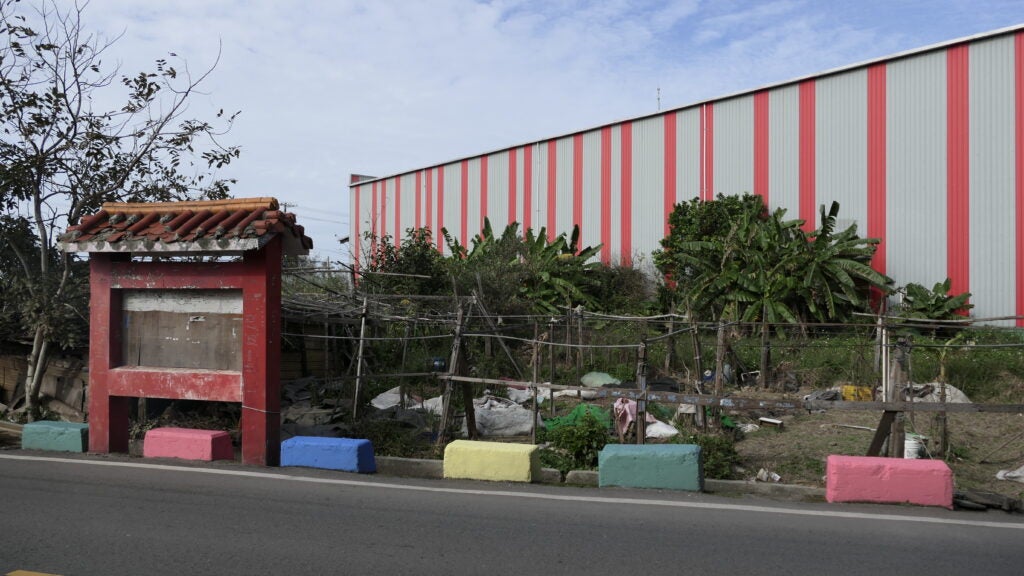 A Factory building in Taoyuan, northern Taiwan (photo courtesy: Ralf Ruckus)
Factory workers talked about the heat in low-tech sweatshops: pouring glowing liquids, grinding, and dragging metals beneath the low roof of a foundry workshop; dealing with burning sparks while sharpening knives at a rubber factory; or preparing fabric amid the steam from a textile dyeing machine. The work is physically demanding. “Everything is manual here,” told us Eko who was working in a metal foundry.
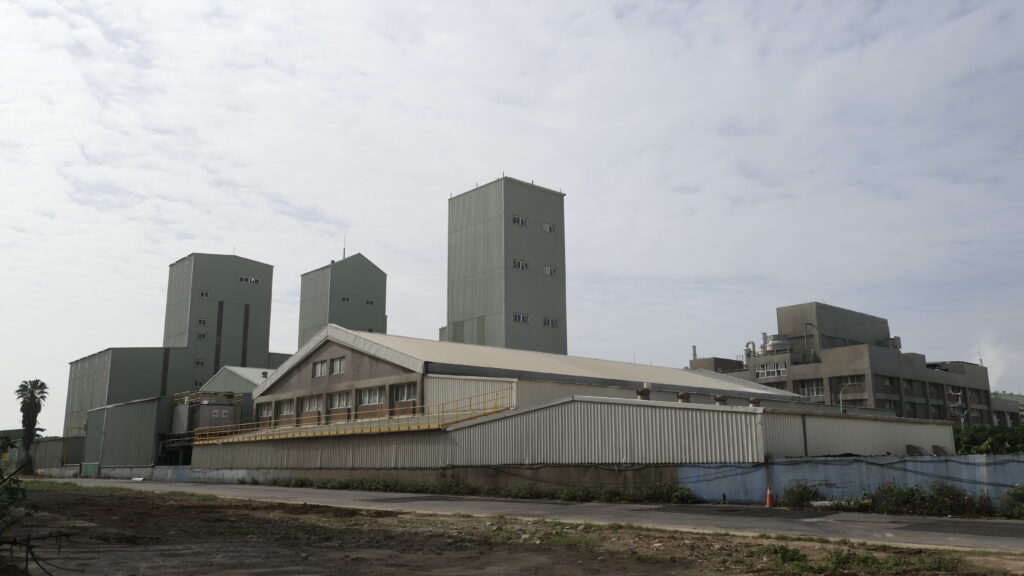
A Factory building in Taoyuan, northern Taiwan (photo courtesy: Ralf Ruckus)
Others employed in high-tech production described how assembly lines determine their work rhythms. Anwar, who works at a scooter factory, realises that the speed of the conveyer belt has increased when his legs become hot, from moving faster. At the end of the conveyer belt, he checks the ignition of the scooters and pushes the vehicles to the quality control department. Echoing other factory workers, Anwar described the boredom of his work during weekdays: “From Monday to Friday, I am on autopilot.”
The migrant fishers’ experiences reflect their work in a risky and uncertain environment. They often mentioned the waves, an intimidating force of the sea. One can only “surrender” to the waves and finally “become friends” with them, they shared. And the waves are unpredictable. “In the morning, the sea can just be calm and then all of a sudden the waves can become very high,” we were told. High waves can wash the fishers overboard. “It often happens that fishers fall into the sea and are not found again. Who gets lost in the sea, won’t be buried.”
Handling gear on the water means the fishers need to stay alert to avoid injury. Rude nagging and insults from captains and ship mates can disrupt the fishers’ focus, as do arguments with co-workers. The rough environment, penetrating noises from engines and fatigue make the fishers easily irritable and prone to use “harsh words.”
Some of our interlocutors work on large squid and saury fishing vessels that leave Taiwanese ports for the South Atlantic and North Pacific. Once they arrive at the fishing ground, they sort, pack, and store masses of fish at rapid pace. Work shifts can extend up to 20 hours if a lot of fish is found. “You need to be able to keep your eyes open,” they told us. Not only do they need to stay awake to manage the workload but also to stay alert as they could easily injure themselves on the slippery floor and in the freezing temperatures of the storage room.
All our interlocutors talked about the narrowness of their living arrangements, whether in their factory dormitories, or the ship cabins. “The only private space we have here is the toilet,” Anwar described their situation in the workers’ dormitories. On fishing vessels, sleeping spaces may be barely as large as a worker’s body and, on smaller boats, divided only by a blanket.
An Essential Critique of the Work of Migrants and their Exploitation
Our interlocutors’ accounts of heat and cold, unpleasant sounds and odours, monotony, swaying grounds, fatigue, anxiety, and narrowness highlight that it is lived bodies “from which we perceive, act, and labour in the world.” Despite this, labour power is often treated as an abstract category. Scholars of embodied labour, by contrast, make the “fleshy”, sensory dimensions of work productive as an analytical heuristic to capture concrete labour processes and the embodied capacities such processes demand.
In a similar vein, my work on this research, some published and some forthcoming, implies that migrant workers’ concrete and embodied experiences are not mere illustrations of formal conditions. I propose that their experiences lead to an essential critique of the work of migrants and their exploitation. This critique accounts for migrant workers’ struggles and agency.
Making migrant workers’ embodied experiences a starting point of inquiry implies, in my view, rethinking labour migration regimes in a threefold sense.
First, these everyday experiences allude to ordinary forms of the expropriation of migrants’ labour and their alienation, in other words, to the “everyday violence” and “brutality” of manual, dangerous, dirty, and monotonous work.
In Taiwan, immigration rules, quota regulations, and employment restrictions to certain sectors perpetuate Southeast Asians’ employment in jobs where such work is prevalent. Even if they work in Taiwan for years, these migrant workers can neither move up to jobs with better conditions nor do their residence permits allow them to easily change employers.
Focusing on ordinary but essential forms of work and exploitation contrasts scandalising portrayals of migrant labour as modern slavery, forced labour, and human trafficking. Reports on physical violence, threat, and debt bondage draw attention to the situation of migrant workers in Taiwan and elsewhere, condemning serious forms of violence and coercion.
Migration and labour scholars criticise the sensationalising and victimising impetus of discourses on modern slavery, forced labour, and human trafficking. Even if unintended, these discourses can have the effect of normalising the ordinary exploitation captured in our interlocutors’ narratives, which, after all, all migrants experience under Taiwan’s labour migration regime.
Second, taking into account migrant workers’ immediate experience of their work and lives allows for deeper understanding of their multiple forms of coping inside and outside their workplaces.
To protect their physical integrity, migrant fishers sabotage dangerous work tasks, for instance, the cleaning of a ship propeller underwater without proper protection gear. Migrant fishers and factory workers lay down their tools in protest and claim improvements. Some workers exit work situations that are unbearable, despite strict restrictions on migrants’ job mobility.
Male workers leave the cramped dormitories and rent their own rooms, some of which they share during the weekends with their female partners who work as domestic workers in private households. Indonesian migrant workers create their own spaces such as home associations in the factory zones and ports, religious organisations, associations in which they pursue their hobbies, and workers’ unions.
They engage in subcultures, for instance in a thriving punk and metal music scene and describe the loud sounds, rhythms, and wild dancing in the mosh pit as a mode to deal with the pressures, fatigue, and monotony at work, or worries about their families in Indonesia. Music gigs and encounters with others make them feel as “humans,” in contrast to their “robotic” work routines.
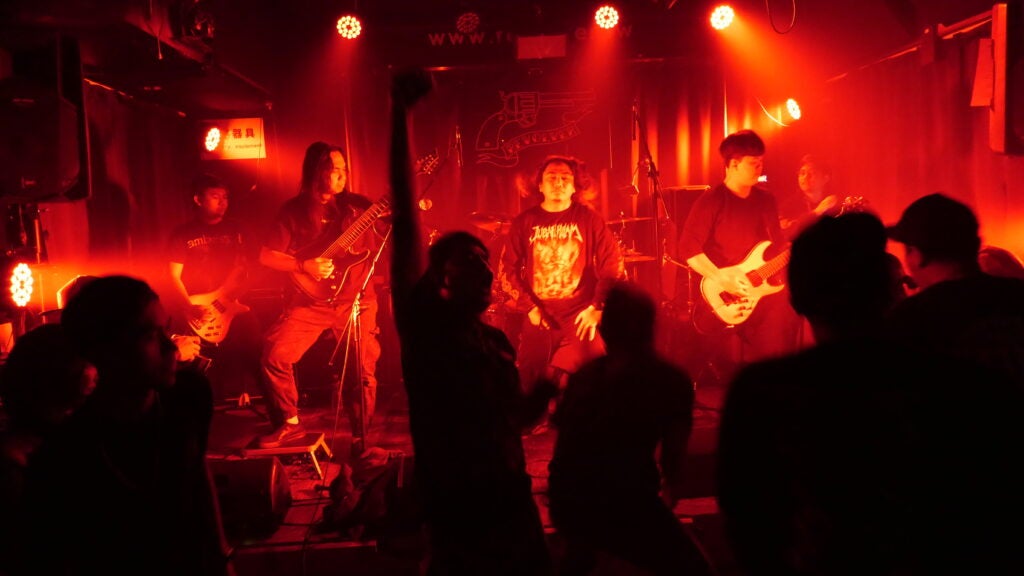 Concert of the metal band Jubah Hitam, formed by Indonesian migrant workers, in Taipei (photo courtesy: Ralf Ruckus)
In an article published in ARIscope, Loïs Bastide describes similar practices of Indonesian domestic workers in Singapore and Malaysia as migrant politics. Understanding such politics in relation to migrants workers’ embodied experiences of their conditions allows for capturing their striving to regain control over time, space, dignity, and meaningfulness. Looking at the everyday conflicts that result from such striving opens up perspectives that a focus on contestations over formal conditions alone can only do limited justice to.
Third, foregrounding embodied experiences and everyday conflicts gives a new direction to discussions around migrants’ agency and workers’ power which go beyond formal union organising.
A closer look at migrant workers’ experiences and strategies of coping shows that they develop particular forms of behaviour at distinct workplaces and environments: on smaller vessels in Taiwan’s coastal and offshore fisheries, on large distant-water squid and saury fishing vessels, in low-tech sweatshops, craft businesses, or high-tech factories.
Under these varying conditions, migrant workers mobilise distinct sources of power to pressure for change of their conditions. They, for instance, leverage labour shortages or their employers’ dependence on their embodied skills. Meanwhile, workers’ concentration in ports and factory zones or labour processes that require large workforces and crews allow migrants to develop a collective force. In their self-organising practices, migrant workers of different origins in Indonesia have also been able to create bonds and links in Taiwan.
Migrant workers’ capacities to make use of such sources of power are constrained by migrants’ precarious right to stay, employers’ retaliation, excessive broker fees, and workers’ fragmentation along different nationalities. Considering that in some cases migrant workers are able to mobilise their sources of power despite these constrains, allows for a grounded account of the active role migrant workers themselves play in shaping the conditions of labour migration.
Sweat and Scorn Bear Witness
To conclude, engaging with embodied experience as a starting point of inquiry means to begin with acknowledging how migrant workers themselves reflect on how they experience their conditions. As the punk band Southern Riot, formed by Indonesian migrant workers in Taiwan, pointed out in a song: “Sweat and scorn bear witness.”
[1] All names of Indonesian migrant workers cited in this article are pseudonyms.
[2] This research was made possible by a postdoctoral fellowship at the Institute of Ethnology, Academia Sinica, and a postdoctoral fellowship at the Department of Sociology, National Taiwan University. The latter was sponsored by the National Science and Technology Council, Taiwan.
The views expressed in this forum are those of the individual authors and do not represent the views of the Asia Research Institute, National University of Singapore, or the institutions to which the authors are attached.

Eva Samia Dinkelaker
Postdoctoral Fellow
Asia Research Institute
Dr Eva Samia Dinkelaker commenced her appointment as a Postdoctoral Fellow with the Asian Migration Cluster with effect from 1 July 2024.
She has a PhD in Cultural Studies and Social Science from the University of Osnabrück. Her research interest lies in the lived experiences and agency of Indonesian migrant workers in various destinations. During her doctoral studies, she investigated the migration of Indonesian female domestic workers to Hong Kong. At ARI, she will continue with her research on the conditions, everyday practices, and self-organisation of Indonesian, mainly male, migrants in Taiwan’s manufacturing and fishing industries. This includes a comparison between Taiwan’s contemporary migration regime and the post-WWII “guest worker” migration to West Germany.
https://doi.org/10.25542/a6m9-xd50
‘Stres’ and self-protection: Migrant workers facing everyday violence in Taiwan’s fisheries
Dinkelaker, S. (2025). ‘Stres’ and self-protection: Migrant workers facing everyday violence in Taiwan’s fisheries. International Sociology, 0(0). https://doi.org/10.1177/02685809251359270