Events
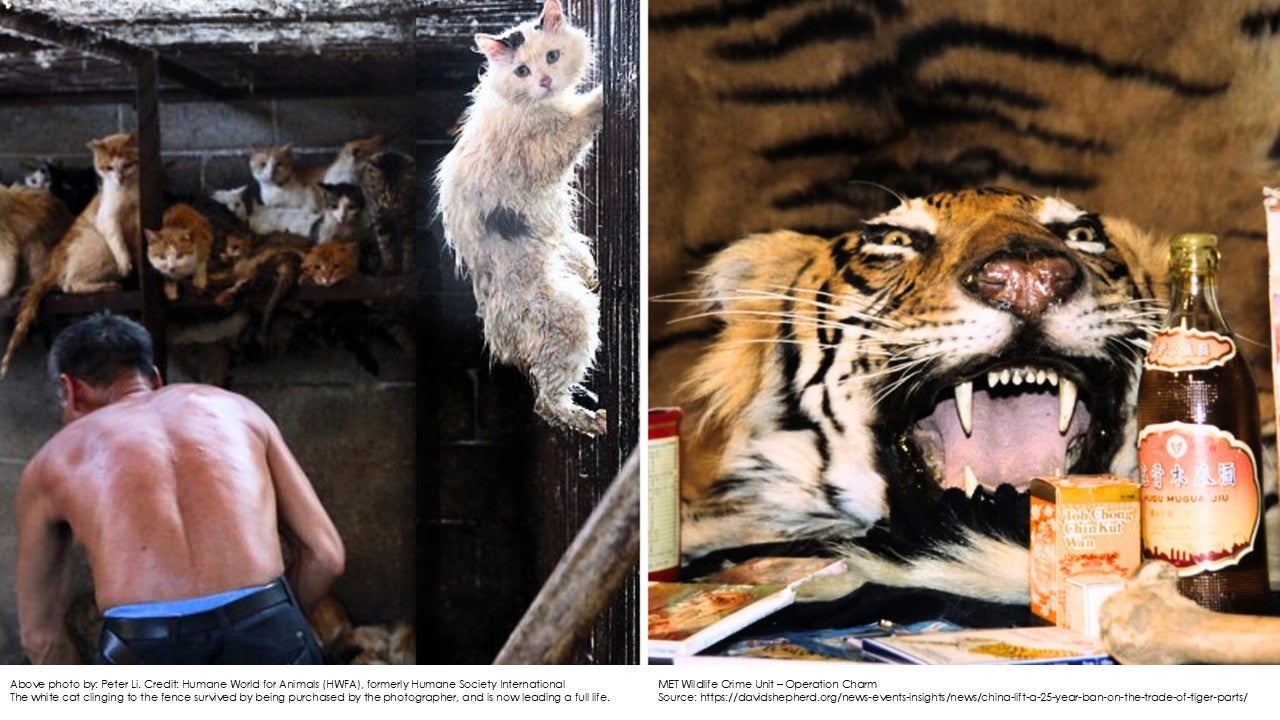
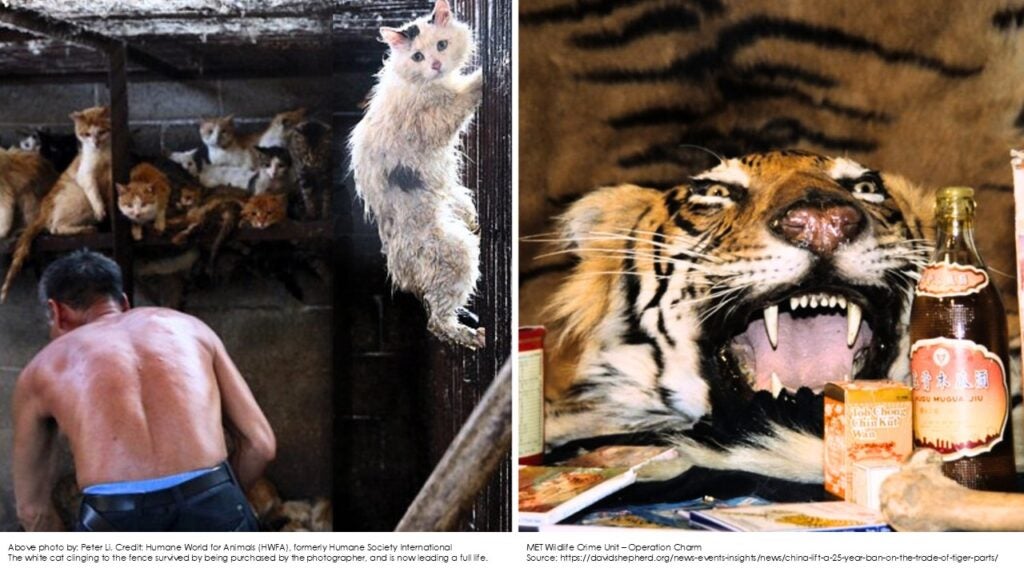
‘Medicinal Animals’ in Crisis: A Three-Part Symposium
| Date | : | 09 Oct 2025 |
| Time | : | 14:00 – 17:00 (SGT) |
| Venue | : | Hybrid (Online via Zoom & AS8 04-04) |
| Contact Person | : | LIM, Zi Qi |
CHAIRPERSON
Assoc Prof Gregory Clancey, Asia Research Institute, and Department of History, National University of Singapore
PROGRAMME
| 14:00 | WELCOME REMARKS Assoc Prof Gregory Clancey | National University of Singapore |
| 14:05 | PRESENTATION 1 Critiquing the Traditionality of Animal Use in Chinese Medicine Assoc Prof Gregory Clancey | National University of Singapore Asst Prof Liz P.Y. Chee | Hong Kong University of Science and Technology (Co-author) |
| 14:50 | PRESENTATION 2 Reducing the Use of Animal-Based Medicine: East Asian Medicine Doctors in Australia and South Korea Dr James Flowers | Kyung Hee University |
| 15:35 | BREAK |
| 16:00 |
ROUNDTABLE DISCUSSION Prof Rethy Chhem | Cambodia University of Technology and Science |
| 16:30 | QUESTIONS & ANSWERS |
| 17:00 | END |
ABSTRACT
This three-hour symposium is the capstone event for the three-year project at the Asia Research Institute on the history and sustainability of animal-based drugs in Asian Traditional Medicines. It will include two 45-minute presentations followed by a roundtable discussion. Refreshments will be provided.
Critiquing the Traditionality of Animal Use in Chinese Medicine
Gregory Clancey, National University of Singapore
Liz P.Y. Chee, Hong Kong University of Science and Technology (Co-author)
The use of animals for drugs in Asian traditional medicines is a contentious topic, bringing these regimes into conflict with animal welfare ethics, conservation, and (in the case of the wildlife trade) international law. What is invariably black-boxed in these discussions, however, is ’tradition and culture’. Even the strongest critics of such practices often accept their continuity from pre-modern times, their wide acceptance, and the depth of their cultural relevance. We will present the findings of a three-year project which critiques these assumptions, based in part on the evidence of a ‘faunal medical database’ we have compiled with over 14,000 entries. We document an increase in the use and availability of many animal-based drugs due to very modern drivers, and with many animal-based materials having only tenuous connections to classical or pre-modern medical texts and usage patterns.
Reducing the Use of Animal-Based Medicine: East Asian Medicine Doctors in Australia and South Korea
James Flowers, Kyung Hee University
Liz Chee’s important work challenges the rampant and unnecessary harvesting of animal parts in Chinese medicine. Her study shows that animal usage in Asian medicine has reached excessive levels especially in the People’s Republic of China. In response, this paper discusses the perspective of East Asian medicine doctors and how we think about the use of animals in healthcare. As a Chinese medicine doctor and historian of East Asian Medicine, in this paper, I focus on two places at either end of the Asia Pacific region, Australia at its southern end and the Republic of Korea at the northern end. These examples show the possibilities of reducing animal usage in East Asian medicines. Reducing the use of animals in Asian medicine requires more intellectual work as seen in this NUS-led project on faunal medicalization.
ABOUT THE SPEAKERS
Gregory Clancey is Associate Professor in the Department of History and the Asia Research Institute (ARI), both at the National University of Singapore (NUS). Clancey was the founding Leader of ARI’s Science, Technology and Society Research Cluster and founding Master of NUS’ Tembusu College. Clancey is the recipient of the Edelstein Prize from the Society for the History of Technology (for his book Earthquake Nation: The Cultural Politics of Japanese Seismicity) and the Morison Prize in Science, Technology, and Society from MIT. He is currently the principal investigator of the project “The History and Sustainability of Animal Drugs in Asian Traditional Medicines”, and co-editor (with Liz Chee) of a forthcoming special issue on that theme in the journal Asian Medicine.
James Flowers is a Chinese medicine practitioner and historian of medicine. He is Brain Pool Program Research Fellow at the Climate-Body Institute, Kyung Hee University, and serves as Vice-President of the International Association for the Study of Traditional Asian Medicine. He is also Director of the International Society of Oriental Medicine, East Asia Editor of Asian Medicine, and Academic Consultant of the Taiwan Clinical Chinese Medicine Association. He holds a PhD in the History of Medicine from the School of Medicine at Johns Hopkins University. His current book project, under contract with University of Pittsburgh Press, tentatively titled Hanbang Healing: The Korean Way of Medicine, explores Eastern medicine in Korea. This book will be the first in the English language to examine the range of traditional Eastern-medicine healers in Japan-ruled Korea 1910-1945.
Rethy Chhem holds an MD (Paris), a PhD in Education (Montreal) and a PhD in History (Montreal), and is currently Distinguished Professorship in AI and the Humanities at the Cambodia University of Technology and Science. He is concurrently Senior Minister in the Kingdom of Cambodia, and Chairman of its Economic, Social and Cultural Council. He has published more than 200 scientific articles, co-authored 25 textbooks and has been invited as a keynote speaker in more than 70 countries. He was formerly Professor of Radiology in Canada (McGill University), Singapore (National University of Singapore), Austria (Vienna Medical University), before becoming Director of the Division of Human Health at the International Atomic Energy Agency in Vienna, where he oversaw coordination between that agency and Japanese health workers in the aftermath of the Fukushima nuclear disaster. He was also the founder of the Society for the History of Medicine in Southeast Asia.
Michael Stanley-Baker is Associate Professor in the School of Humanities of the Nanyang Technological University. He is an award-winning historian of Chinese Medicine and Religion, with a focus in the early Imperial period, and in the modern Sinophone diaspora. He received his PhD from the Wellcome Trust Centre for the History of Medicine at University College London, an MA in East Asian Languages and Cultures from Indiana University, Bloomington, and also has a clinical degree in Chinese medicine. He serves as President of the International Association for the Study of Asian Medicine, and the co-chair of the Healing Arts at the MIT Centre for Comparative Global Humanities. He has held research positions at the Max Planck Institute for the History of Science, Berlin; Academia Sinica, Taipei; the Needham Research Institute, Cambridge; the Forschungs Kolleg for Multiple Secularities at Leipzig University and the Asian Studies Centre at the University of Pittsburgh.
REGISTRATION
Registration is closed, and instructions on how to participate in this hybrid talk has been sent out to registered attendees. Please write to ziqi@nus.edu.sg if you would like to attend the event.