Events
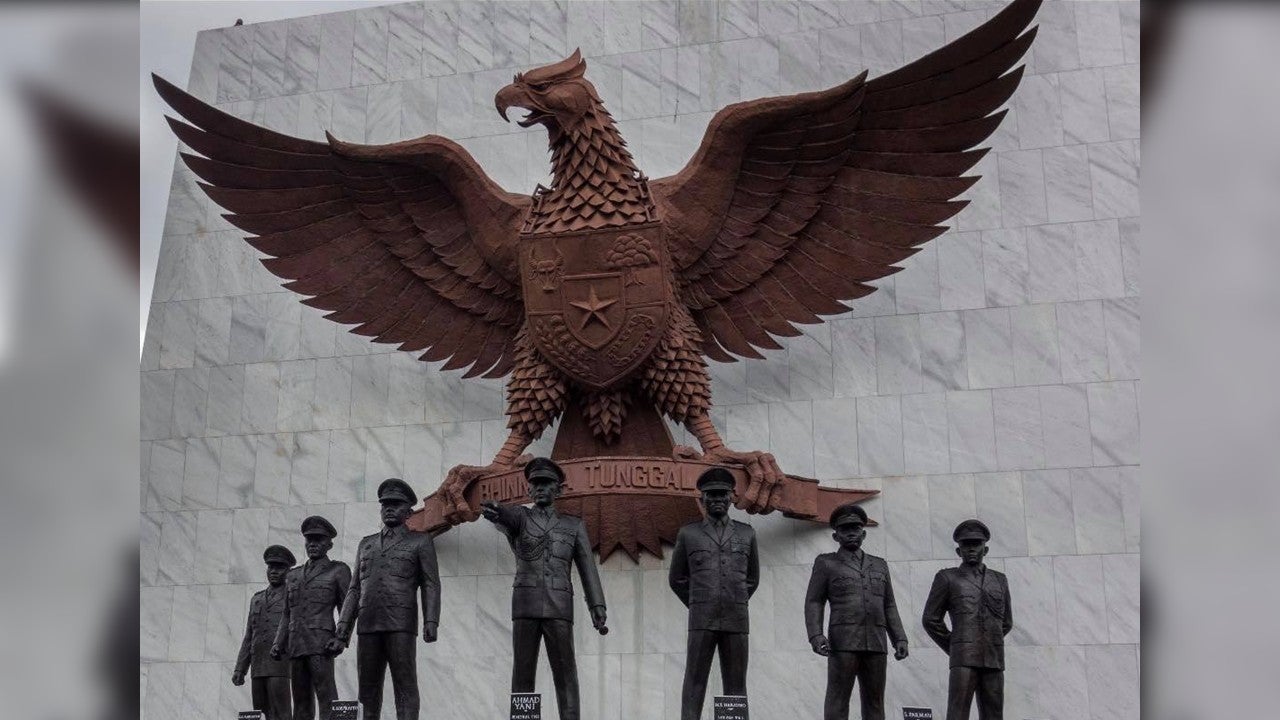
Urban Icons and Decolonial Memory: Rethinking Statues and Monuments in Asia
| Date | : | 03 Nov 2025 |
| Time | : | 16:00 – 17:30 |
| Venue | : | AS8, Level 4, Seminar Room 04-04 |
| Contact Person | : | LIM, Zi Qi |
CHAIRPERSON
Prof Tim Bunnell, Asia Research Institute, and Department of Geography, National University of Singapore
PROGRAMME
| 16:00 | WELCOME REMARKS Prof Tim Bunnell | National University of Singapore |
| 16:05 |
PRESENTATIONS |
| 17:05 | QUESTIONS & ANSWERS |
| 17:30 | END |
ABSTRACT
This interdisciplinary roundtable critically examines the roles of statues and monuments as gendered and contested sites of memory, power, and identity in Asia’s urban landscapes. Moving beyond interpretations of these icons as static remnants of the past, the discussion explores how they are continuously reinterpreted, through rituals, contestation, artistic subversion, and silences, as dynamic terrains of meaning-making.
Guided by decolonial perspectives, the event challenges dominant Euro-American memory frameworks by foregrounding alternative epistemologies and regionally grounded engagements with monuments. What do statues signify in postcolonial Asian cities? How do individuals and communities negotiate their presence, absence, or transformation beyond official state narratives? Can Asian case studies reframe global debates on iconoclasm, heritage, and public space?
Bringing together scholars at the intersection of urban studies, heritage, memory politics and gender studies, the roundtable fosters comparative discussion across diverse contexts in Asia. It highlights emerging research that considers monuments not merely as symbolic relics, but as living archives of resistance, erasure, visibility and afterlives of the past.
ABOUT THE SPEAKERS
Myra Mentari Abubakar is an NUS fellow at the Asian Urbanisms Cluster of Asia Research Institute, National University of Singapore and Research Affiliate at the International Centre for Aceh and Indian Ocean Studies (ICAIOS). She holds a PhD from the Australian National University, where she researched female heroism and the politics of commemoration in Indonesia. Her broader work spans archives, manuscripts, and visual-textual sites, focusing on the hero phenomenon, spatial politics, and memory. Prior to joining ARI, she was Evans Fellow at the University of Cambridge and visiting fellow at KITLV Leiden and the Leibniz Institute for Educational Media. She was recently awarded fellowships by the Netherlands Institute in Turkey and the Hamad Bin Khalifa Symposium on Islamic Art in Qatar. She is the recipient of the Asian Studies Association of Australia (ASAA) Event Grant to convene Urban Icons and Decolonial Memory: Rethinking Statues and Monuments in Asia (Gender and Urban Landscapes in Southeast Asia). Her research focuses on gender, memory, and cultural history in Southeast Asia focusing on the politics of commemoration and hero phenomenon in Indonesia.
Hamzah Bin Muzaini is Associate Professor at the Department of Southeast Asian Studies, National University of Singapore. He is a cultural and historical geographer with a strong interest in social and spatial theory, particularly as it relates to heritage, memory, and remembrance. His primary research area focuses on how heritage associated with the Second World War is currently (and historically) commemorated in Singapore and Malaysia. His research is conceptualised around postcolonial theory, materiality, cyber-memorialisation, transnational deaths, the immanent past, and practices of power and resistance in everyday spaces. His latest project examines the history and heritage of the Southern Islands in Singapore, specifically aiming to recover the lost narratives of St John’s Island (Pulau Sekijang Bendera), Lazarus Island (Pulau Sekijang Pelepah), Seringat Island, and the various islands that constitute present-day Jurong Island.
Maurizio Peleggi is Professor at the Department of History, National University of Singapore. Born in Rome, he studied classics before completing a degree in Chinese History at La Sapienza University, followed by an MA (Asian Studies, 1994) and PhD (1998) at the Australian National University. He has been teaching in this department pioneering courses on cultural history, the history of art, heritage and memory. His publications include Monastery, Monument, Museum: Sites and Artifacts of Thai Cultural Memory (2017), Thailand the Worldly Kingdom (2007), The Politics of Ruins and the Business of Nostalgia (Bangkok: White Lotus, 2002) and Lords of Things: The Fashioning of the Siamese Monarchy’s Modern Image (Honolulu: University of Hawaii Press, 2002), and as sole editor, A Sarong fro Clio: Essays in the Intellectual and Cultural History of Thailand (2015). His next book, Devotional Conservation, is forthcoming.
REGISTRATION
Registration is closed. However, we welcome walk-ins to join us if there are available seats.