Events
Museums Without Objects: The Making of Revolutionary Museums in Nepal | Stefanie Lotter
| Date | : | 28 Jul 2026 |
| Time | : | 16:00 – 17:30 (SGT) |
| Venue | : | Online via Zoom |
| Contact Person | : | LIM, Zi Qi |
CHAIRPERSON
Dr Zezhou Yang, Asia Research Institute, National University of Singapore
ABSTRACT
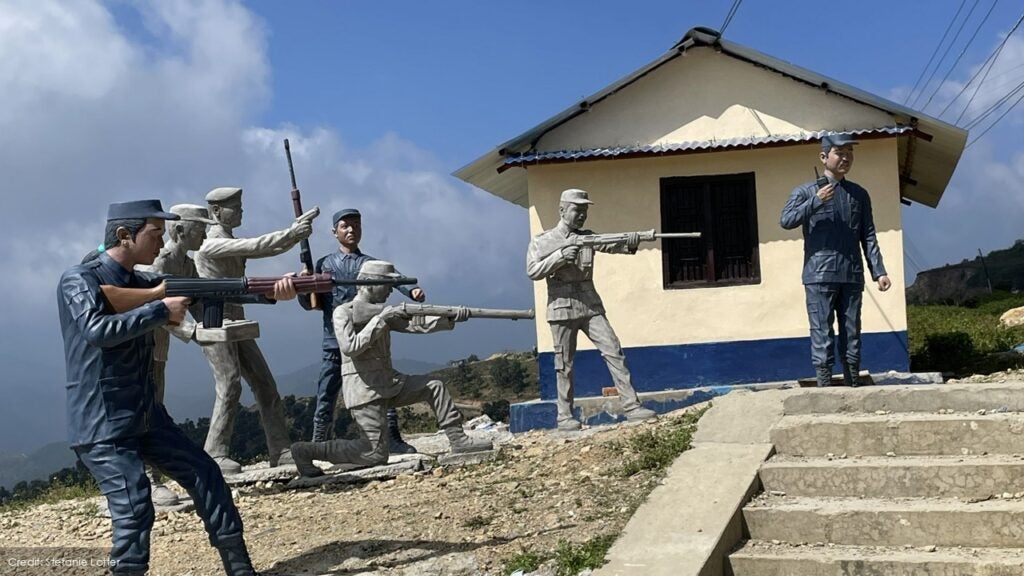
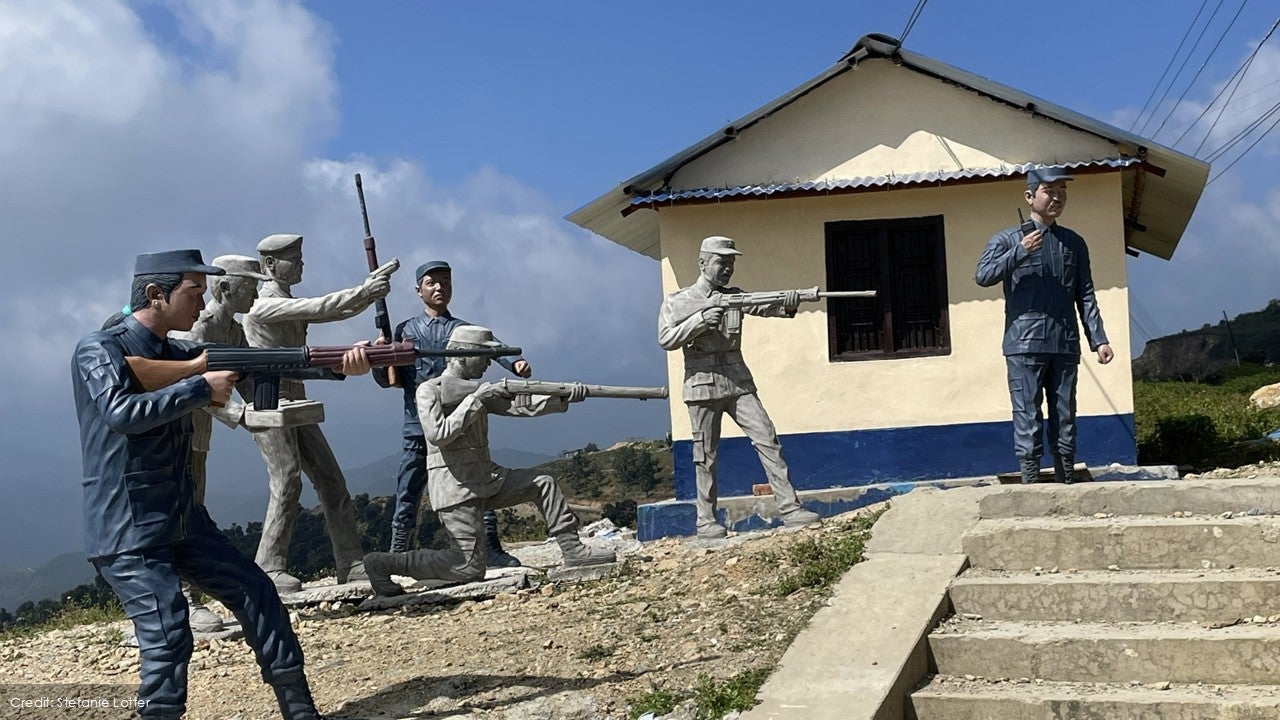
Nepal’s People’s War, a Maoist revolution from 1996 to 2006, led to the abolition of Nepal’s monarchy, the creation of a new constitution, and the establishment of federalism. However, it also resulted in a significant death toll of 17,000 people, mainly in rural mid-western Nepal, where the movement originated. While memories of the civil war are still within living memory, the central government launched an initiative in 2019 to preserve heritage sites related to the civil war, involving local authorities in developing sites of recent historical importance. This led to a surge in the mid-west of Nepal in the construction of museums, peace parks, open-air museums, dioramas, murals, gates, view towers and martyrs’ memorials, several of which are now already part of the local school curriculum. This talk draws on fieldwork conducted in rural Rukum and Rolpa (between 2022 and 2025), where ‘curating the dead’ (Were 2025) and building museums where ‘war does not belong’ (Muchitsch 2013) are negotiated in local communities. The talk questions: who should decide how and where war is commemorated as heritage, and why does time matter?
ABOUT THE SPEAKER
Stefanie Lotter is a museum and heritage expert as well as an anthropologist specialising in the Himalayas. Currently, she serves as a research associate at School of Oriental and African Studies, University of London, where she has been involved in various research projects since 2017. Her most recent project, ‘Heritage as Placemaking’ (https://heritageasplacemaking.com), investigates the development of ‘Revolutionary Museums in Nepal’.
REGISTRATION
Registration is closed, and instructions on how to participate in this online talk has been sent out to registered attendees. Please write to ziqi@nus.edu.sg if you would like to attend the event.