CHAIRPERSON
Dr Stefan Huebner, Asia Research Institute, National University of Singapore
ABSTRACT
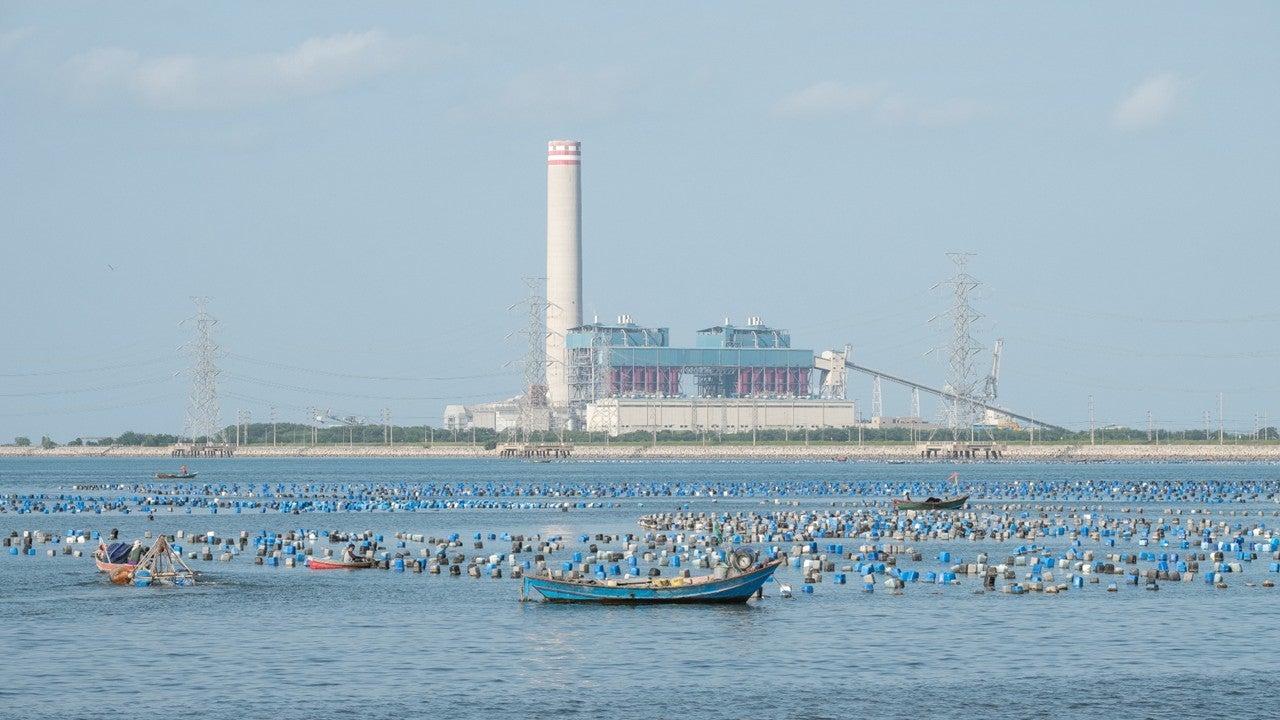
Located in Southeast India, the Coromandel coastline is one of the world’s longest contiguous coasts. While the British colonizers considered the Indian coastline and particularly fishers as unproductive in opposition to India’s vast agrarian lands, much of this would change in postcolonial India. Thermal power plants, ports, petrochemical industries, fertilizer factories and cement manufacturing plants all began to spring up along the long coastline. This project and paper suggests that South Asia’s Green Revolution was underpinned by a Blue Revolution along its lengthy coastline.
First, a history of the postcolonial coast produces a history of ‘downstream’ fossil fuel. That is, India was not an oil producing region, and South India did not have large coal deposits. Instead, we see how an energy infrastructure emerged through circulation rather than extraction, alongside a petrochemical industry designed to produce cheap consumer goods. Second, the postcolonial moment produced regional social justice focused governments, which had to grapple with the effects of thermal infrastructure and petrochemical plants on coastal areas, namely environmental pollution. Finally, the paper problematizes the new ‘industrial-scientific-government-social’ encounter. As science was oriented towards new emergent industries such as energy, petrochemicals, cement etc., its effects on the social landscape were continuously investigated. In the archives of science, we find the unknown space of materials that would shape the world around them.
ABOUT THE SPEAKER
Aditya Ramesh is currently Assistant professor in History and Sustainability at Nayanta University, Pune. He was previously Assistant Professor of Modern South Asian and Environmental History at the University of Washington, Seattle, as well as Presidential Fellow in Environmental History and Assistant Professor at the University of Manchester, UK. He have also held postdoctoral positions at the Center for the History of Science, Technology and Medicine, University of Manchester and the Indian Institute for Human Settlements, Bengaluru. Presently, he is finishing a manuscript titled Landscape to Hydroscape: Dam, Delta, and the Making of Modernity in South India. The book is a history of India’s first multipurpose reservoirs on the Kaveri River and economic and ecological life in its delta. He have published several articles in Capitalism: A Journal of History and Economics, Urban History, Journal of Urban History, History Compass, Water History, and Historical Journal. His future research is centered around the industrial history of postcolonial India’s coastline and its relationship with fishers and capital flows in the Indian Ocean across South Asia, Southeast Asia, and the Gulf states.