ABSTRACT
The word peranakan, derived from the Malayic root word anak (‘child’), means ‘locally born’, a designation that implicitly acknowledges ancestral heritage from elsewhere. A very similar meaning inheres in creole and its Romance-language cognates, that derive from Latin creare (‘to bring forth’, ‘to produce,’ ‘to create’). Applied to demographic developments in Plantation economies of Atlantic and Indian Ocean islands, ‘creole’ also came to designate the contact languages concomitantly developing from the violent diasporas and unequal encounters caused by colonialism and slavery. I build on this semantic mirroring between peranakan and creole to reopen reified assumptions about creolisation as a process, history, and theory of transcultural encounter. Peranakan as a heuristic category challenges scepticism about creolisation’s applicability and utility for cultural histories of the Indian Ocean littoral. It also helps us ask: what does creolisation look like when our starting point is the Indian Ocean world? The vantage points I direct attention to are the myriad coastal enclaves fortified, destroyed, and re-fortified by competing European powers, and port cities that were subsequently established during the British Empire. Using tools from archipelagic thought to connect these sites, I draw on evidence from philological and sociolinguistic debates about contact languages, as well as the material dimensions of their associated cultures: foodways, music and dance, and, crucially, built heritage as creolisation’s most visible spatial imprint and, therefore, most marketable resource.
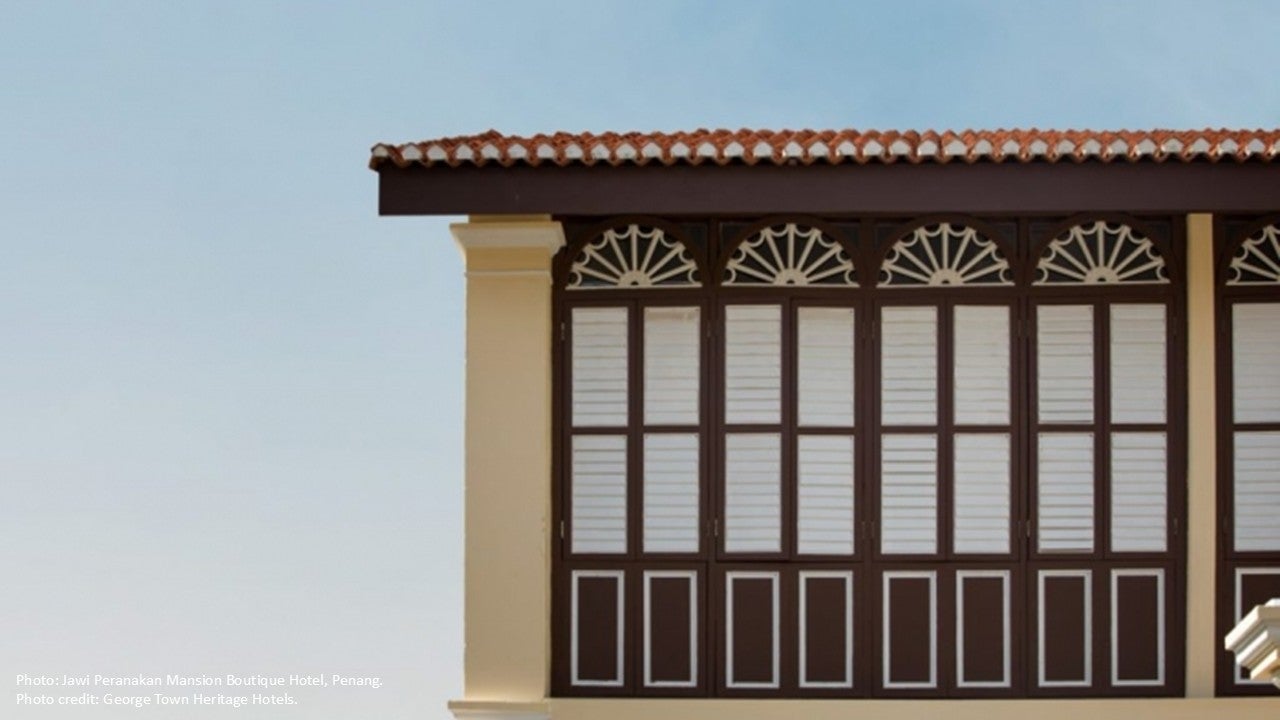
As an Asia Research Institute Visiting Scholar, I will explore these dimensions of Peranakan heritage and its revitalisation in Southeast Asia as indices for tracking, and assessing, creolisation across what I call the ‘archipelagic Indian Ocean.’ This talk, delivered at the start of my visit, will present the larger research question motivating this exploration, and lay out the hypotheses and methods I hope to be able to refine through it.
ABOUT THE SPEAKER
Ananya Jahanara Kabir is Professor of English Literature at King’s College London, and Fellow of the British Academy. Her publications include Territory of Desire: Representing the Valley of Kashmir (2009), Partition’s Post-Amnesias: 1947, 1971, and Modern South Asia (2013), and Alegropolitics: Creolizing Connection on the Afromodern Dance Floor (Duke University Press, 2027). She is the recipient of India’s Infosys Prize for the Humanities and Germany’s Humboldt Research Prize. Her current research is on creolisation and archipelagicity across the Indian and Atlantic Ocean worlds, within which frame she investigates Southeast Asia. Ananya researches all forms of creative expression: literary texts, music, dance, film, visual arts, built heritage and infrastructure, and foodways. Her research involves working with creatives and entrepreneurs in museums, galleries and heritage sectors, and she has extensive curatorial and programming experience: most recently, as advisory curator to Wereldmuseum Leiden’s forthcoming exhibition, Wax Prints Worldwide: From Batik to Vlisco. Like most Asians, she is multilingual: growing up with English, Bangla, and Hindi, she studied old Germanic languages for her PhD, added German, French, Spanish, Portuguese, Dutch, and various Creoles along the way, and is now learning Japanese and Bahasa Indonesia.