Events
New Histories of Capitalism in Southeast Asia
| Date | : | 07 Jul 2025 - 08 Jul 2025 |
| Time | : | 09:00 - 10:15 |
| Venue | : | AS8, Level 4, Seminar Room 04-04 |
This workshop is organised by the Department of History, with support from the Journal of Southeast Asian Studies, and the Asia Research Institute at the National University of Singapore.
Global capitalism has been in crisis mode since 2007-2008 but one may not notice it living in and reading scholarship on Southeast Asia. In contrast to North America and Europe, and to some extent East and South Asia, relatively few historical works have emerged in recent years to trace, reflect on and chart the trajectory of capitalism in our region. In fact, staying neutral on geopolitical divides, and populated with relatively young societies, Southeast Asia has been touted by pundits as the new growth region, and the future hope of the tired world economy. All the more, then, the call is on Southeast Asianists to grasp the logic, dynamic and history of global capitalism in Southeast Asia and from a regional perspective.
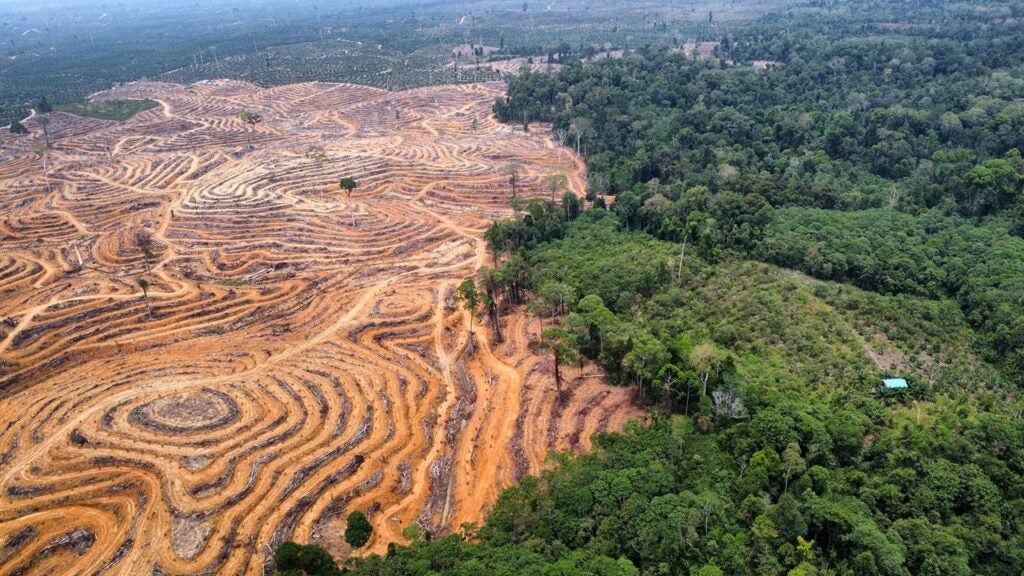
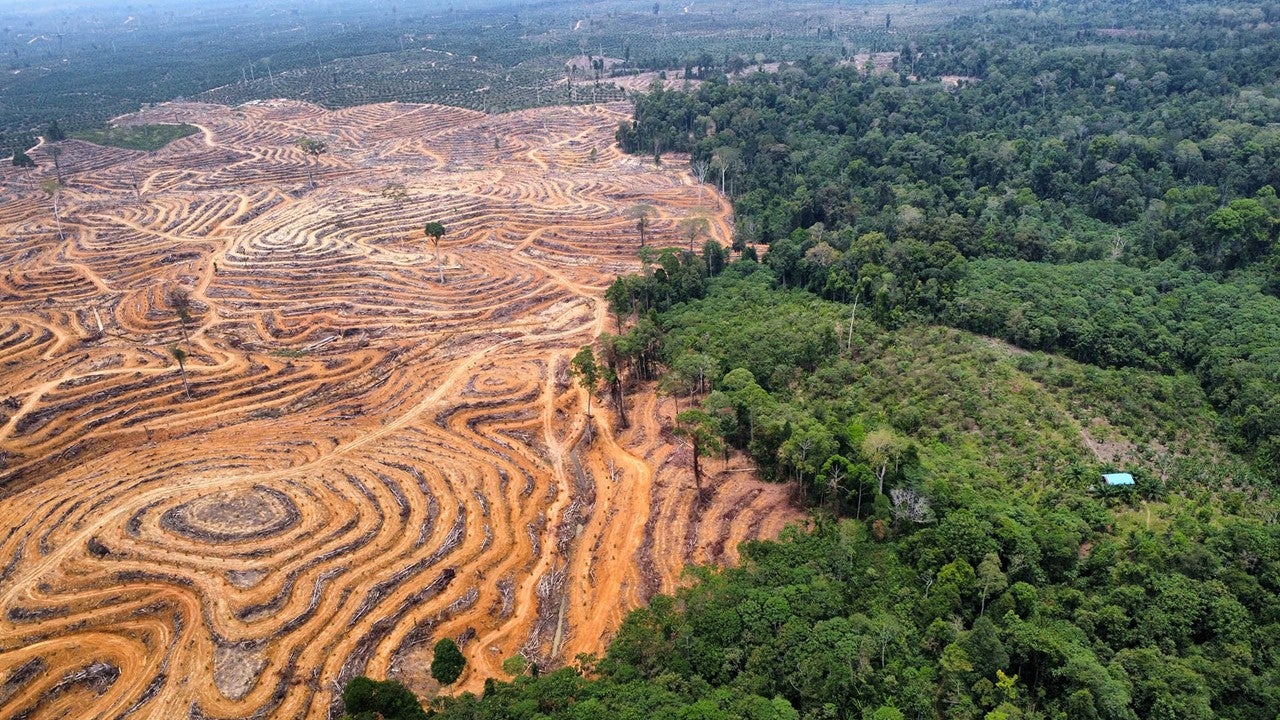
This workshop is convened to bring to conclusion a series of dialogues among historians on the historiography of global capitalism from a regional standpoint. We will look into the continuities and discontinuities of economic institutions, ideologies and governance in twentieth-century Indonesia, Thailand and the Philippines within the context of modernization and decolonization debates during and after the Cold War. The workshop also considers the questions of race, gender and labor in relation to the emergence of creole and indigenous business sectors in Singapore, Malaysia, Indonesia, Thailand and Vietnam. We also examine the ecological impact of capitalistic development during the long twentieth century, paying particular attention to the conversion of forest landscapes to plantations and to the infusion of capital into brackish marine ecosystems.
PARTICIPATION
Please note that participation in this closed-door workshop is by invitation only. However, the keynote lectures on both days will be open to the public.
For further enquiries about attending the workshop, please email to Mr Wang Leizhi at wanglezhi@u.nus.edu
KEYNOTE LECTURES
Sugar: From Luxury to Bulk | Ulbe Bosma
7 July 2025 (Mon) | 09:00 – 10:15
Based upon his publication, The World of Sugar: How the Sweet Stuff Transformed Our Politics, Health, and Environment over 2,000 Years (Harvard University Press, 2023), Ulbe Bosma will discuss the earliest evidence of sugar production and explain how traders brought small quantities of precious white crystals to rajahs, emperors, and caliphs during the Middle Ages. Later, when European consumers discovered the sweet stuff, increasing demand spawned a brutal quest for supply, based on enslaved labor. Two-thirds of the 12.5 million Africans taken across the Atlantic were destined for sugar plantations. By the twentieth century, sugar had become a major source of calories in diets across Europe and North America. Sugar has been at the heart of capitalism, and this goes a long way in explaining why it poses such a threat to our bodies, our environment, and our communities.
Ulbe Bosma is Senior Researcher at the International Institute of Social History and Professor of International Comparative Social History at the Vrije Universiteit Amsterdam. He has published over eighty articles as well as twenty monographs and edited volumes on colonial and postcolonial history, commodity production, migration, and slavery. Facilitated by an extensive grant from the European Research Council, Bosma and his team currently study the transformative effects of large-scale commodity production in the Global South that fed the rise of early industrial capitalism in the decisive years between the end of the Napoleonic Wars and the opening of the Suez Canal in 1869.
Capitalist Relations in Unexpected Places: Ethnographic Puzzles and Historical Insights | Tania Li
8 July 2025 (Tue) | 09:00 – 10:15
How does the recognition that there are no “peoples without history” shape ethnographic research practice? Rather than supply an abstract answer (ethnography should be more historical), my lecture addresses the question concretely by reflecting on three key insights supplied by historians that have helped me make sense of ethnographic puzzles and place my interlocutors in fields of capitalist relations that popular narratives tend to obscure: 1) the constitution of the Singapore Malay community; 2) the peopling of highland Sulawesi; 3) Southeast Asia’s agrarian capitalism from below.
Tania Li is Yusof Ishak Professor in Social Sciences in the Department of Malay Studies, National University of Singapore. Her publications include Plantation Life: Corporate Occupation of Indonesia’s Oil Palm Zone (Duke University Press, 2021) co-authored with Pujo Semedi (Universitas Gadjah Mada), Land’s End: Capitalist Relations on an Indigenous Frontier (Duke University Press, 2014), Powers of Exclusion: Land Dilemmas in Southeast Asia (with Derek Hall and Philip Hirsch, NUS Press, 2011), The Will to Improve: Governmentality, Development, and the Practice of Politics (Duke University Press, 2007) and Malays in Singapore: Culture, Economy and Ideology (Oxford University Press, 1989). For more information, please visit https://www.taniali.org/
WORKSHOP PROGRAMME
DAY 1
Beyond Corrupt Capitalism and Good Governance Narratives in the Philippines
Lisandro Claudio | University of California, Berkeley
The Telur of Terubuk: Storying Economic Life in the Melaka Straits
Anthony Medrano | National University of Singapore
Agricultural Land Distribution and Utilization in Thailand: Evidence from Census Data, 1950-2023
Panarat Anamwathana | Thammasat University
Tjina Mindering: Credit, Race and the Politics of Late Colonial Market Formation in Indonesia (1910s-1942)
Seng Guo-Quan | National University of Singapore
Indigenous Anti-Capitalism? Environmentalisms of the Poor in Indonesia and Malaysia
Faizah Zakaria | National University of Singapore
DAY 2
Capitalism in Disguise: ‘Reform and Openness’ and ‘Sufficiency Economy’ as Moralistic Alternatives
Wasana Wongsurawat | Chulalongkorn University
Indonesian Oil Frontier and the Emergence of the Outer Island
Farabi Fakih | Universitas Gadjah Mada
Selling Sacred Trees: Resisting Paternalistic Conservation in Dutch Borneo
Wang Lezhi | National University of Singapore
Anticolonialism in Three Serialities: Capital, Empire, Resistance
Thiti Jamkajornkeiat | University of Victoria
From ‘the King of Tonkin Rivers’ to the World: Bach Thai Buoi’s Shipping Empire in Early Twentieth-Century Vietnam
Pham Van Thuy | Vietnam National University
WORKSHOP CONVENORS
Dr Farabi Fakih | Faculty of Cultural Sciences, Universitas Gadjah Mada
Dr Faizah Zakaria | Department of Southeast Asian Studies, National University of Singapore
Dr Seng Guo-Quan | Department of History, National University of Singapore