
Books
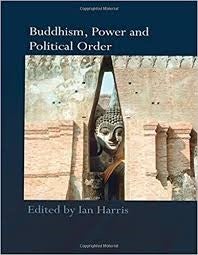
Buddhism, Power and Political Order
| Author | : | HARRIS Ian Charles |
| Publication Date | : | 2007 |
| Publisher | : | Routledge, London & New York |
Weber’s claim that Buddhism is an otherworldly religion is only partially true. Early sources indicate that the Buddha was sometimes diverted from supra-mundane interests to dwell on a variety of politically related matters. The significance of Asoka Maurya as a paradigm for later traditions of Buddhist kingship is also well attested. However, there has been little scholarly effort to intergrate findings on the extent to which Buddhism interacted with the polit-ical order in the classical and modern states of Theravada Asia into a wider, comparative study.
This volume brings together the brightest minds in the study of Buddhism in Southeast Asia. Their contributions create a more coherent account of the relations between Buddhism and political order in the late pre-modern and political order in the late pre-modern and modern period by questioning the contested relationship between monastic and secular power. In doing so, they expand the very nature of what is known as the ‘Theravada’. This book offers new insights for scholars of Buddhism, and it will stimulate new debates.
Ian Harris is Professor of Buddhist Studies at the University of Cumbria, Lancaster, and was Senior Scholar at the Becket Institute, St Hugh’s College, University of Oxford, from 2001 to 2004. He is co-founder of the UK Association for Buddhist Studies and has written widely on aspects of Buddhist ethics. His most recent book is Cambodian Buddhism: History and Practice (2005), and he is currently responsible for a research project on Buddhism and Cambodian Communism at the Documentation Centre of Cambodia [DC-Cam], Phnom Penh.