Research node on the Global Indo-Pacific: Connecting Histories and Futures
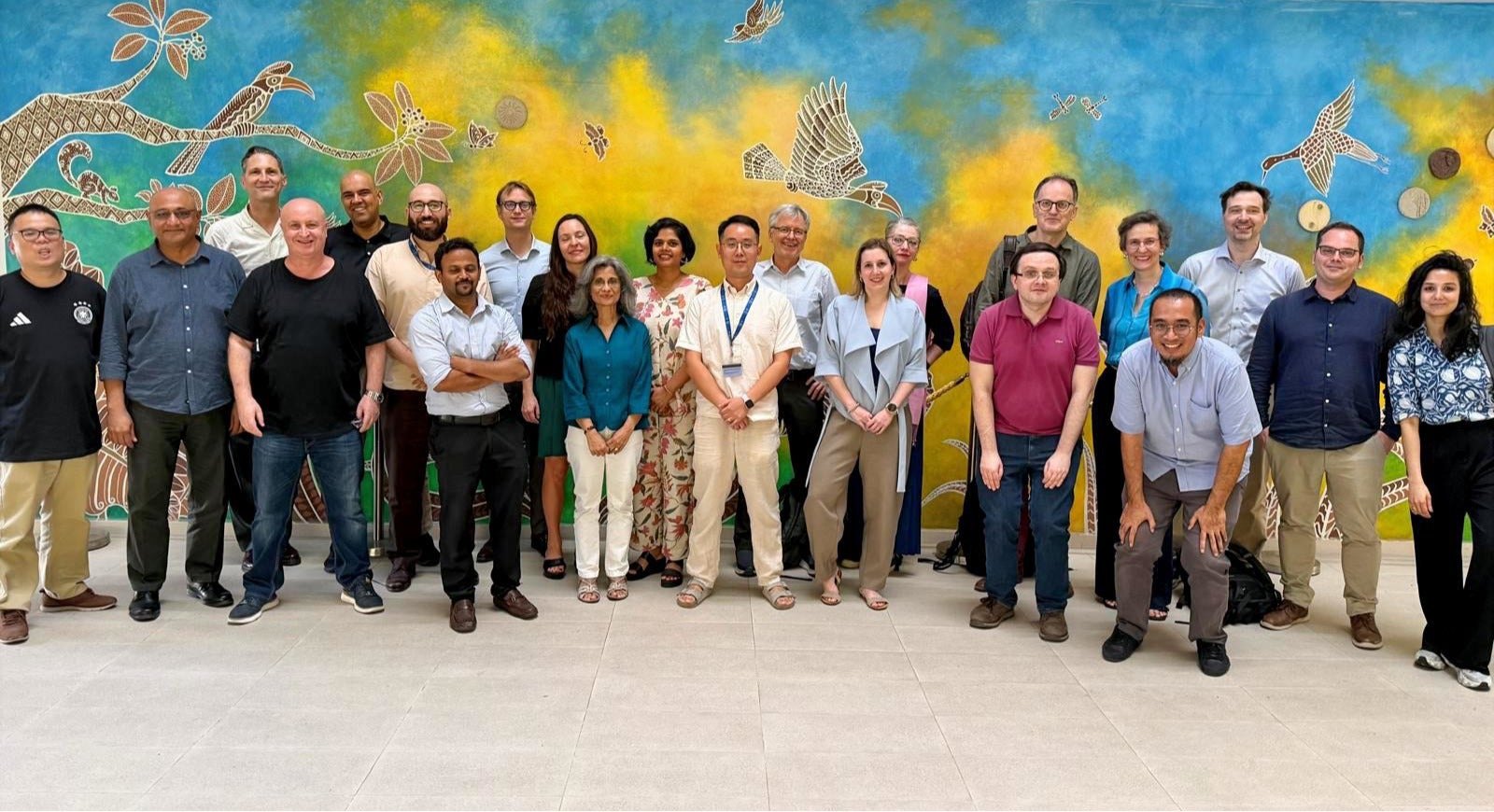
Delegates at the Global Indo-Pacific Symposium, 9-12 February 2026, Singapore.

Commencing in July 2025, this Research node is expected to run until the end of 2027. It is a collaboration of the Max Weber Foundation Institutes in Delhi, London, Paris, Tokyo and Washington, the Institute for Asian and African Studies at the Humboldt University Berlin and ARI. The node is funded by the The Max Weber Foundation and hosted, with co-funding, by ARI. 
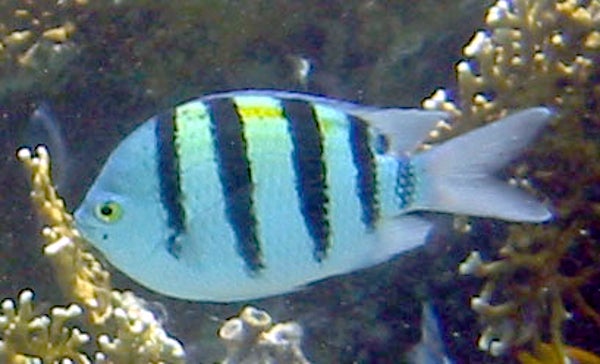
Indo-Pacific sergeant (Abudefduf vaigiensis) CC BY-SA 3.0, https://commons.wikimedia.org/w/index.php?curid=2184093

The Indo-Pacific embracing large parts of Asia and Oceania and spanning from the East coast of Africa to the West coast of the American continent has been referred to both as a maritime ecological system and a strategic geopolitical construct. The region comprises a multiplicity of colonial and postcolonial histories and geographies, which together increasingly challenge Western-centric mappings of international order. These historical experiences, along with the growing geopolitical significance of the region, have led to a substantial body of scholarship. The research node will be fostering a better understanding of the Indo-Pacific’s complex historical trajectories and regional dynamics and their implications for pressing global ecological, demographic and geopolitical issues. However, in contrast to the those framings (frequent amongst many think tanks, media and state discourses) of the Indo-Pacific that reduce it to a "security" or geo-strategic concept, we seek to unravel the multiple ways that the Indo-Pacific comes to be constructed and circulates. This invites broad and diverse cultural, geographical, historical, scientific and social perspectives. 

The Indo-Pacific therefore has both a complex history as a concept and is an increasingly popular contemporary focus for research centres, amongst others; the Centre for Indo-Pacific Studies, the Franco-German Observatory of the Indo-Pacific, the Indo-Pacific Studies Center and the Perth USAsia Centre.

Hence our approaches to the concept/region follow multiple scholarly vectors, such as those traced by the Aotearoa/New Zealand-based historian Kate Stevens, in studying:

“…islands, seas, and peoples connected by the ocean, centring on the basin rather than only the Pacific rim [and Indian Ocean littorals]. This ‘other one-third [plus] of globe’ is often absent in global histories, despite the long history of distance voyaging before and after colonialization. The region is important to histories of both ocean and imperialism writ large, as a critical space where ‘the push-and-pull dynamic of globalisation’ shaped the modern world.”[1]

In these regards, too, we are mindful of how the Indo-Pacific is cited as biogeographical category, prominent in marine biology since the mid-nineteenth century, and in twentieth century and contemporary climatology and oceanography.  

The research node comprises two modules:

Module 1: History, Heritage and Civilization (ARIGHI LondonGHI ParisIAAW)
 
In today’s multipolar world, history, religion and culture are shaping international affairs in complex and consequential ways. The Indo-Pacific is the epicenter for such developments, a region where ideas about history and heritage are being transformed by geopolitics, frontier digital technologies and the climate crisis. Dramatic changes are occurring in the ways cultural heritage is being preserved and constructed by archaeologists and museum practitioners and presented to public audiences through new technologies. As China, India and others mobilize their civilizational legacies to exert their will on the future, this module addresses the past as a vector of South-South and North-South regional competition and collaboration spanning both terrestrial and oceanic regions. By working outwards from the vantage point of Southeast Asia, and using ARI’s research infrastructure of Arabia-Asia and India-China Studies together with the GHI London’s Colonial and Global History and India Research Programmes, we will research the intellectual and institutional drivers that have shaped the key influential discourses of history and heritage – empire, civilization, Buddhism, Islam, Indian Ocean World, Silk Road etc. – that have analytically connected East Africa to Pacific Asia.
 
Module 2: Knowledge, Networks, and Institutions (ARIDIJIAAWMWF Delhi)
 
Colonial legacies, postcolonial modernization narratives, and Cold War politics continue to profoundly influence current socio-economic development paradigms and imaginaries of the future within the Indo-Pacific region. Drawing on global historical and transregional approaches and acknowledging the situated and contested nature of knowledge, we critically examine how the production and circulation of knowledge has informed the formulation of national development programmes and geopolitical strategies and has been linked to the formation of networks and institutions from the colonial period to the present day. We thus aim to contribute to a deeper historical understanding of the dynamic complexities involved in processes of regional cooperation and integration and the epistemic foundations of the “global south-global north” framework. The Indo-Pacific region provides a highly instructive and relevant case in this respect. Hosting both “global south” and “global north” nations, it has in recent years witnessed increased competition between different infrastructural developmental models and heightened geopolitical confrontation, with China’s Belt and Road Initiative –and reactions to it especially prominent. Japan and China, in particular, have pursued contrasting strategies for technological cooperation, health diplomacy and most recently the transnational governance of data and information. We conceptualize infrastructural projects as both material and epistemic manifestations of networks. Health and digital infrastructures, for instance, are not only technical systems but also vehicles for soft power, regulatory diffusion, and international norm- setting. Particular attention is paid to Japan’s strategic role through initiatives such as the Partnership for Quality Infrastructure, Data Free Flow with Trust, and the promotion of Universal Health Coverage. These approaches build on a long history of Japanese technical assistance for countries in the Indo-Pacific. They mediate US market-oriented and EU rights-based models and resonate well with nations in the Global South seeking autonomy amidst a growing global Sino-American rivalry.
 

At ARI, the convenors of the Asian Urbanisms and Science, Technology and Society Clusters also serve as serve as collaborators. Dr Yannis-Adam Alouche assists with events and logistics. 

[1] Stevens, K. (2026) ‘Chewpoints across the Pacific Ocean: Marine borers and the disruption of colonial infrastructure’, Journal of Global History, pp. 1–20. doi:10.1017/S1740022825100430
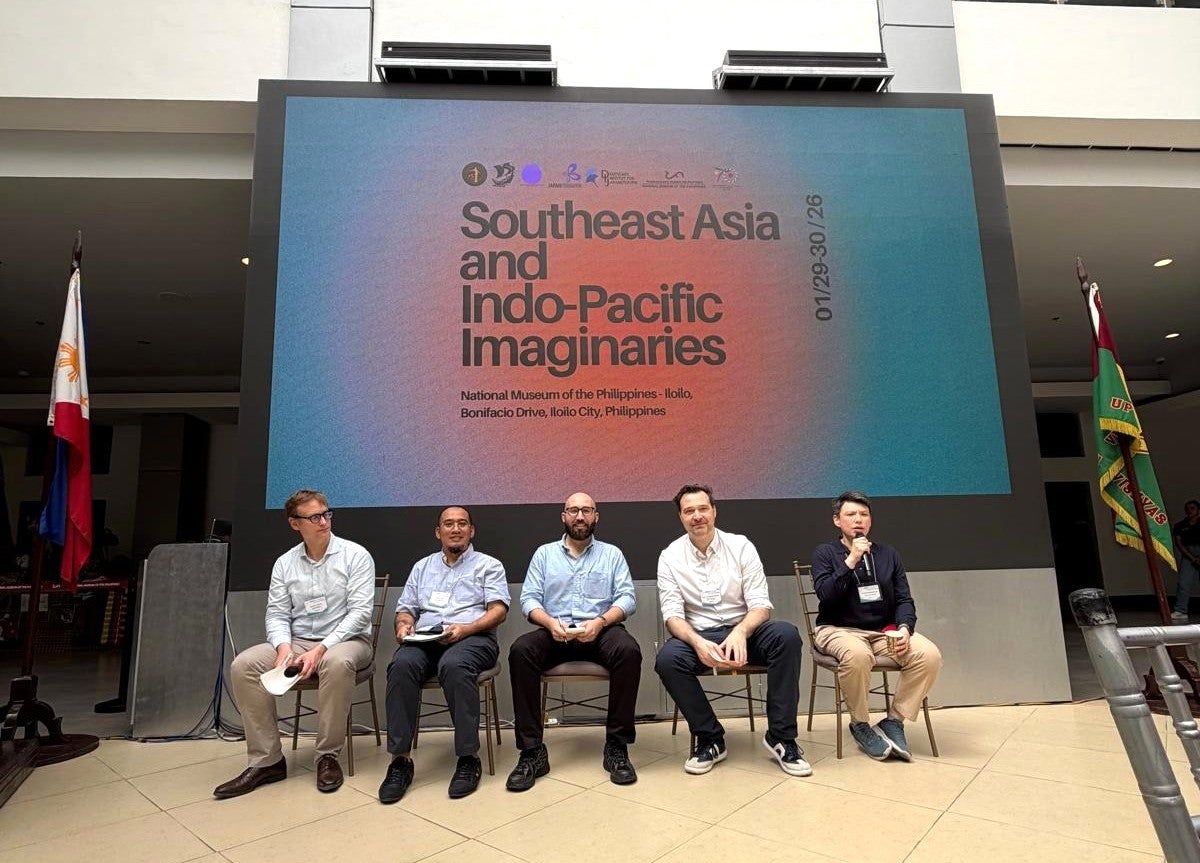
 
(L-R) Dr David Malitz, Dr Fathun Karib, Dr Yannis-Adam Allouache, Dr Dolf-Alexander Neuhaus and Assoc. Prof. Dr Wasana Wongsurawat presented at the Southeast Asia and Indo-Pacific Imaginaries conference, held on 29–30 January 2026 at the National Museum of the Philippines – Iloilo.