
Understanding Religion and Populism: Insights from Asia


 Image: Shutterstock.
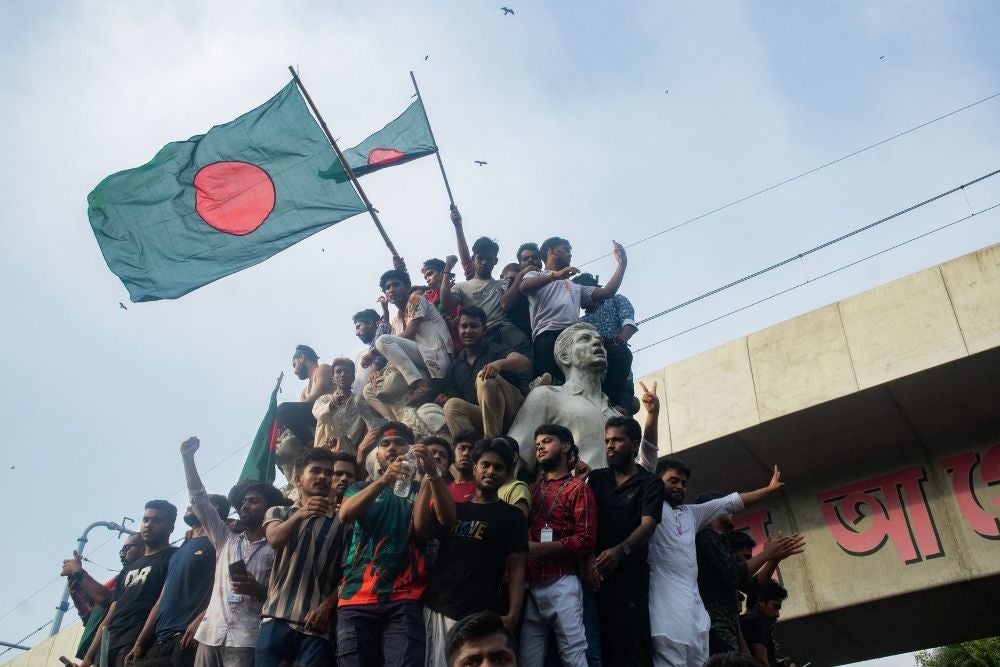
Something is stirring across Asia and beyond in recent decades. In Malaysia, Islamic law increasingly shapes civil life. In Sri Lanka, Buddhist monks and populist leaders march side by side. In India, Hindu nationalist movements, with the current Prime Minister Narendra Modi at the helm, have profoundly reshaped the country’s electoral politics. At the same time, in China and Singapore, governments exert tight control over religion and its public role, and religious populism has not reared its head. What explains these differences across Asia? Moreover, what can we learn about one of the most potent political forces of our time from Asia’s diversity? Our research project, Modalities of Religious Populism in Asia: How Secularism Shapes Religion and Politics, addresses these questions, among others. The project is supported by the Singapore Ministry of Education’s Academic Research Fund (Tier 2). The research team comprises me, Nilay Saiya, Walid Jumblatt, and Yusri Supiyan from NTU, Meredith Weiss (University at Albany, SUNY), and D.B. Subedi (Queensland).
The Populism Puzzle
While populism is not a new phenomenon, it has surged dramatically worldwide in recent years, including in Asia (Subedi et. al., 2024). Our study aims to answer two theoretically and empirically significant questions that have largely been unaddressed in the existing literature: First, how do different secular configurations in Asian countries shape the interaction between religion and populist politics? Second, how can the experience of Asia contribute to the formulation of a coherent theoretical framework for analysing the religion-populism nexus, not only in Asia but also in other parts of the world?
Scholars have studied populism through several approaches. An ideational approach treats populism as a “thin ideology” that divides society into the pure people and the corrupt elite, with the general will of most of the pure people superseding that of the small group of elites (Mudde, 2004). By contrast, the discursive-performative approach foregrounds style and practice over worldview (Weyland, 2001), focusing on how political actors rhetorically construct “the people” and mobilise them against perceived enemies, such as political opponents, outsiders, and ethnic minorities. The socio-cultural approach situates the populist appeal along a “high” versus “low” axis rather than a left-right one. In this view, populist leaders mobilise ordinary, plain-speaking people against the powerful, refined, and corrupt elites (Ostiguy, 2017).
Religious populism adds another distinctive layer. It is the claim that “the people” are not merely a civic or economic category but a religious one. Existing scholarship has documented this empirical landscape extensively (Roy, 2016; Brubaker, 2017; Zúquete, 2017; Yilmaz, Morieson and Demir, 2021; Subedi et al., 2024). In this framing, the nation’s true essence is religious or spiritual. This perspective often leads to viewing not only political elites but also religious minorities, secularists, or foreign influences as threats to the nation’s majority faith.
We conceptualise religious populism as a political strategy in which religion is deployed both to define the boundaries of 'the people' in terms of shared religious identity or civilisational heritage, and to delegitimise political elites by reference to a religious standard of moral authority that they are alleged to violate or betray. Our approach specifies the religious content that distinguishes religious from secular populism. At the same time, it preserves the thin-ideology framework of Mudde (2004), which treats populism as the ideological construction of an antagonism between 'the pure people' and 'the corrupt elite'.
Much of the existing research on religious populism has focused on Christianity in Western Europe and the United States, where the entanglement of right-wing politics and evangelical churches has received extensive attention (e.g., Marzouski, McDonnell, and Roy 2016; DeHanas & Shterin, 2018). In addition, scholarly literature tends to view religious populism as a socio-political anomaly, with an unstated secularist assumption that the separation of religion and politics is the normative arrangement. This Western-centred focus leaves out much of what is happening in Asia.[1]. Existing studies research has also not sufficiently examined the dynamic relationship between secularism and religious populism in Asia (Subedi & Lim, 2024).
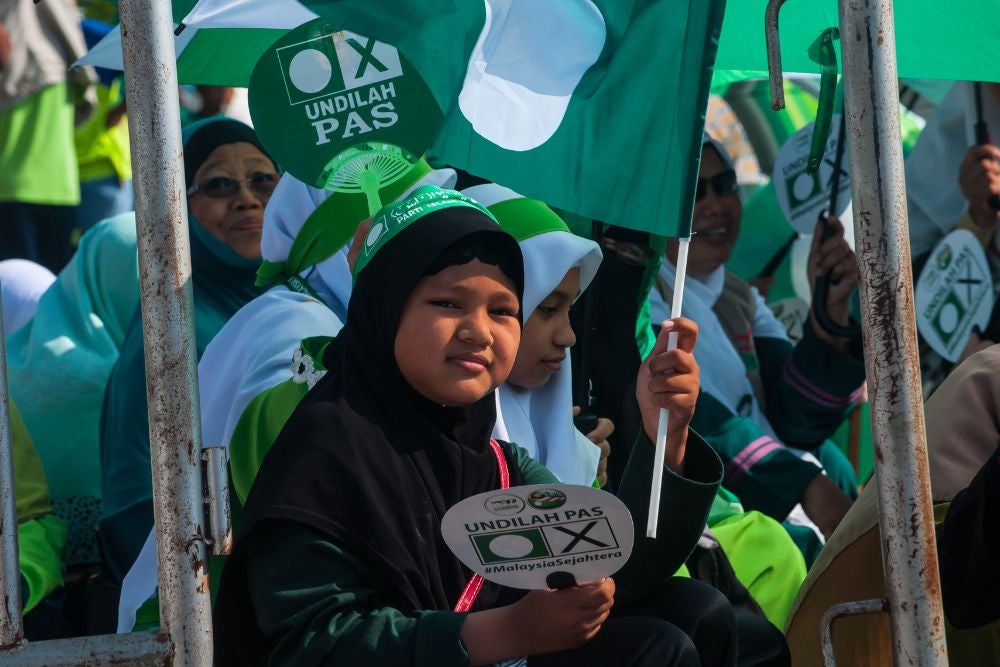 Image: Shutterstock.
Our proposed research aims to address this gap in existing scholarship. Religion and culture have long been primary sources of identity politics in many post-colonial Asian nation-states, such as Sri Lanka, Bangladesh, Thailand, Malaysia, and Myanmar (Purohit, 2011; Liow, 2016). Many such states utilised religious platforms to consolidate a national identity and mobilise support for the post-colonial nation-state (Kingston, 2019). Some politicians, embedded in post-independence nationalist politics, continue to bring populism and nationalism closer together in countries such as Sri Lanka (Subedi, 2022), Pakistan, and Bangladesh. Why does overt religious populism succeed in some contexts and fail in others? For example, why does Islam fuel PAS's Islamic statism in Malaysia and the 212 Movement's Islamist populism in Indonesia, while producing no comparable mass mobilisation in Singapore? And why does Thailand, despite its constitutionally embedded Theravada Buddhism, produce elite-mobilised Buddhist nationalism rather than the bottom-up religious populism observable in non-secular Malaysia?
A Three-Variable Framework
The answer, we argue, lies in the institutional architecture of secularism. As scholars such as Asad (2003) and Taylor (2007) have described, the ideological practice of secularism in many modern nation-states has created a public space that separates state, economy, and science from religion. Casanova (2013: 34) characterises this condition as a decline in religious belief and the relegation of religion to the private or personal sphere. Habermas (2006) discusses the idea of a ‘post-secular society’, in which, under certain circumstances, religion is permitted in the public sphere, and the ‘dialogue’ between secular and religious actors is encouraged. However, we believe that post-secularism is not a useful concept in many contexts in Asia, where secularism has consolidated unevenly (Dean & van der Veer, 2019; Liow, 2016). Secularism has been contested in many Asian societies, and opinions differ on what a secular state entails. In Indonesia, for instance, even though there is a strong secular tradition, some groups question the notion of secularism’s compatibility with Islam (Gillespie, 2007).
Secularism is therefore not a uniform condition but a variable configuration of state-religion relations. It profoundly shapes which resources populist actors can mobilise, which legitimacy claims they can make, and which institutional channels constrain or enable religious political action. Saiya's (2024) argument that state favouritism toward dominant religions produces a 'paradox of privilege', generating majoritarian violence rather than securing social peace, highlights one dimension of this institutional architecture. Our proposed theoretical framework is a three-variable model: the types of secular institutional arrangements interact with a mediating condition we call the institutional legitimacy deficit, which in turn shapes the forms of the religion-populism nexus that emerge.
In our approach, the secular type conditions the opportunity structure for religious populism but does not, by itself, produce that populism. The mediating mechanism is what we call the institutional legitimacy deficit. It is a condition in which a significant proportion of the population perceives both the instrumental performance and the normative authority of governing institutions as inadequate. Performance failures include corruption, economic exclusion, unresponsive governance, and elite capture. In contrast, moral-authority failures refer to the perception that the state’s secular arrangements are artificially imposed or biased rather than reflecting ‘authentic’ values and norms. These two dimensions can reinforce each other. When institutions are seen as failing to deliver, they may lose the normative standing that underpins their authority. Meanwhile, when institutions are perceived as lacking moral authority, their performative failures are seen not as mere mismanagement but as a kind of betrayal.
In countries where secular arrangements permit religion in public life, institutional legitimacy deficits create opportunities for populist actors to deploy religion as a moral alternative to discredited institutions. This can result in the direct politicisation of religion, which Zúquete (2017) calls overt religious populism. Where secular arrangements are highly restrictive, legitimacy deficits produce different outcomes. While the overt politicisation of religion may be curtailed, discontent is channelled into, or managed by, other processes. These may include the sacralisation of secular politics, underground religious resistance, the construction of a civil religion around the state itself, or the forging of a political religion (cf. Gentile, 2006).
Secular Configurations
Building on Kuru’s (2007) distinction between passive and assertive secularism, we develop a typology of four state types across two dimensions of secular arrangements. First, the degree of institutional separation between the state and religion. And second, the extent of state regulation of religious affairs. Each of these four ideal types yields distinct outcomes for the religion-populism nexus.
The first type, non-secular states, have an official religion that legitimises political authority. The separation between state and religion is low, with religion often constitutionally embedded as a co-source of public law. The state maintains moderate regulation of religion and manages religious institutions within the political order. Malaysia exemplifies this category. Islam is constitutionally enshrined in the country, and all ethnic Malays are Muslim by law. State structures have also undergone Islamicisation in recent years (Liow, 2009; Farish, 2014; Tayeb & Weiss, 2024). The low separation between state and religion, together with state permissiveness for Islam to play an active role in public life, creates favourable conditions for overt religious populism. For example, the erosion of Barisan Nasional’s legitimacy in recent years through performance failures and corruption scandals has provided political opportunities for the Islamist party, the Parti-Islam Se Malaysia (PAS), to promote the establishment of Malaysia as an Islamic state (Abdullah, 2018; Noor, 2003).
The second type is the moderately secular state, which is constitutionally secular yet permits religion to exert widespread influence in public life. Typically, there is moderate constitutional separation between state and religion, but high institutional permeability. At the same time, the state maintains a 'principled distance' (Bhargava, 2013) and exercises low-to-moderate regulation of religion. India exemplifies this type of state (Singh, 2024). The decline of Congress's legitimacy created the conditions for the Bharatiya Janata Party (BJP) to frame Hindu majoritarianism as the restoration of authentic national identity (Jaffrelot, 2021). The belief that India is essentially a Hindu nation, expressed as the Hindutva ideology, has been powerfully articulated by the BJP to mobilise Hindu nationalists against perceived internal (especially minority Muslims) and external threats. Networks of politically active Hindu organisations form an ‘ecosystem’ of Hindutva, playing crucial roles in disseminating populist narratives and Hindu ideology at the grassroots level (Vaishnav 2019: 6).

Image courtesy: Home | Racial and Religious Harmony Circle
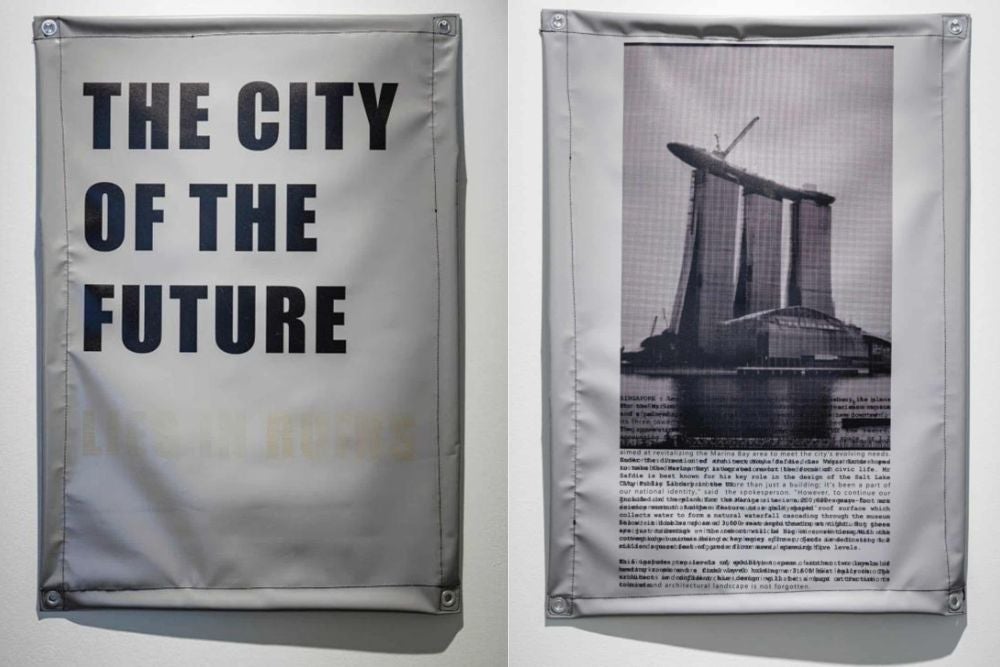
Strong secular states constitute the third type in our proposed framework. Exemplified by Singapore, this type of state strictly enforces the separation of religion from politics, regulates religious matters intensively, and prohibits religious groups from participating in the political process. Singapore’s strong secular institutions and managed pluralism raise the threshold for religious mobilisation (Tan, 2008; Musa, 2023). Religious organisations are incorporated into governance through institutions such as MUIS and the Maintenance of Religious Harmony Act, limiting adversarial religious politics (Thio, 2006; Abdullah, 2021). As a result, legitimacy pressures tend to produce secular anti-establishment politics rather than overt religious populism. Overt religious populism is suppressed, while the sacralisation of national identity and civic life can be present and significant.
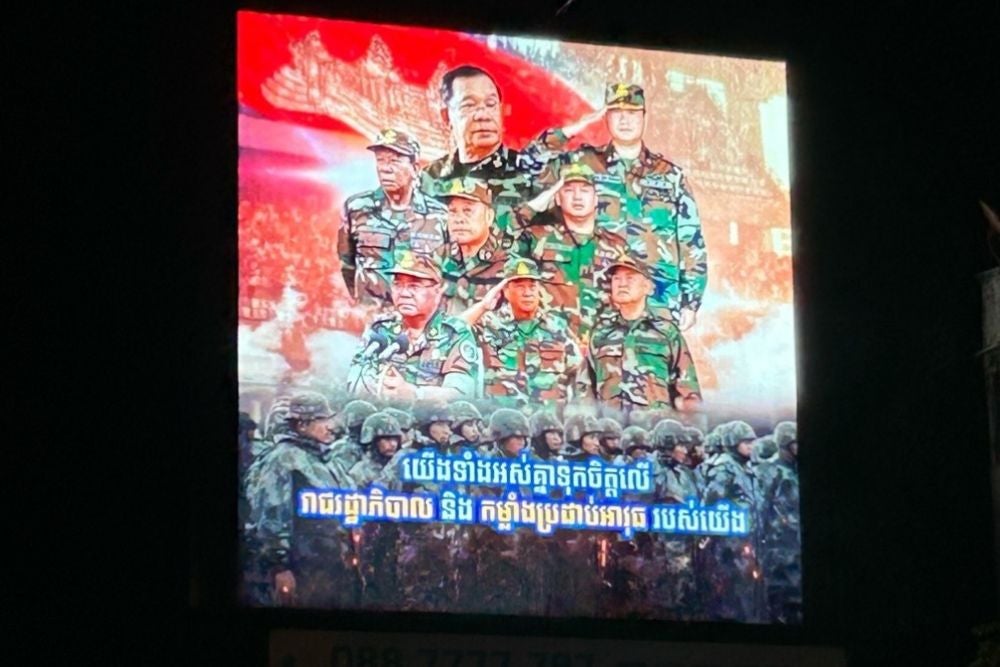
The fourth type, atheistic secular states, is characterised by both a high degree of institutional separation between state and religion and strong state ideological regulation of religion. China, where the ruling Chinese Communist Party regards religion as an ideological competitor, imposes strict regulations on religious affairs and periodically engages in harsh religious suppression (Leung 2005; Yang 2006; Ashiwa and Wank 2009). At the same time, the party-state often mobilises religious forces to support its political agenda, for example, through religious diplomacy, the provision of social welfare services, and ethnic integration (Wu, 2016; Walsh, 2020; Lim & Sng, 2021; Zhang, 2023). In this context, overt religious populism is either suppressed or driven underground. Meanwhile, the sacralisation of politics may take the form of ‘communist’ or ‘authoritarian’ populism (Tang, 2016; He et al., 2021; Guo, 2019) or a civil religion organised around the party-state (Pieke, 2018). What Gentile (2006) calls ‘political religion’ can also be found in this kind of secular configuration, as in the cult of Mao Zedong in China (Zuo, 1991).
To develop and test this framework, we conduct comparative research in four case-study countries, Malaysia, India, Singapore and China, using both quantitative analysis and in-depth qualitative fieldwork. In our quantitative approach, we aim to build a time-series, cross-national database covering all Asian countries from 2000 to 2023. This will track indicators of political secularism alongside measures of populist attitudes, drawn from the World Values Survey and the Asia Barometer. This database will help us identify general patterns and test hypotheses about how different secular institutional arrangements shape the conditions for religious populism. Our qualitative approach consists of fieldwork in each of the four case-study countries (Malaysia, India, Singapore, and China), including interviews with religious believers and leaders, policymakers, and civil society leaders; analysis of government policies; and content analysis of social media and online platforms (especially crucial in contexts where the mainstream media is tightly controlled).
Why the Study Matters for Singapore
In some ways, Singapore is an ideal place to study these issues. As a city-state that is religiously plural and ethnically diverse, with a strong emphasis on maintaining social cohesion through rigorous and extensive political controls, it has much at stake in understanding the currents of religious and populist movements elsewhere in Asia. Neighbouring countries such as Malaysia, Indonesia, and India are experiencing the dynamics our research investigates. Our findings will be highly relevant to policymakers seeking to understand the conditions under which an institutional legitimacy deficit may generate religious populism, and how the kinds of secular arrangements that tend to facilitate, contain, or redirect it shape it. Our study aims to provide Singapore’s foreign policy community with new analytical tools to understand the dynamics between religion and politics across Asia.
By treating secularism as an independent variable and the institutional legitimacy deficit as a mediating variable, our framework aims to provide a more precise, empirically grounded account of how and why religion enters the political arena. Secular arrangements are not background conditions. They are foundational institutions that shape political pathways. Asia’s diverse secular arrangements offer an excellent context for testing these ideas. By taking that diversity seriously, we aim to develop a theory of religion and populism that addresses the challenges facing plural societies in Asia and beyond.
[1] For some notable exceptions, see e.g. Liow (2016), Hadiz (2016), and various contributions in Subedi et. al. (2024).
The views expressed in this forum are those of the individual authors and do not represent the views of the Asia Research Institute, National University of Singapore, or the institutions to which the authors are attached.
.png)
Francis Khek Gee Lim (林克宜)
Associate Professor
School of Social Sciences
Nanyang Technological University
Francis Lim Khek Gee is Associate Professor of Sociology at the Nanyang Technological University and Visiting Scholar at ARI, September 2025 – May 2026.