

Shooting Your Shot: Courtship in an Indigenous Philippine Community


What is the place of tradition in a globalizing world and how do Indigenous peoples use it to achieve their goals? This question has been a crucial one for Indigenous peoples and anthropologists alike as we seek to understand processes of culture change that are always present, but were spurred on especially by European colonialism beginning in the 15th century. This article takes a similar view of changing courtship practices among Panay Bukidnon communities in the Philippines.
Fiestas in the Philippines are time for a lot of things: reunions with relations near and far, extravagant dishes like lechon, beauty pageants, and basketball. In February 2024, I was living in upland Calinog, Philippines on a Fulbright grant to conduct ethnographic field research [Figure 1]. The main topic I proposed to study was cultural education and oral traditions in Indigenous Panay Bukidnon communities, specifically looking at chanting practices of epic poems called sugidanon. To do this, I attended lessons at local Schools for Living Tradition (SLT) in each community on Saturday mornings over a period of 9 months. My goal was to better understand how young people in these communities learn, understand, and use the traditional cultural artforms taught there in their lives.
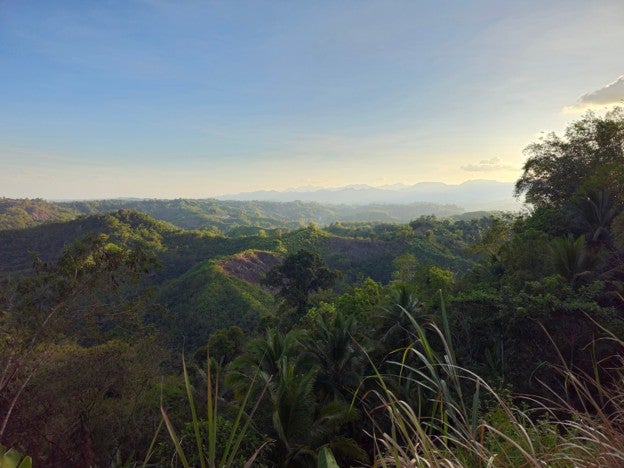
Figure 1. Mountain view from upland Calinog, Philippines. Author photo.
For several Saturdays in early 2024, my observations were interrupted by an inter-barangay basketball tournament leading up to a series of local fiestas. The barangay is the smallest administrative unit of the Philippine government, roughly equivalent to a village and administered by an elected captain, counsellors, and other officers. In upland Calinog, where 13 of the 59 barangays are considered majority indigenous, administration of these territories by local officials can take on new dimensions. Legal standards for recognition and protection of Indigenous Cultural Communities in the Philippines were first laid out in the 1997 Indigenous People’s Rights Act, which at the time was a landmark piece of legislation for Indigenous rights in Southeast Asia. Government-recognized Indigenous Cultural Communities claim traditional rights over their lands through a Certificate of Ancestral Domain Title (CADT), granting them also legal rights to customary law governance, protection for local languages and artforms, and restrictions on sale of ancestral lands to outsiders.
Basketball is easily the most popular sport in the Philippines. It can be played virtually anywhere, needing only a hoop, a ball, and a group of friends. Nearly every barangay has its own designated court, often located near the barangay hall or along major thoroughfares. Especially in the upland communities where I conducted research, in pure entertainment and socialization terms a basketball tournament is very much the only game in town [Figure 2].
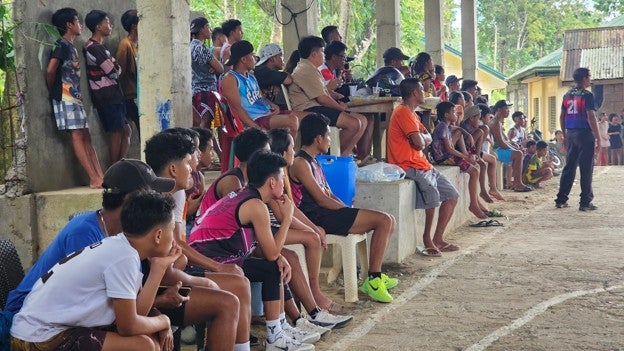
Figure 2. Players and residents watch a basketball game in Calinog, Philippines. Author photo.
The air is thick with the dust of passing motorcycles that clog dirt roads with rare traffic jams and turn muddy portions into miniature swamps. Food vendors gather outside the entrances of barangay basketball courts covered by high corrugated metal canopies and surrounded by eager onlookers. Young men on the court look to impress young women in the audience with their speed, shooting prowess, and aggressive defence. Young women in turn watch for skilful players, catch up with friends, and write flirtatious and (often but not always) anonymous notes to be read out over the PA system during halftime.
Panay Bukidnon elders often lamented that courtship practices had rather gone downhill since they were young. Back in their day, courtship was carried out through poetic jousts (talda) and love songs (dilot) or binanog dancing during inter-community gatherings like weddings and other religious ceremonies. A respectable couple only contracted marriage after extensive negotiations over rice wine where older relatives spoke of their respective reputations and demands only in metaphors, and ultimately (if the match was approved) agreed on the bugay, the number of weapons, coins, and livestock to be paid to the bride. Wealthier, skilful, and more beautiful women—especially a binukot secluded by her family since childhood and trained as a performer and artisan—commanded the highest bugay of all.
Young people in upland Calinog nowadays are more likely to meet potential romantic partners at venues like basketball games, barangay discos, or on social media. The extensive preparations and high demands associated with traditional marriage negotiation have largely become obsolete for the last few decades, having been replaced with either Christian or civil weddings or else cohabitation. Binanog is still practiced regularly but more as a cultural performance than courtship method [Figure 3]. During my research, I did not encounter any couples younger than middle age who met by dancing binanog together.
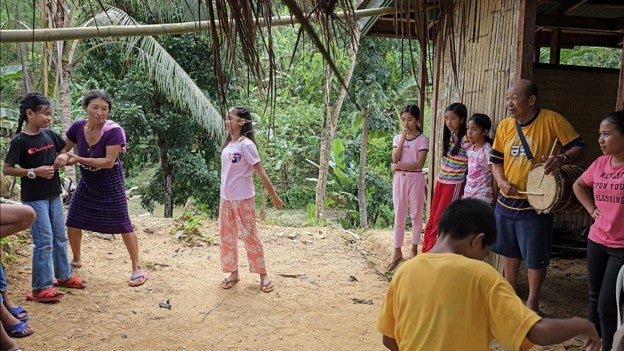
Figure 3. Panay Bukidnon School for Living Tradition students in Calinog learn binanog.
Other traditional courtship methods are now illegal. One of these, pagtaban, is a practice I only heard about a few times during my research. However, these instances were striking enough to illustrate some important contrasts and point towards other sources.
In the Kinaray-a language that many Panay Bukidnon people speak, the root word taban is also used for a piece of food carried off in the mouth of an animal, e.g. “gintaban ka miyaw ang isda” (the fish was carried off by the cat). When used to describe courtship practices, it takes on a more violent connotation of marriage by capture. One Panay Bukidnon elder described pagtaban as a sort of test of masculine prowess in which a young man got his friends together, followed a young girl to someplace private like a stream, and took her away so the pair could be married by a neutral third party acting as arbiter (manughusay).
When I went back to the house where I was staying and told my host (the elder’s niece) about this, she laughed and asked if her uncle had really described pagtaban that way. In its place she offered her own view on it as a younger woman. The way she explained it involved modifying the term to pagtabanay, adding a suffix that indicates a reciprocal action to clarify that the masculine rite of “bride-capture” her uncle had told me about was actually an elopement arranged by the girl. I asked her if this was always the case and she replied emphatically that it was.
These two anecdotes are not enough to describe every single instance of pagtaban and cases of actual abduction certainly happened even though the idea of mutual arrangement is a compelling one. Specifically, mutual arrangement suggests mutual reputational benefit: that the young man gets to boast of his bravery and strength in capturing a wife, while the young woman gets to argue that she was taken against her will despite being the mastermind of the entire act.
The idea that this facade of male strength and female compliance is something of an open secret highlights ambiguity in this tradition that is well-accounted for in Panay Bukidnon customary law. Settling a marriage contracted through pagtaban can be less costly (in terms of fines paid to the arbiter and bride’s family) than a marriage contracted through traditional courtship negotiations. Additionally, pagtaban—when arranged by the couple—can provide them a quasi-approved cultural space to act on their own in the face of costly and uncertain negotiations between elders that might not go their way.
This perspective allows us to read female agency into this practice and also sheds some light on Panay Bukidnon oral traditions. Sugidanon frequently feature episodes of pagtaban, either instigated by a go-between spirit named Taghoy (acting alternatively as a gossip and stand-in for chiefly libido) or by other women. In one epic, the hero Labaw Donggon is ordered by his wife Matan-ayon to rescue her sister Suranggaon from her husband, the aswang (man-eating witch) Sinagnayan, and take her as a secondary wife [Figure 3]. Another focuses on the powerful binukot Tibang-tibang, who is seduced and abducted by Labaw Donggon. When he contradicts her wishes by blowing a shell trumpet to announce his return to the village, fire rains down from the sky and turns everyone in the middleworld to stone, with the exception of a few slaves who dove into the ocean.
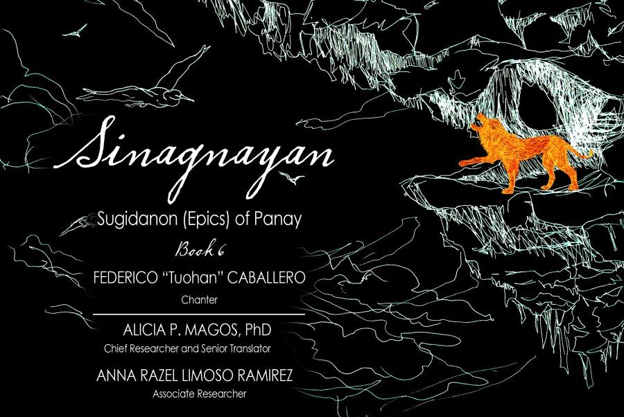
Figure 4. Cover of Sinagnayan chanted by Federico “Tuohan” Caballero. Image courtesy of University of the Philippines Press.
Oral traditions like sugidanon fulfil many purposes for Panay Bukidnon people today. The most common is as a performing arts genre taught to children so that they can take pride in their upland indigenous heritage, earn money, and qualify for government scholarships reserved for Indigenous students. In the case of pagtaban, it can also offer a guide to understanding how things used to be in the past through the deeds (and occasional misadventures) of ancestors like Labaw Donggon and Matan-ayon. The idea does not seem to be that Panay Bukidnon parents and elders expect children to do everything exactly as their ancestors did, but rather that they should take inspiration from their successes and avoid repeating their mistakes.
Contrasting views on pagtaban may not be a pressing concern for many Panay Bukidnon people today. In my 9 months in upland Calinog, I only heard of one potential pagtaban case brought before the manughusay and community members debated amongst themselves if it was actually kidnapping or an elopement. Dances, basketball games, and Facebook are more present in young people’s minds and correspondingly a cause for concern on the part of elders who are keenly aware of changing values in their communities.
Indigenous traditions and views on traditions are never static. They always exist in changing contexts, taking on new importance, adapting to new circumstances, or declining until they disappear entirely. Government policies may seek to endorse or abolish certain Indigenous traditions as part of broader human rights and economic development initiatives. However, the most important conversations in this regard are the ones occurring within Indigenous communities themselves: what to do with tradition, how to carry it on, and what lessons from it might be applied to the people’s concerns today. Courtship behaviours, like other Indigenous cultural traditions, continue to change over time and come to be reinterpreted by Panay Bukidnon people alongside the changing socioeconomic contexts of their everyday lives.
The views expressed in this forum are those of the individual authors and do not represent the views of the Asia Research Institute, National University of Singapore, or the institutions to which the authors are attached.

David Gowey
Adjunct Professor, Anthropology
Glendale Community College
2026 ARI-LUCE scholar

David Gowey is an Adjunct Professor of anthropology at Glendale Community College and visiting researcher in the School of Human Evolution and Social Change at Arizona State University. His research focuses on oral literature and cultural education among Indigenous Panay Bukidnon people of the Philippines. Previously, his work has been published in Ethnohistory, Colonial Latin American Review, and Journal for Asian Studies.
https://doi.org/10.25542/n9fd-0c88