

Arabia Asia Archives
Arabia Asia Archives is a flagship project of the Arabia Asia Studies Programme. Since its establishment, our Programme has collaborated with researchers, affiliates, and students to build an archive of primary materials in Arabia Asia studies. We have jointly scanned manuscripts and documents from important, yet previously neglected indigenous sources held in private collections, including mosque libraries, institutions, and overlooked locations across Arabia and Asia. Unsurprisingly, we have found rich historical troves in places off the global arteries of major cities connected by air travel -sites once linked to distant regions by the sea, deserts, and mountain passes. We have also conducted ethnographic fieldwork, collected materials, and recorded inscriptions found at tombs, monuments, and mosques. More...>
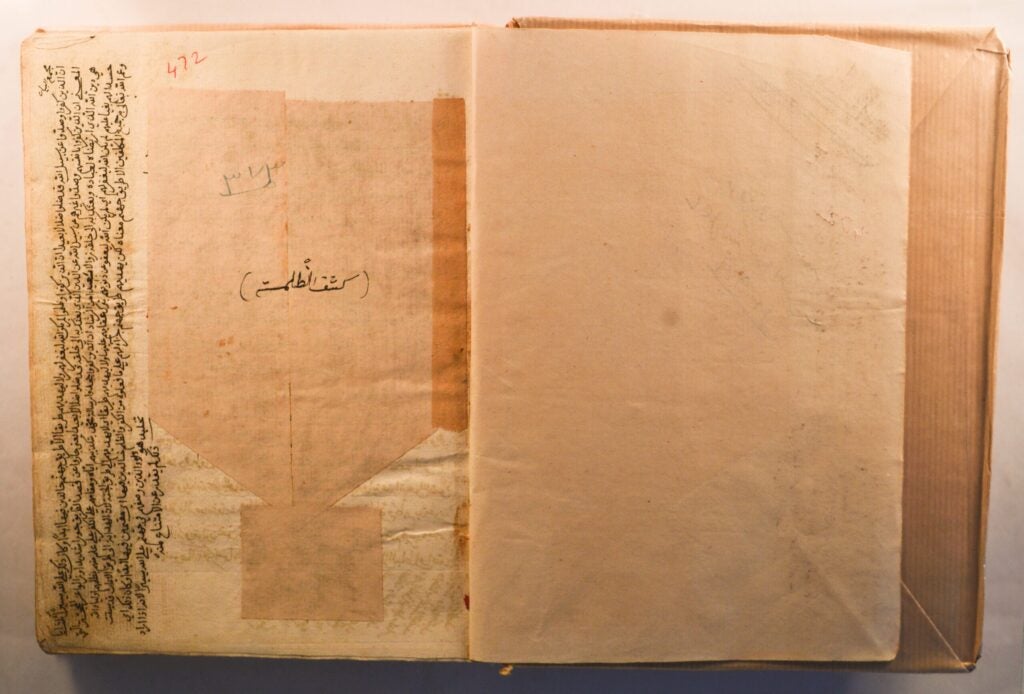
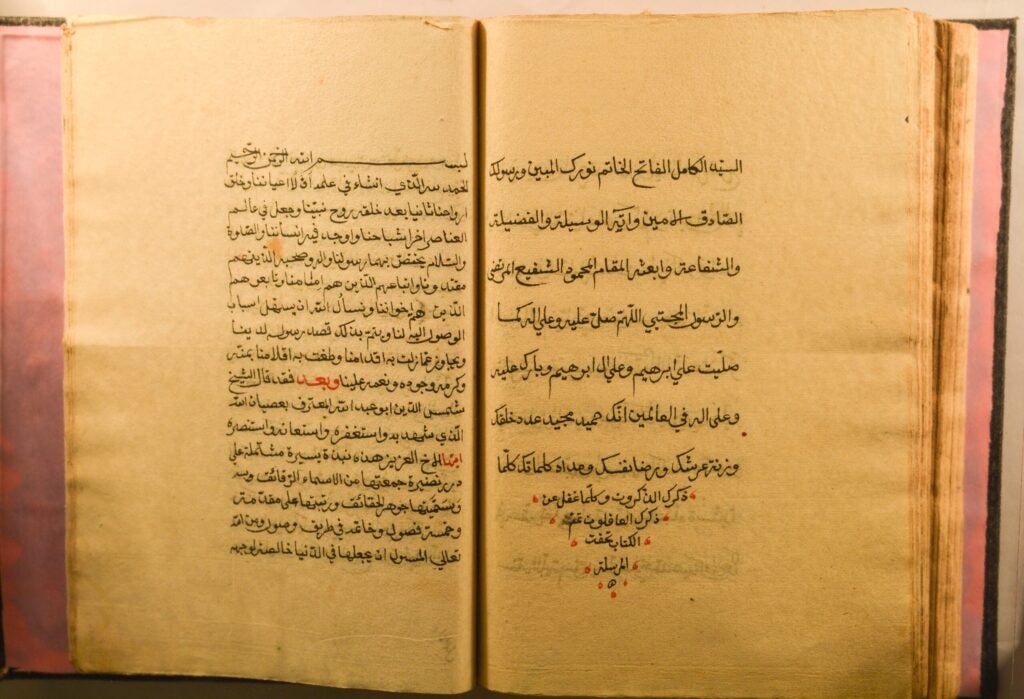
These pages consist of a collection of chapters followed by a conclusion, both concerning al-Mawjūdāt wa-l-Wujūd (Existents and Existence). The chapters systematically address various aspects of this metaphysical dichotomy, distinguishing between beings that exist and the principle of existence itself. The appended conclusion serves to synthesize the preceding discussions. For scholars, this structural arrangement—sequential chapters capped by a final section—reveals a methodical approach to presenting complex ontological material, guiding the reader through graded layers of analysis toward a consolidated closing statement. The manuscript appears to be unfinished, as a catchword indicating the next page is written as “Khuliqat.
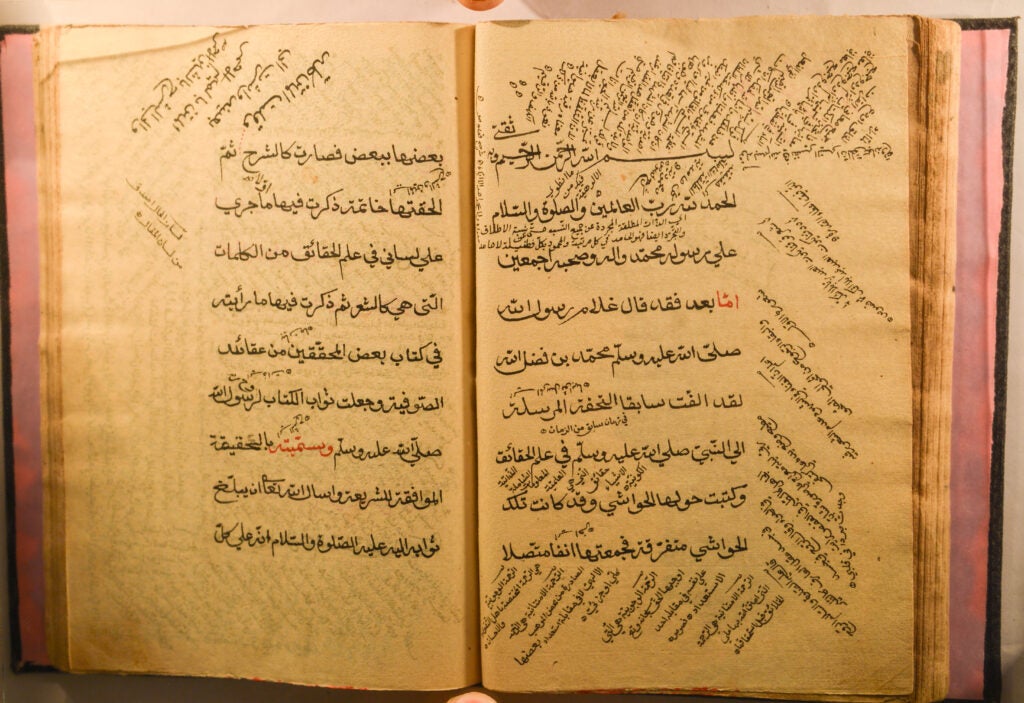
These pages center on the author’s earlier work, al-Tuḥfat al-mursala ilā al-Nabī ṣallá Allāh ʿalayhi wa-sallam fī ʿilm al-ḥaqāʾiq. Rather than reproducing that work in full, the text engages with its themes in a more general way. The author then appends a conclusion (khātimah) to bring the discussion to a close. Following this, several poetic verses are added on two central theological and metaphysical concepts: al-Dhāt (the divine essence) and Marātib al-Wujūd (levels of existence). For scholars, this structure—a discussion of an earlier work followed by a concluding section and poetry on ontology—offers insight into how authors in the Sufi tradition revisited, summarized, and poetically elaborated on their own writings.
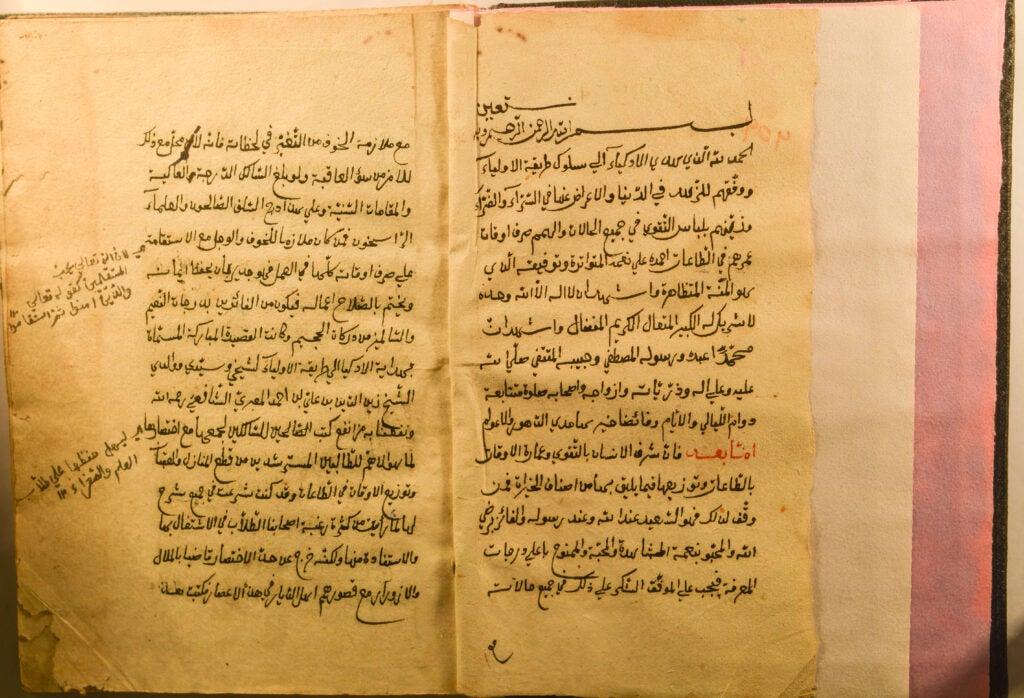
This book is a commentary on a poem composed by the author’s father, Zayn al-Dīn al-Malībārī. The original poem explores various spiritual virtues and ethical qualities, including contentment (al-qanāʿa), repentance (al-tawba), and asceticism (al-zuhd). Through verse-by-verse exposition, the commentary elucidates and expands upon these themes. The work serves as a concise synthesis of life lessons drawn from the poem’s ethical teachings, offering practical guidance for those pursuing knowledge. For scholars, this filial commentary provides insight into how spiritual and ethical teachings were transmitted across generations within scholarly families, preserving and interpreting ancestral wisdom for new cohorts of students. The manuscript measures 21.3 cm in length, 15.4 cm in width, and 1.8 cm in height, with a total of 125 folios.
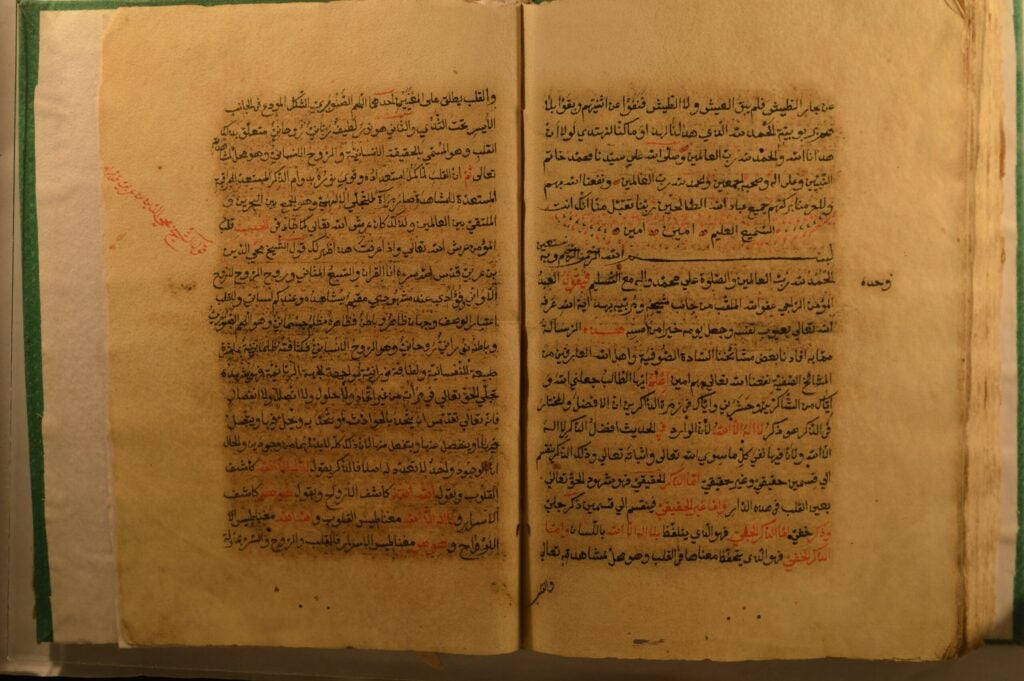
These pages focus on the remembrance of Allah (dhikr), offering a conceptual distinction between two forms: al-dhikr al-ḥaqīqī (true remembrance) and al-dhikr al-khafī (hidden remembrance). The text draws on the teachings of Muḥyī al-Dīn Ibn ʿArabī to elucidate this typology of devotional practice. It further supports the argument by citing the works or sayings of Ibn al-Qāḍī, reinforcing the distinction through additional authoritative voices. For scholars, this manuscript provides insight into how later Sufi traditions synthesized and corroborated Ibn ʿArabī’s esoteric teachings on remembrance with the scholarly lineage of Ibn al-Qāḍī.
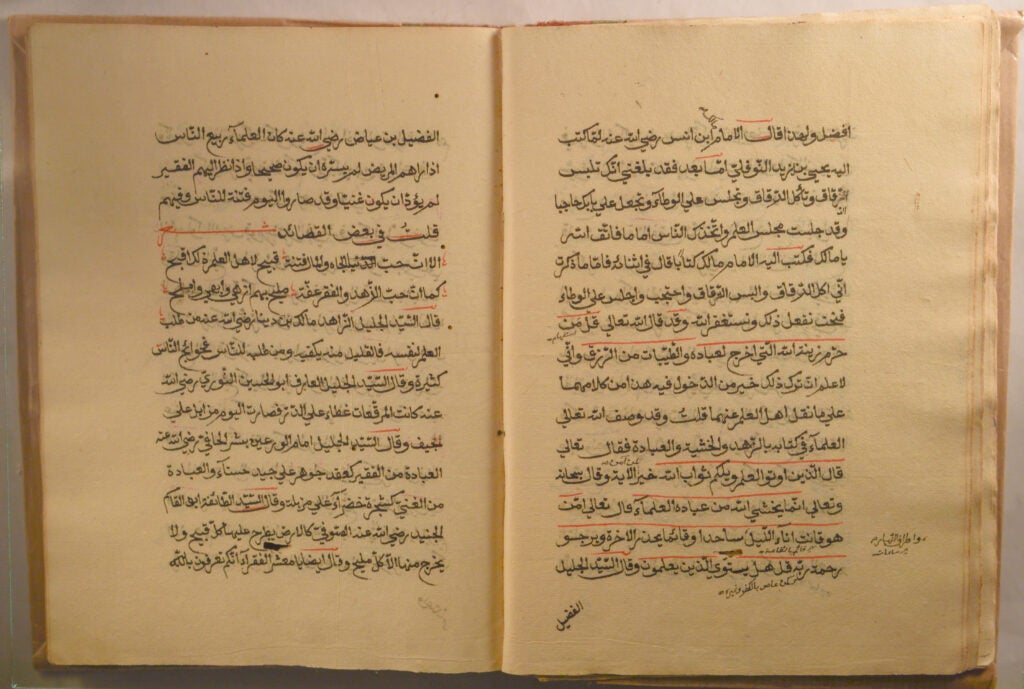
These pages provide a concise summary of al-ʿAydarūs’s Kitāb al-Kibrīt al-Aḥmar wa-l-Iksīr al-Akbar (The Red Sulfur and the Greatest Elixir), focusing on Sufism and its spiritual paths. The content is organized into brief chapters, complemented by poetic verses that reinforce the core themes of each section, creating a rhythmic interplay between expository instruction and lyrical elaboration. For scholars, this structural format reveals how al-ʿAydarūs’s teachings were condensed for accessibility while retaining the aesthetic and mnemonic power of poetry in transmitting spiritual principles to seekers of the path.