

Arabia Asia Archives
Arabia Asia Archives is a flagship project of the Arabia Asia Studies Programme. Since its establishment, our Programme has collaborated with researchers, affiliates, and students to build an archive of primary materials in Arabia Asia studies. We have jointly scanned manuscripts and documents from important, yet previously neglected indigenous sources held in private collections, including mosque libraries, institutions, and overlooked locations across Arabia and Asia. Unsurprisingly, we have found rich historical troves in places off the global arteries of major cities connected by air travel -sites once linked to distant regions by the sea, deserts, and mountain passes. We have also conducted ethnographic fieldwork, collected materials, and recorded inscriptions found at tombs, monuments, and mosques. More...>
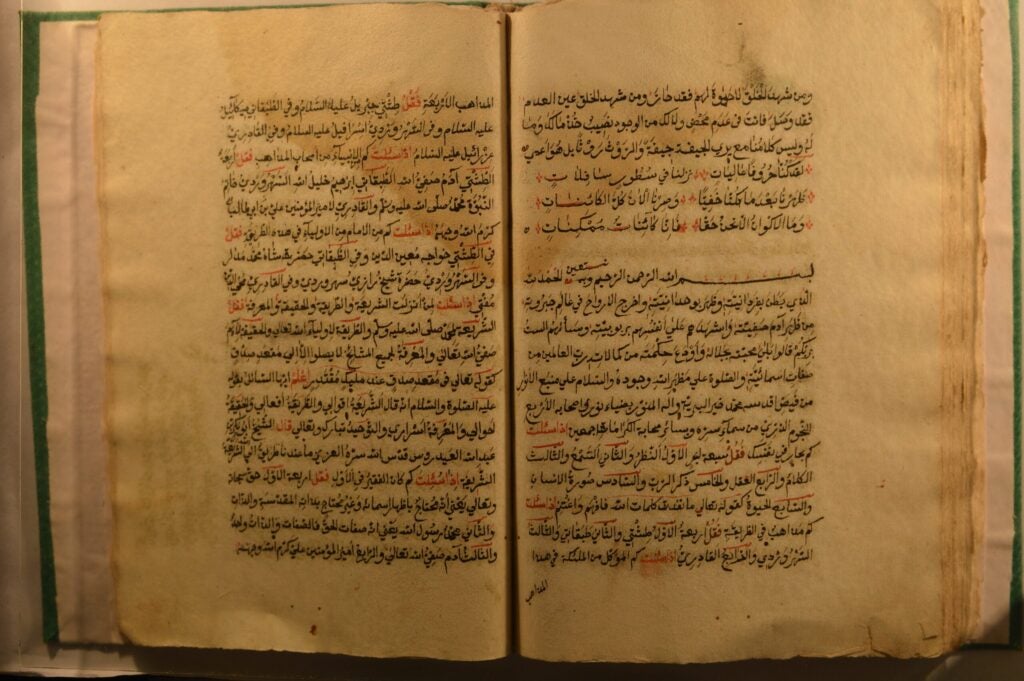
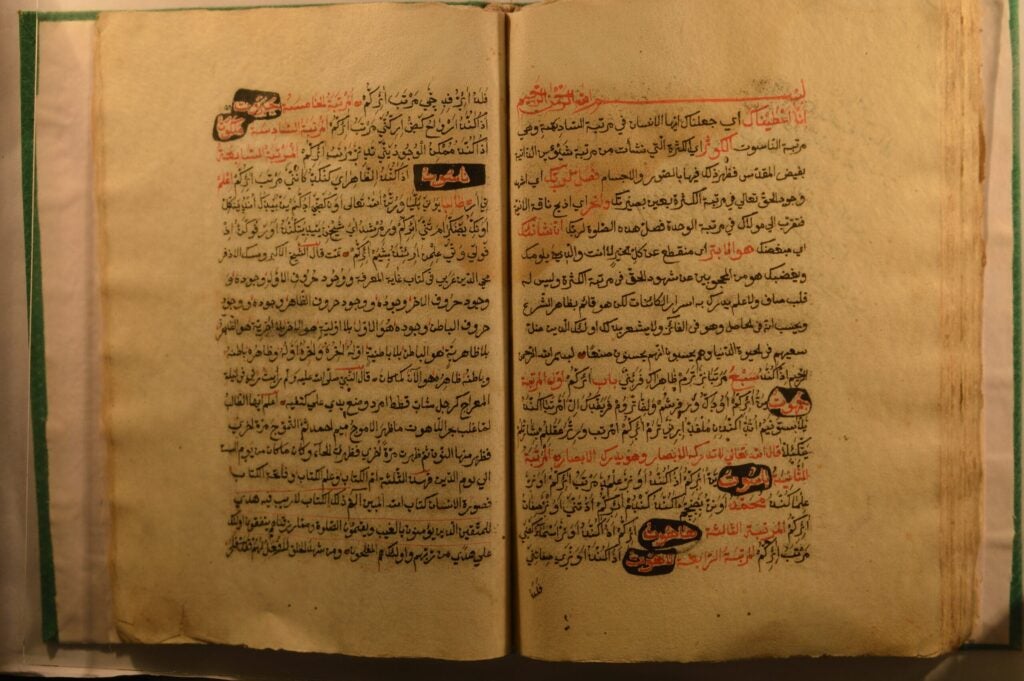
This manuscript presents Ibn ʿArabī’s concept of the Marātib al-Wujūd (Seven Levels of Existence). It combines allegorical Qur’anic commentary with Sufi ontology, using symbolic interpretation to explore the esoteric meanings of the text. The exposition begins with Nāsūt, the realm of humanity and physical form, as the lowest level in the cosmological hierarchy, and proceeds through the higher ontological stations. A brief Arabic-Malayalam section follows, outlining the seven levels of existence according to Sufi doctrine and identifying Lāhūt, Jahmūt, Jabarūt, Nāsūt, and Hāhūt. Despite its brevity, the manuscript presents a concise theological schema of the descending degrees of being from the divine to the human. f. 72 provides Abd al-Raḥmān bin Muhamamd al-Zāhir’s note records that reading is not encouraged for those who did not affiliate with a Sufi master
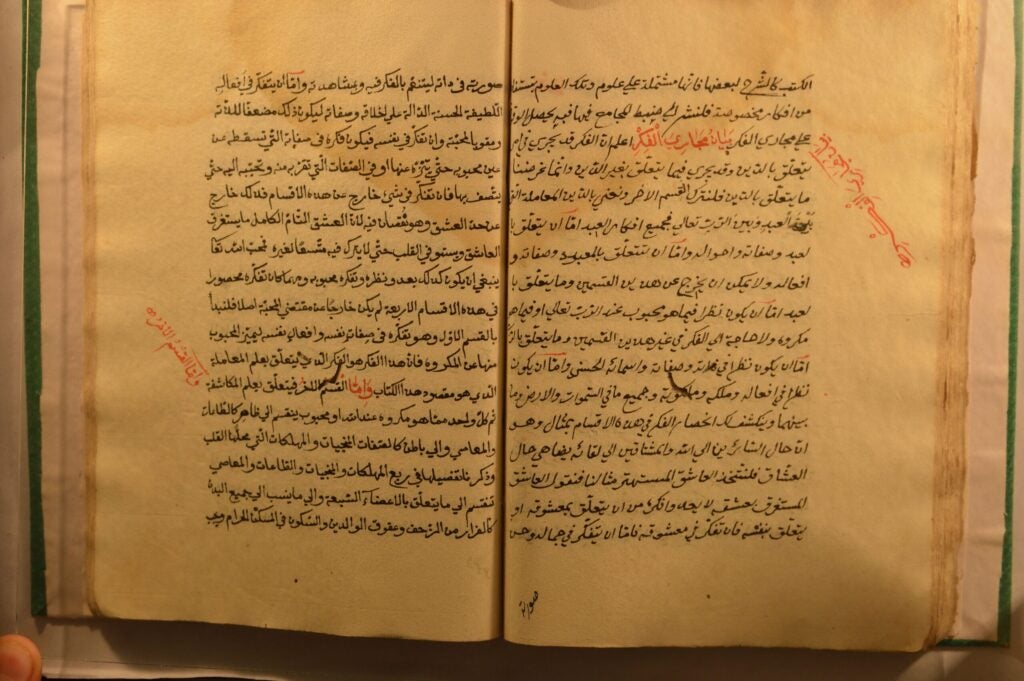
These pages comprise the section on al-Tafakkur (reflection), drawn from Kitāb al-Ḥikmah fī Makhlūqāt Allāh (The Book of Wisdom in God’s Creation) by al-Imām al-Ghazālī. The text focuses on the spiritual and intellectual importance of contemplating Allah’s creations as a pathway to deeper faith and understanding. It emphasizes deliberate reflection on the natural world, the celestial bodies, the human body, and all existing things as manifestations of divine wisdom. Through such contemplation, the seeker comes to recognize the intentionality, design, and purpose embedded within creation, thereby strengthening awareness of the Creator. For researchers, this section illuminates al-Ghazālī’s integration of cosmological observation with theological reflection, presenting tafakkur not merely as passive wonder but as an active spiritual discipline that bridges sensory experience and metaphysical truth.
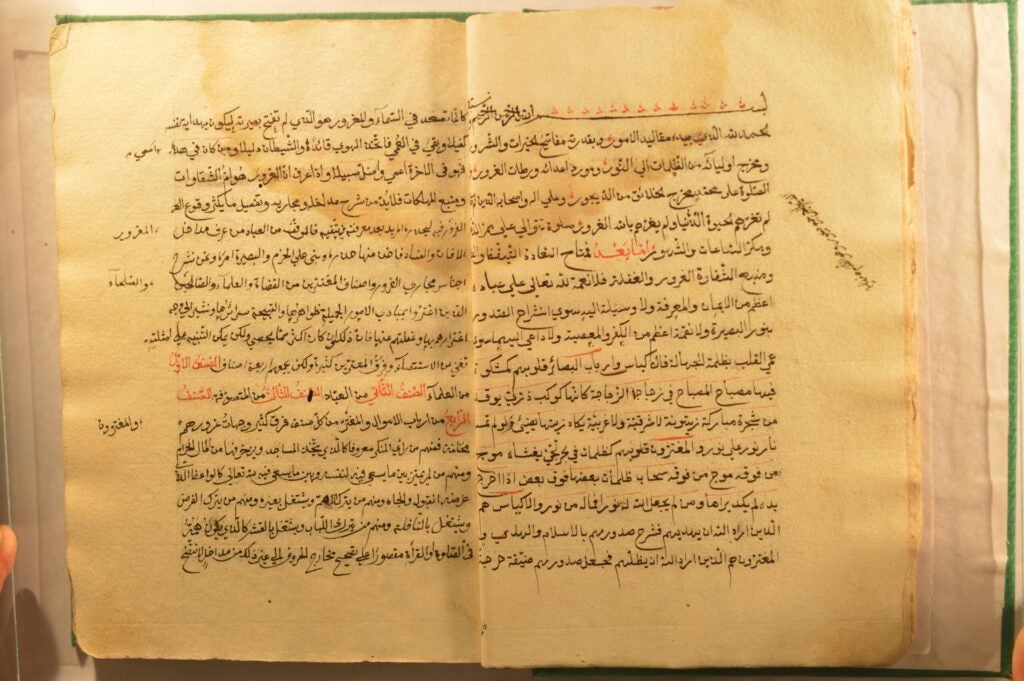
These pages contain the section on the “Categories of the Deluded” (Dhamm al-Ghurūr), a component of the larger masterwork Iḥyāʾ ʿUlūm al-Dīn (The Revival of the Religious Sciences). The text offers a systematic examination of self-deception in religious life, providing detailed examples of deluded individuals across four distinct social and spiritual categories. It addresses the delusions to which scholars may fall prey, the self-deception of worshippers regarding their piety, the spiritual pitfalls encountered by Sufis, and the illusions of the wealthy concerning their worldly status. For each category, the text illustrates how outward religious observance or social position can mask inner complacency and spiritual blindness. This section reveals the Iḥyāʾ’s penetrating moral psychology and its critique of hypocrisy across diverse segments of Islamic society
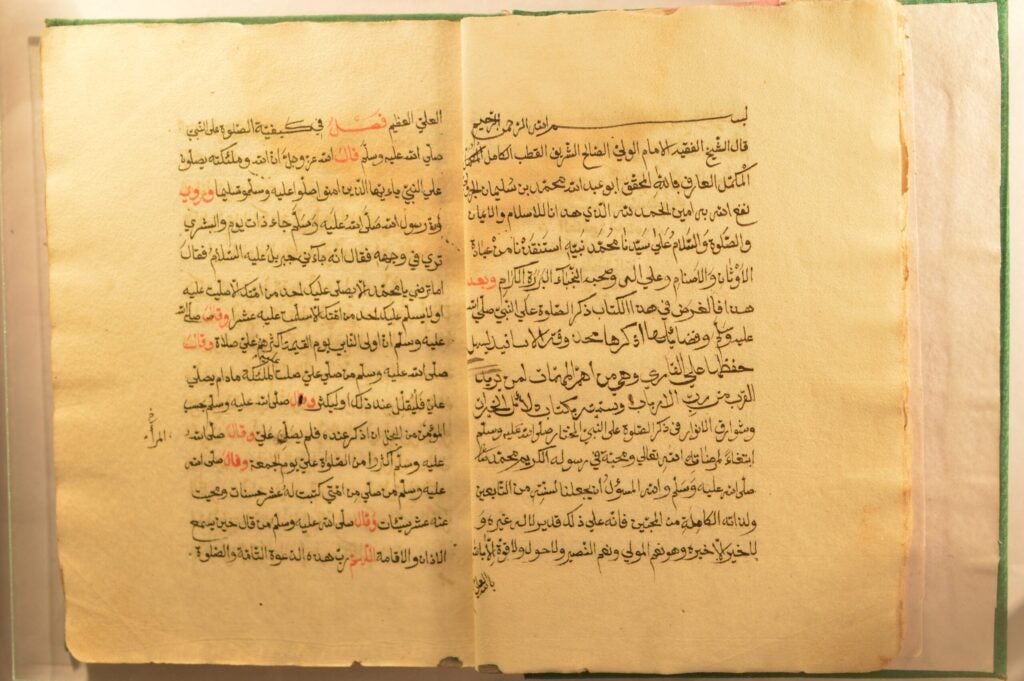
These pages present a summary of the contents of al-Jazūlī’s renowned Dalāʾil al-Khayrāt wa-Shawāriq al-Anwār, focusing specifically on the manner of invoking blessings upon the Prophet Muḥammad. Rather than reproducing the full text, the manuscript condenses and extracts the essential teachings of the original regarding al-ṣalāh ʿalā al-nabī. The summary preserves al-Jazūlī’s instructions on this liturgical practice in a more concise format. This abridged version offers insight into how al-Jazūlī’s influential prayer manual was received, adapted, and transmitted in abbreviated form. Its presence suggests a practical function, perhaps as a portable reference or introductory digest for those seeking the essential elements of this enduring devotional tradition.
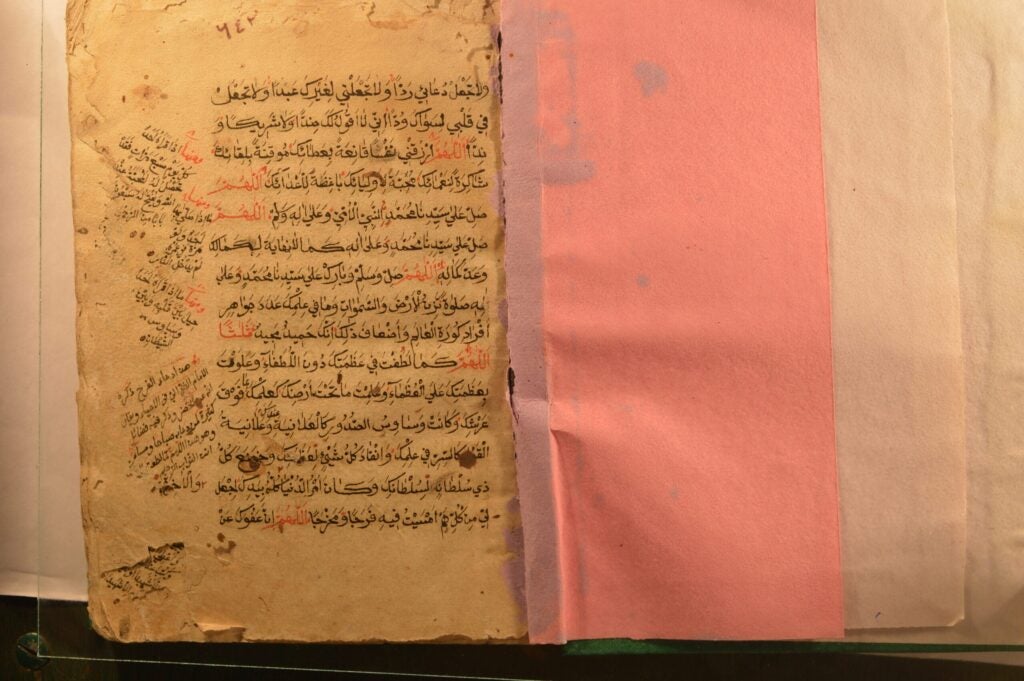
This manuscript is a multi-text volume (majmūʿ) bringing together several shorter texts within a single binding. Its contents include an anonymous collection of devotional litanies (awrād) and invocations, reflecting the pious practices of an unnamed compiler or scribe. The litanies consist of prayers and supplications intended for regular recitation, forming part of spiritual discipline, as well as a series of invocations focused specifically on the merits and virtues of the Prophet Muhammad, extolling his qualities and seeking blessings upon him. As a composite manuscript, the compilation offers evidence of how devotional texts were gathered, transmitted, and used collectively by practitioners. The anonymous nature of the collection raises questions about popular piety, the circulation of litanies outside formal scholarly networks, and the personal selection of texts for spiritual edification. The manuscript is neatly bound in a green cover and measures 20.6 cm in length, 15 cm in width, and 4.2 cm in height with a total of 98 folios.