

Arabia Asia Archives
Arabia Asia Archives is a flagship project of the Arabia Asia Studies Programme. Since its establishment, our Programme has collaborated with researchers, affiliates, and students to build an archive of primary materials in Arabia Asia studies. We have jointly scanned manuscripts and documents from important, yet previously neglected indigenous sources held in private collections, including mosque libraries, institutions, and overlooked locations across Arabia and Asia. Unsurprisingly, we have found rich historical troves in places off the global arteries of major cities connected by air travel -sites once linked to distant regions by the sea, deserts, and mountain passes. We have also conducted ethnographic fieldwork, collected materials, and recorded inscriptions found at tombs, monuments, and mosques. More...>
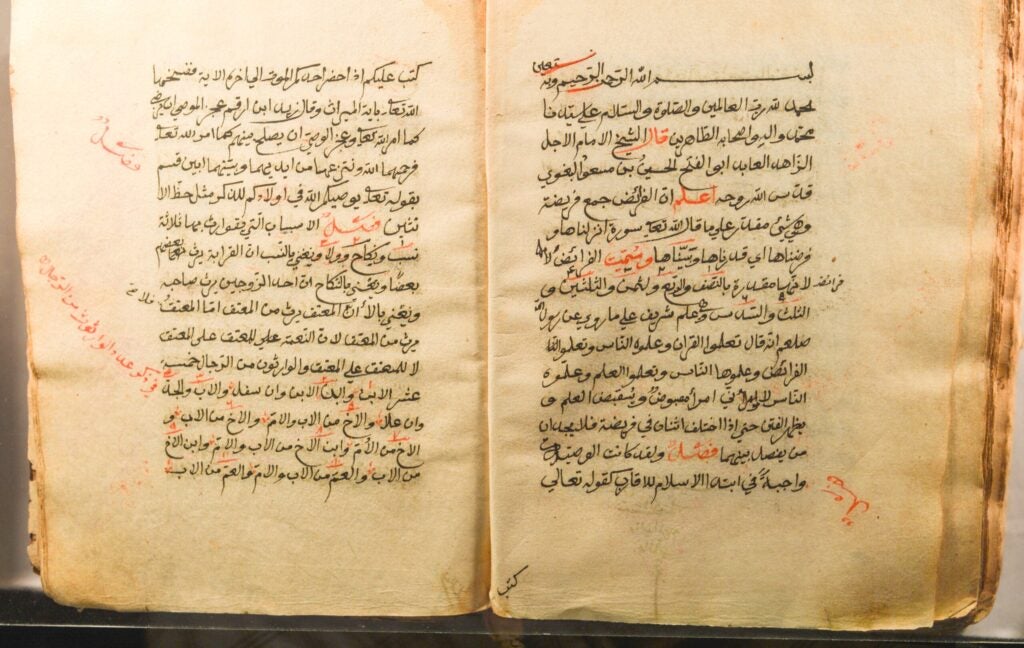
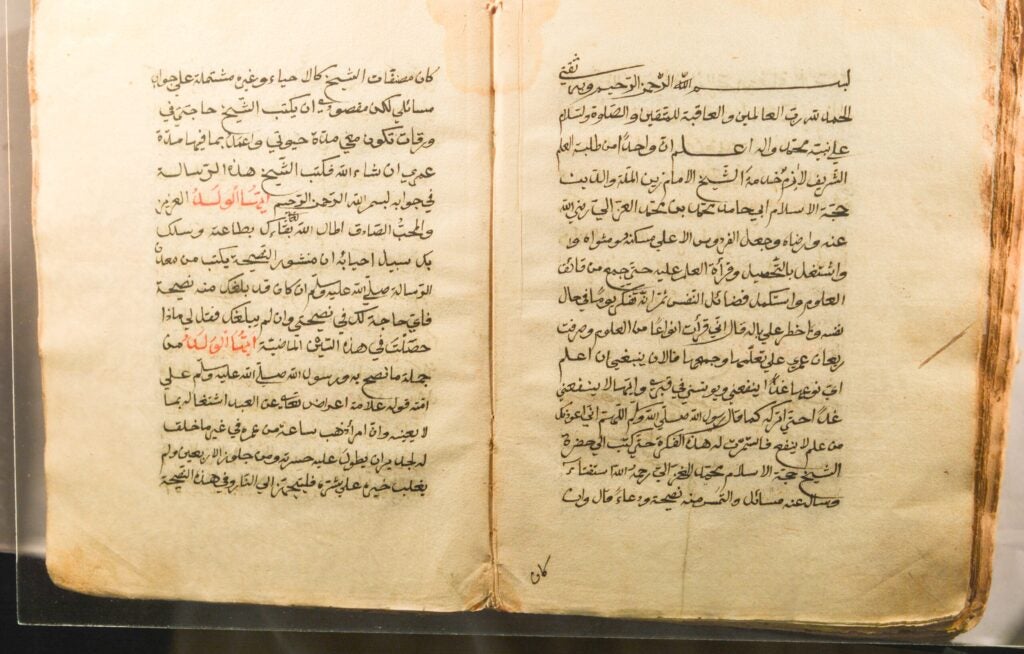
These pages contain the text of Ayyuhā al-Walad by Abū Ḥāmid al-Ghazzālī, the renowned theologian and philosopher. He addressed the treatise to one of his students, who served him and learned diverse kinds of knowledge from him over a long period, and who requested a treatise that would be useful in the afterlife. Written probably in the final years of the author’s life, the content is hortatory in nature, reflecting the master-disciple dynamic central to classical Islamic pedagogy. Throughout the epistle, al-Ghazzālī exhorts the recipient to remain unwavering in adherence to the Islamic faith, emphasizing steadfastness amid intellectual and spiritual challenges. He argues for the pursuit of moral excellence (akhlāq) and the cultivation of virtue as essential components of the righteous life. Additionally, the text provides general guidance on the conduct, priorities, and inner disposition expected of a sincere seeker of knowledge (ṭālib al-ʿilm). For researchers, this text offers direct insight into al-Ghazzālī’s personal mentorship style and his practical counsel on integrating faith, ethics, and the pursuit of learning within the spiritual formation of his students.
These two pages from Jalāl al-Dīn al-Suyūṭī’s Kitāb al-Nuqāyah function as a systematic overview of the larger work’s contents, presenting the material in a compressed reference format. Rather than offering extended exposition, the text is organized into a consecutive series of headings that outline the subjects treated throughout the volume. Each heading demarcates a distinct topic, serving as a finding aid for readers navigating the encyclopedic range of al-Suyūṭī’s compendium. The sequence of headings provides valuable insight into the organizational principles governing late medieval Islamic scholarly compilations, revealing how authors structured knowledge for pedagogical reference and how readers were guided through complex multidisciplinary texts.
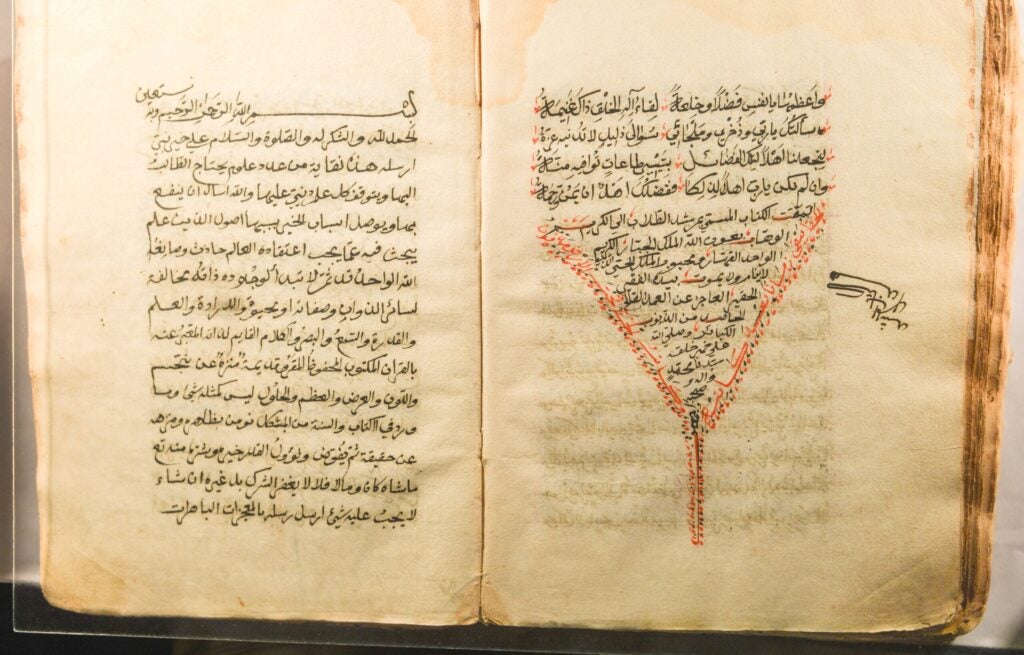
Murshid al-ṭullāb, written in early sixteenth-century Malabar, reflects on key legal and theological concepts, including piety (taqwa), faith (īmān), prayer, and moral and social obligations, while also warning against deviation in religious practice. The text follows a deliberate and consistent structure throughout. Each section begins with a prose sermon (khuṭba) that establishes a thematic foundation and is often followed by a series of poetic verses that echo, expand upon, or reinforce the sermon’s message. This alternating pattern of homiletic instruction and lyrical expression offers researchers insight into didactic methods in Islamic religious writing in the region, in which the fusion of reasoned exhortation and emotive verse served to engage both the intellect and the reader’s spiritual sensibilities.The manuscript shows evidence of layered historical use, including multiple ownership notes and waqf statements. One note records that in 1198 AH (1783–84), its owner, Zayn al-Dīn b. al-Ḥājj Muḥammad of Tānūr (Malappuram), endowed the text to the students of Valiya Kuḷṅṅara Palli in Tānūr and stipulated that it not be exchanged. This suggests that the learning center has held custodianship of the text since the late eighteenth century.
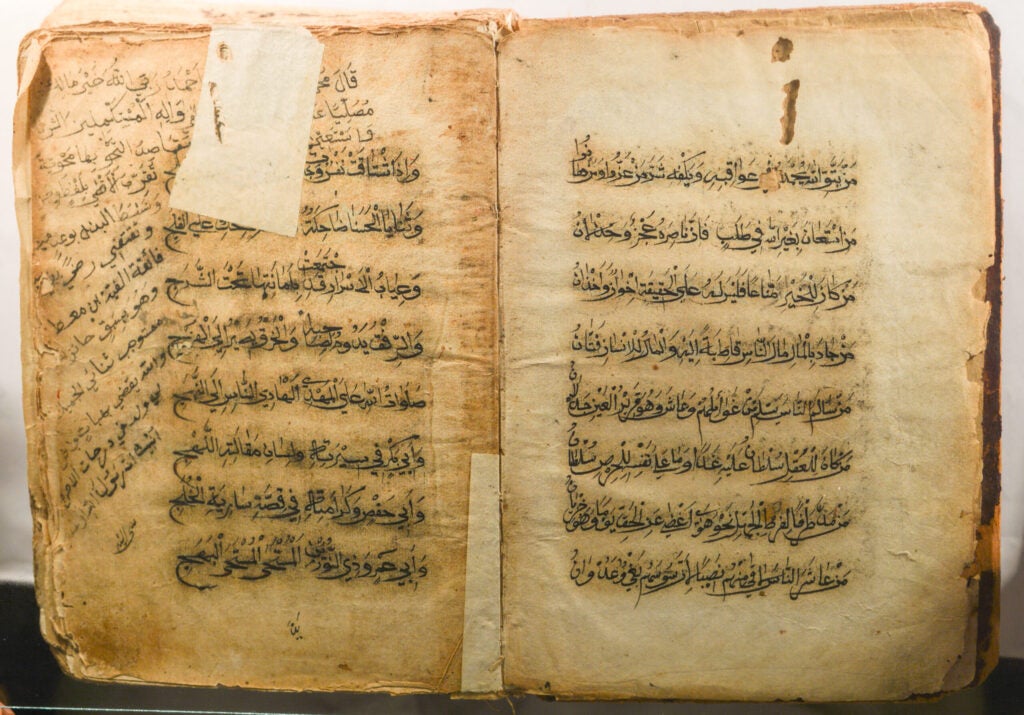
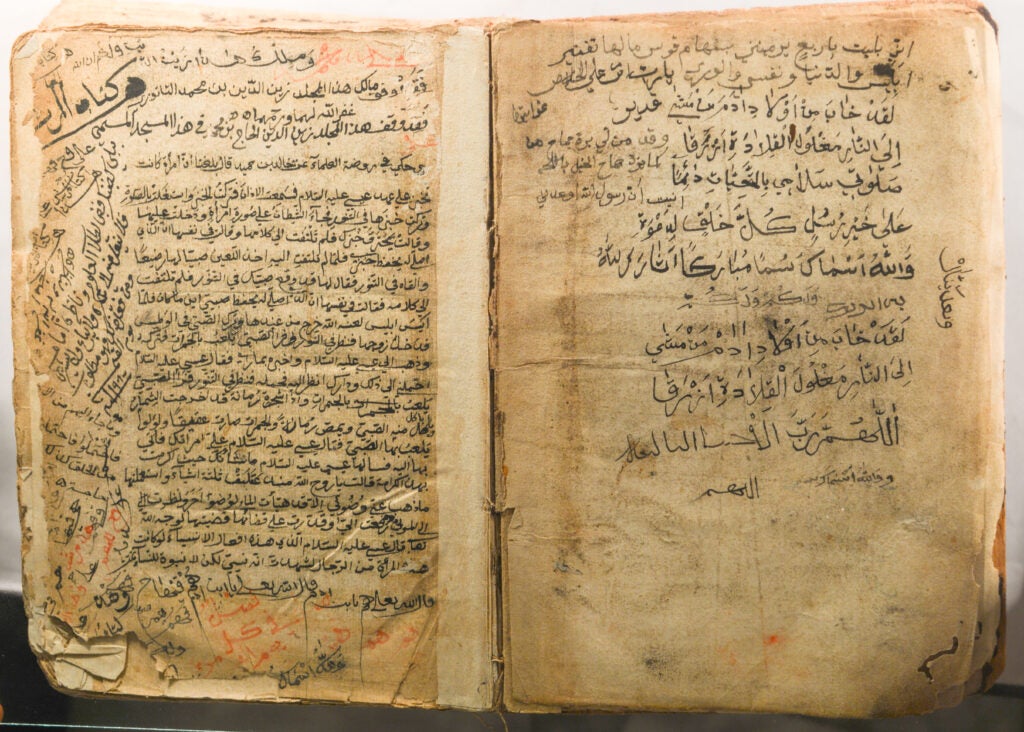
The opening of this manuscript contains the celebrated introductory verses of ʿUnwān al-Ḥikam, also known as al-Nūniyya, a didactic poem by the renowned 11th-century Abbasid statesman and poet Abū al-Fatḥ al-Bustī (d. C.E. 1010). Composed in the Baḥr al-Basīṭ meter, the poem takes its title from its distinctive monorhyme scheme, in which every couplet ends with the Arabic letter nūn. These opening lines establish the work’s central theme: a profound meditation on character, ethics, and the transience of power, encapsulating al-Bustī’s philosophy of contentment and integrity. The poem achieved enduring fame across the Islamic world and was frequently copied and memorized for its moral teachings. Here, the verses are written in a clear naskh script, with the rhyming nūn vocalized in black ink to aid oral recitation and study. Folio 2r contains excerpts from a poem by Abū Muḥammad ʿAbd Allāh ibn Nuʿaym al-Haḍramī al-Qurṭubī (d. C.E. 1239), along with introductory lines from Alfiyyat Ibn Mālik in the margin. The poem actually begins on folio 2v, and the folios were probably misplaced at a later stage during binding. Although the manuscript is bound, it is in very precarious condition. The manuscript measures 21.3 cm in length, 14.8 cm in width, and 4.5 cm in height with a total 307 folios.