

Arabia Asia Archives
Arabia Asia Archives is a flagship project of the Arabia Asia Studies Programme. Since its establishment, our Programme has collaborated with researchers, affiliates, and students to build an archive of primary materials in Arabia Asia studies. We have jointly scanned manuscripts and documents from important, yet previously neglected indigenous sources held in private collections, including mosque libraries, institutions, and overlooked locations across Arabia and Asia. Unsurprisingly, we have found rich historical troves in places off the global arteries of major cities connected by air travel -sites once linked to distant regions by the sea, deserts, and mountain passes. We have also conducted ethnographic fieldwork, collected materials, and recorded inscriptions found at tombs, monuments, and mosques. More...>
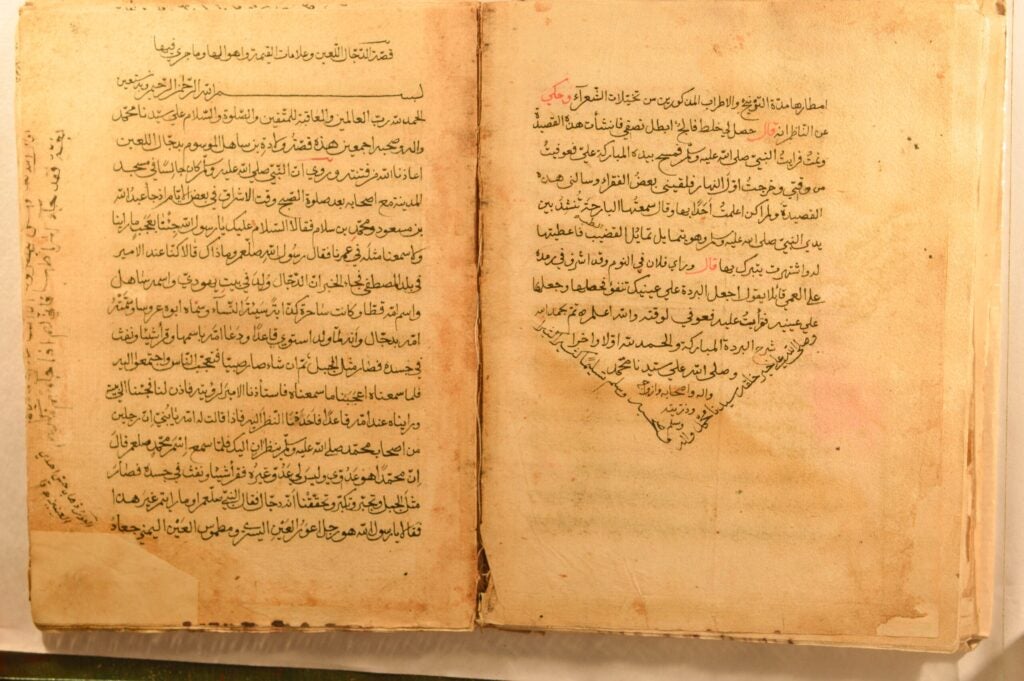
This manuscript recounts the story of the accursed Antichrist (al-Dajjāl), the signs of the Resurrection, and the horrors associated with them. The text narrates the emergence of the Dajjāl as a great deceiver and tribulation preceding the end of time, detailing his physical description, miraculous claims, and the deception he brings upon humanity. It further enumerates the major and minor portents of the Hour, including cosmic disturbances, societal collapse, and the appearance of Gog and Magog. The horrors of these events—both the trials faced by believers and the terrors of the final days—are vividly depicted. For researchers, this eschatological compilation synthesizes prophetic traditions into a coherent narrative of end-time trials and their spiritual significance. The manuscript measures 19.6 length, 14.4 width and 1.8 height with a total of 50 folios.
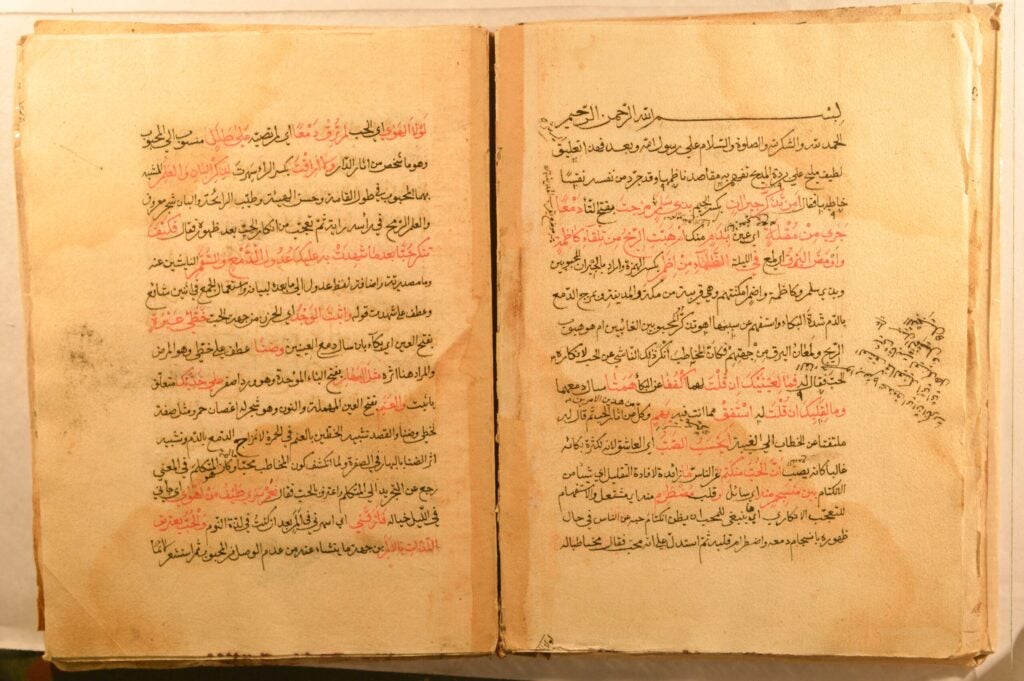
This manuscript is a commentary on the most famous poem of Prophetic praise, al-Burda. It explores the poem’s terminology, rhetorical imagery, events from the Prophetic biography (sīra), and the moral lessons contained within it. The text systematically unpacks the poem’s vocabulary, explaining specialized terms and their theological or devotional significance. It also analyzes rhetorical devices—metaphor, simile, and allusion—through which the poet conveys praise of the Prophet’s life, clarifying their historical context and extracting ethical guidance. For researchers, this work bridges poetic analysis, Prophetic biography, and moral instruction, demonstrating how al-Burda functions as both a literary masterpiece and a vehicle for spiritual education.
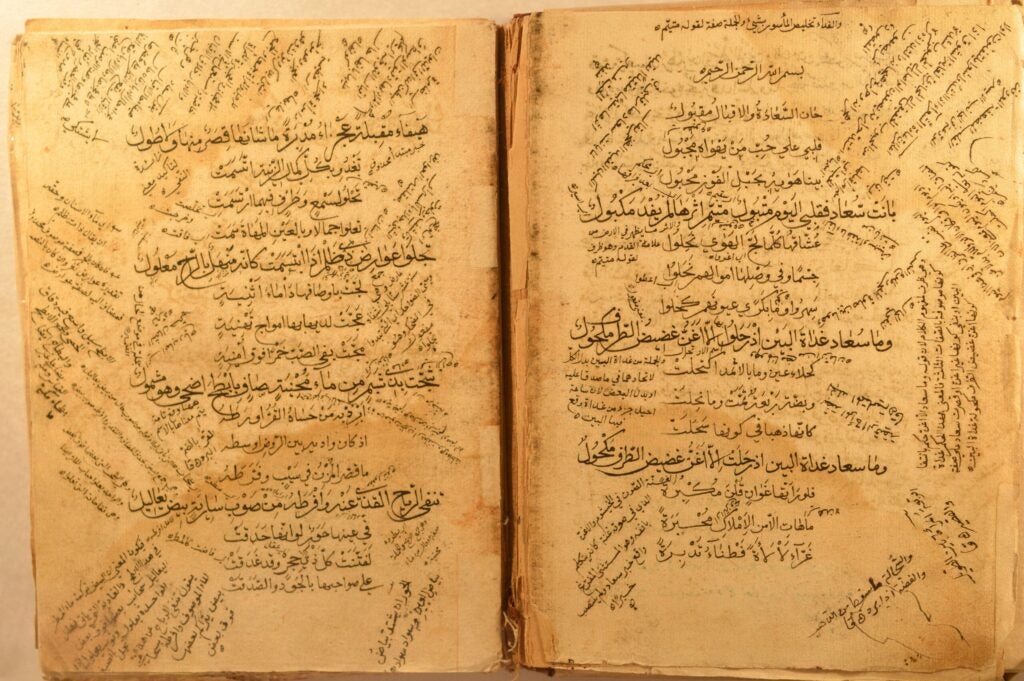
This quintain is an elaboration of the celebrated poem Bānat Suʿād by Kaʿb ibn Zuhayr. Recited before Prophet Muhammad after Kaʿb’s acceptance of Islam, the poem stands as an eloquent tribute to the Prophet’s leadership and character. Regarded as one of the masterpieces of early Arabic literature, it has been read by later poets and scholars not only as a significant expression of the transition from pre-Islamic to Islamic poetry, but also as a rich source for further poetic expansion and interpretive detail.
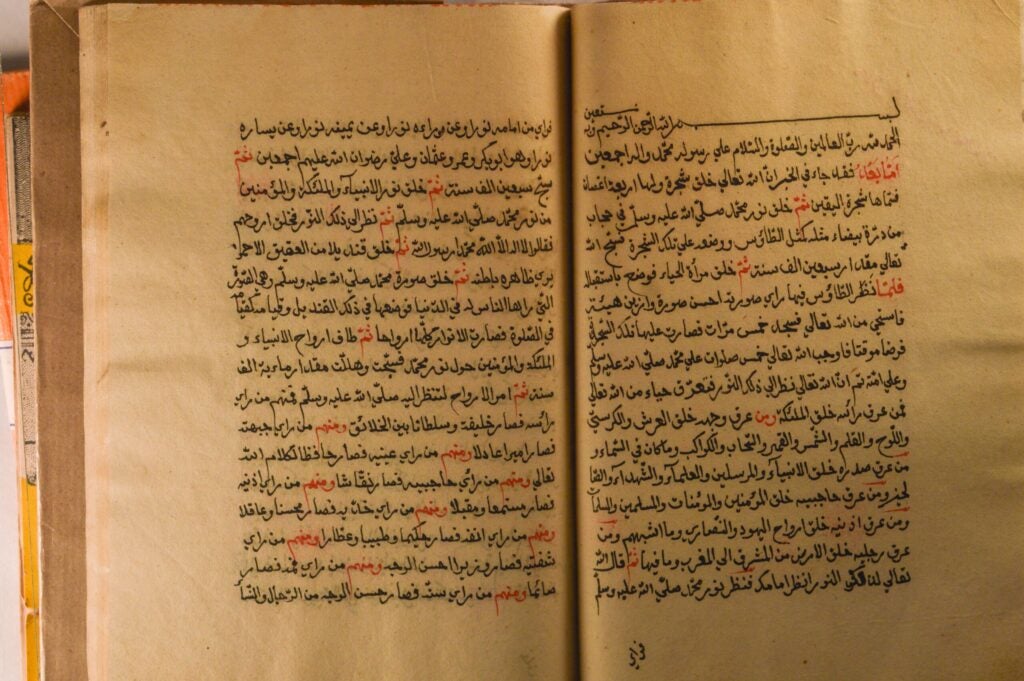
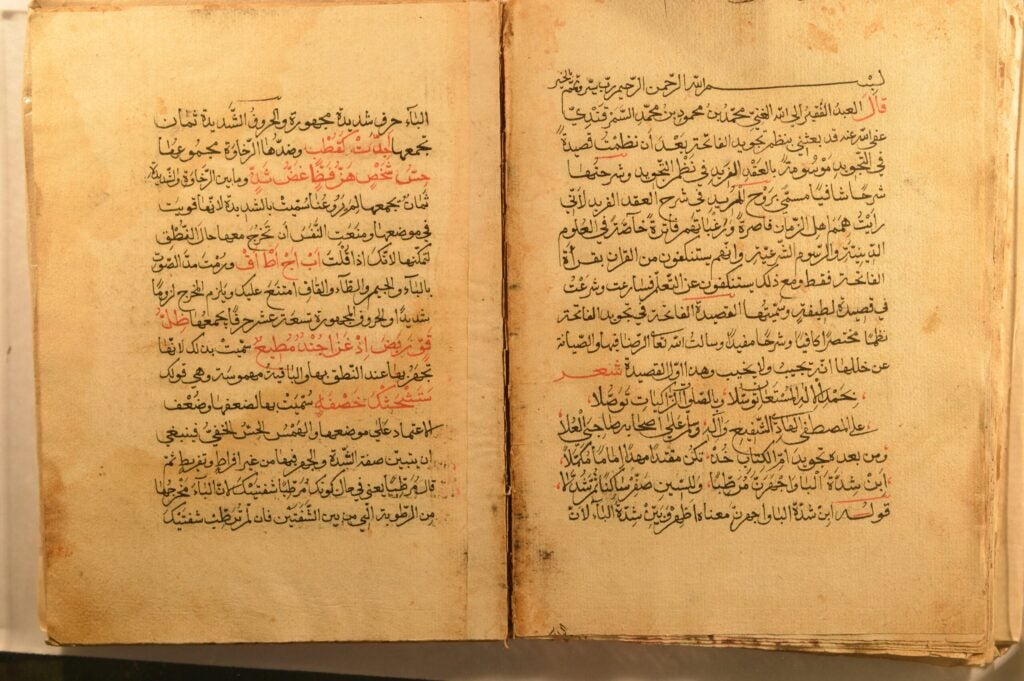
This manuscript explains God’s creation of the “Tree of Certainty” and its branches, noting that each branch carries a specific meaning. The text presents this tree as a symbolic or metaphysical structure, in which each branch corresponds to a distinct aspect of spiritual or doctrinal significance. The manuscript goes further, delving into the nature of God’s creation and its profound inner meanings. It explores how all created things contain hidden depths beyond their outward forms, inviting the reader to contemplate the wisdom and purpose woven into existence. For researchers, this work offers a framework for understanding how symbolic representations, such as the Tree of Certainty, can reveal the layered realities embedded within divine creation.
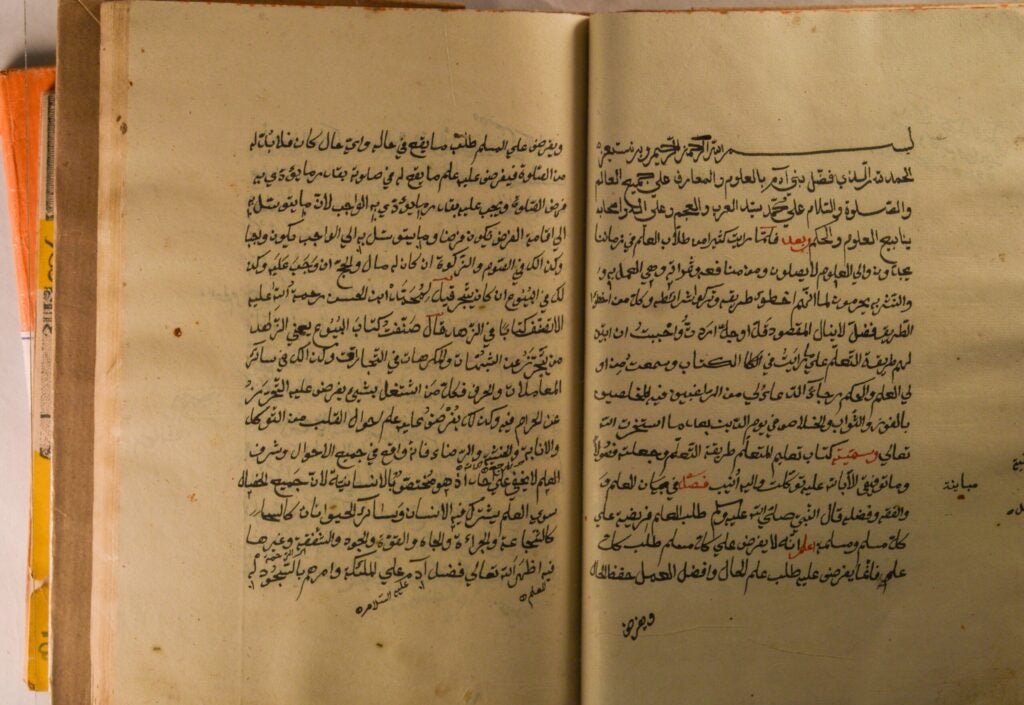
A copy of the famous Taʿlīm al-Mutaʿallim by Burhān al-Dīn al-Zarnūjī (d. 1223?) explains various aspects of religious etiquette in the pursuit of knowledge. Al-Zarnūjī lived in Transoxiana and was a disciple of Burhān al-Dīn al-Marġīnānī al-Ḥanafī (d. 1197), the author of al-Hidāya. This is a renowned work focused on the methods of study, the virtue of seeking knowledge, and the character traits and etiquette a student must uphold in relation to their teacher. The text outlines proper approaches to learning, emphasizing sincerity, diligence, and respect for scholarly tradition. It extols the spiritual and social merits of pursuing sacred knowledge as a religious duty. Furthermore, the work details the moral conduct expected of a student toward their teacher, including humility, attentiveness, and reverence, framing the teacher-student relationship as an essential ethical and spiritual bond for the successful transmission of knowledge.