

Arabia Asia Archives
Arabia Asia Archives is a flagship project of the Arabia Asia Studies Programme. Since its establishment, our Programme has collaborated with researchers, affiliates, and students to build an archive of primary materials in Arabia Asia studies. We have jointly scanned manuscripts and documents from important, yet previously neglected indigenous sources held in private collections, including mosque libraries, institutions, and overlooked locations across Arabia and Asia. Unsurprisingly, we have found rich historical troves in places off the global arteries of major cities connected by air travel -sites once linked to distant regions by the sea, deserts, and mountain passes. We have also conducted ethnographic fieldwork, collected materials, and recorded inscriptions found at tombs, monuments, and mosques. More...>
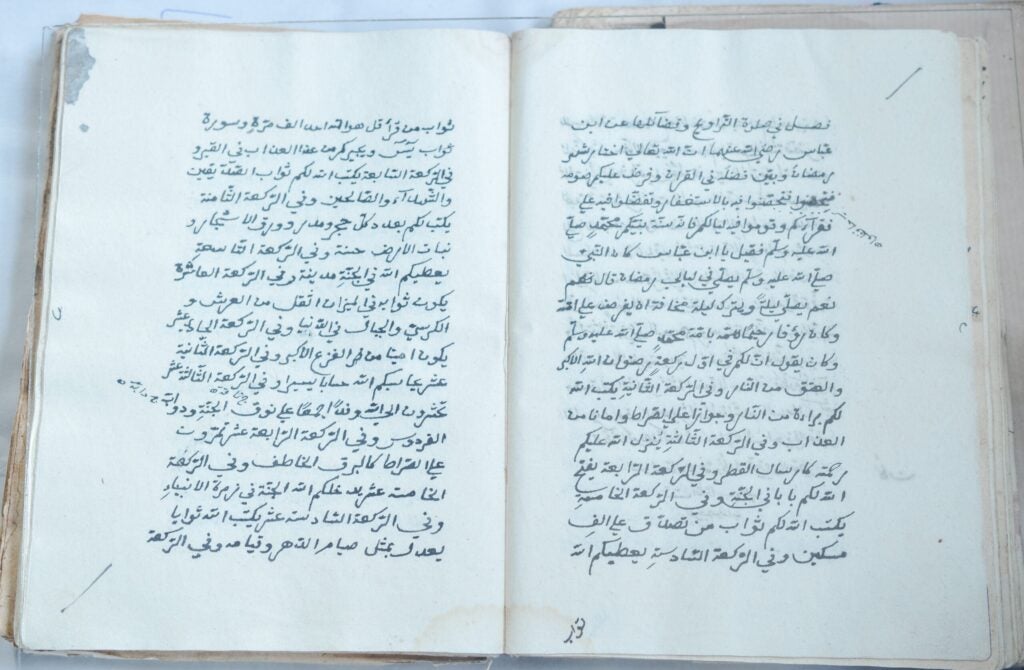
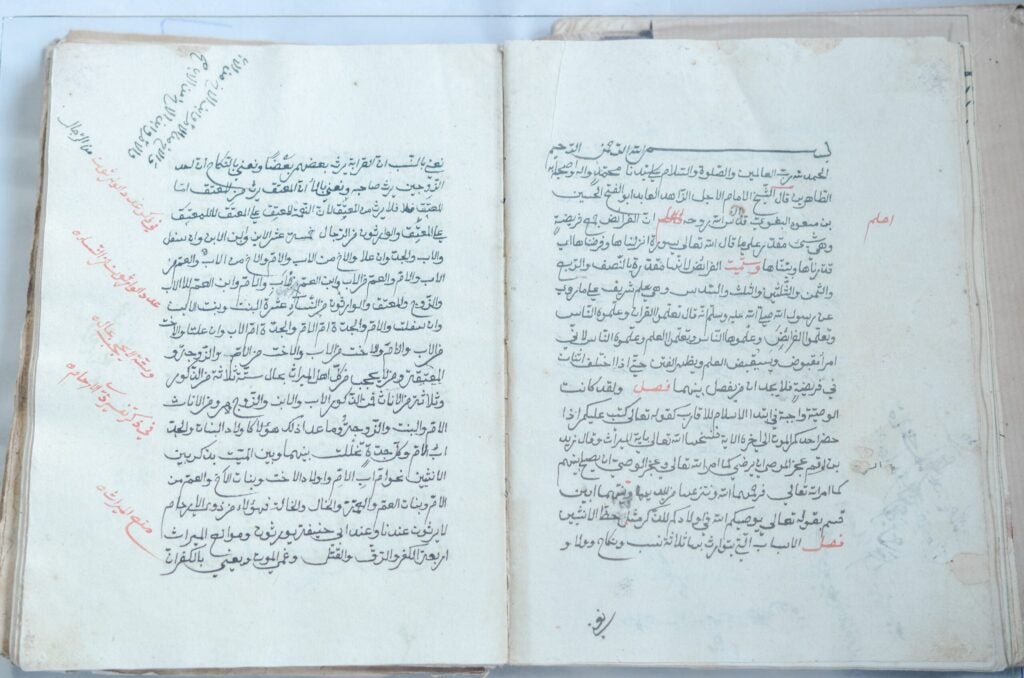
This manuscript discusses al-Mīrāth (inheritance), its intricate details, and legal rulings, while covering various inheritance scenarios. The text systematically addresses the shares of heirs, the principles of distribution, and the resolution of complex cases involving multiple claimants or excluded relatives. This work provides a structured reference for understanding Islamic inheritance jurisprudence (al-Farā’iḍ), demonstrating how mathematical calculations determine entitlements based on degrees of kinship and legal impediments. Its coverage of diverse scenarios illustrates the flexibility and comprehensiveness of these legal frameworks.
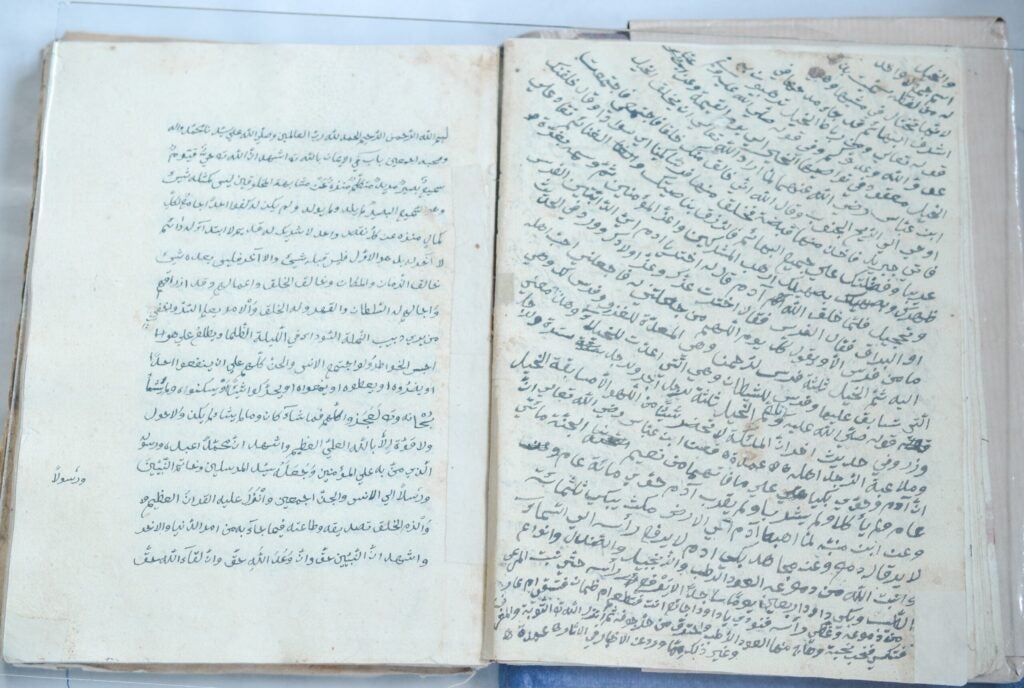
This manuscript details the lives of Prophet Muhammad, the prophets, and al-Ṣaḥābah (the companions), alongside descriptions of al-Jannah (paradise) and broader matters in Islam. The text presents prophetic biographies, highlighting key events and moral lessons from each messenger. It further extols the virtues and contributions of the Prophet’s companions, documenting their roles in preserving and transmitting Islamic teachings. The descriptions of paradise offer vivid depictions of its rewards, intended to inspire righteousness. For researchers, this work functions as a comprehensive primer on Islamic sacred history and eschatology, weaving together prophetic narratives, companion biographies, and otherworldly imagery into a cohesive devotional and educational text.
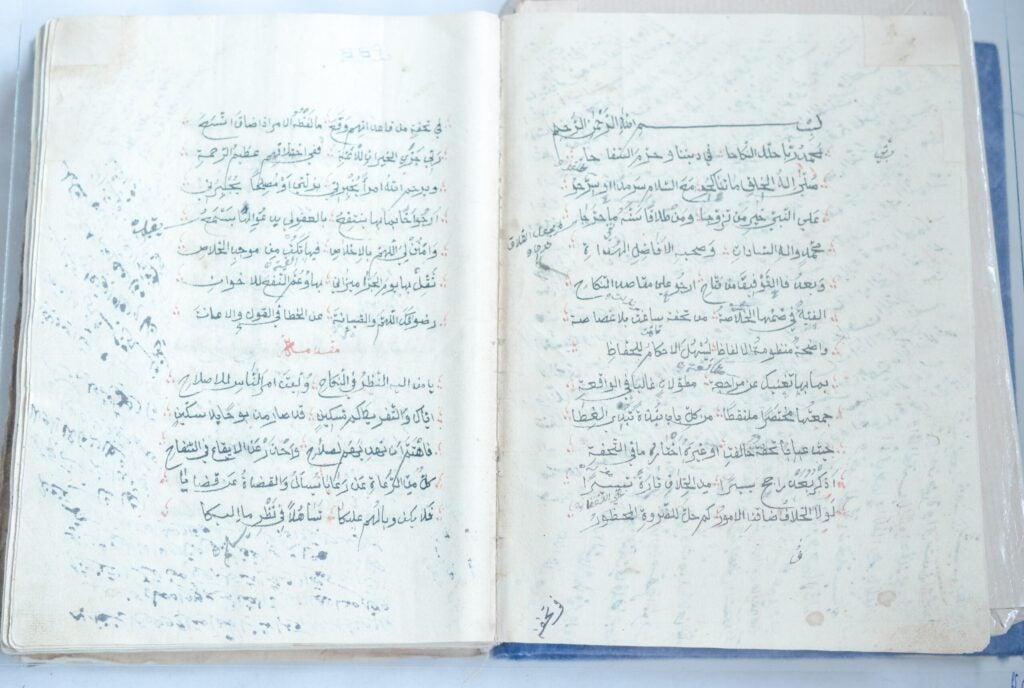
This manuscript is a metrical poem (qaṣīda) dedicated to the jurisprudence of marriage, titled Maqāṣid al-Nikāḥ. Composed in an instructional poetic style, the text meticulously outlines the objectives, shurūṭ (legal conditions), and comprehensive regulations governing marriage in Islamic law. The poem addresses the underlying purposes of marriage, the prerequisites for a valid contract, the rights and obligations of spouses, and related legal provisions. The work serves as a concise didactic manual, using rhyme and meter to facilitate the memorization and study of these essential legal rules. For researchers, this poetic treatise exemplifies the pedagogical tradition of versifying complex legal material, transforming technical jurisprudential content into an accessible, rhythmic composition. Its focus on maqāṣid (objectives) alongside positive rulings reflects a methodologically integrated approach to Islamic legal education, balancing teleological principles with specific normative regulations.
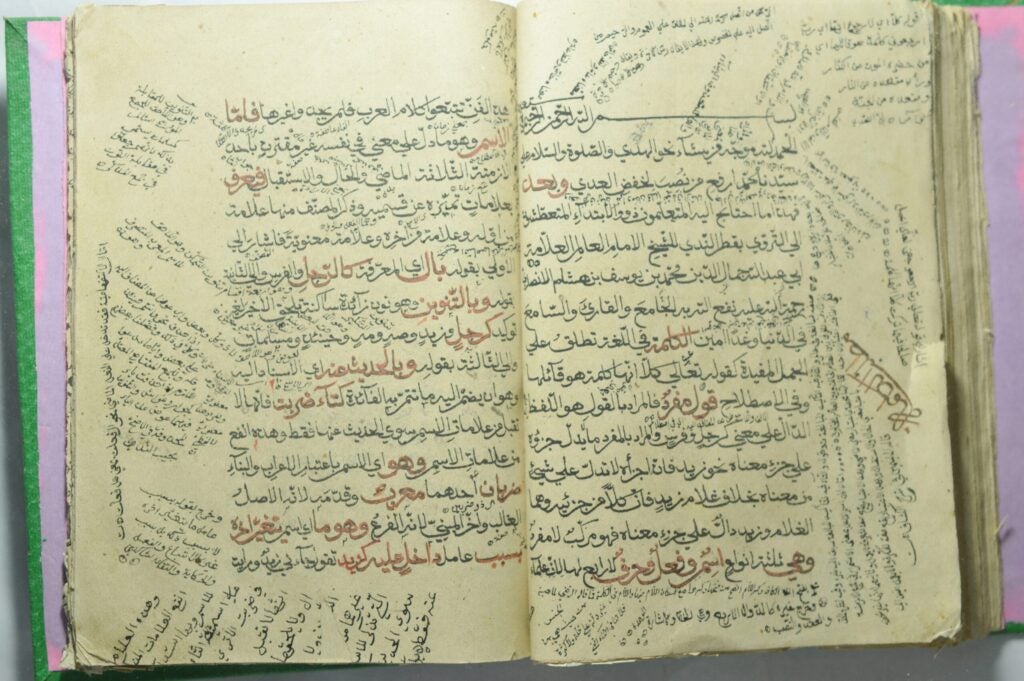
This manuscript is a seminal text in ʻIlm al-naḥw (Arabic grammar), offering a comprehensive analysis of ʻIlm al-iʻrāb (desinential inflection). It details the various states of the Arabic word, including al-jāzim and al-majzūm, al-manṣūb (the accusative), and other fundamental grammatical rules governing case endings, mood markers, and syntactically conditioned changes to word finals. For researchers, this work serves as an authoritative reference for understanding how desinential inflection encodes grammatical relations within Arabic sentences. Its systematic treatment of nominal declension and verbal apocopation reveals the logical precision underlying iʻrāb, demonstrating how final vowel and consonant changes signal functional roles such as subject, object, or conditional verb.
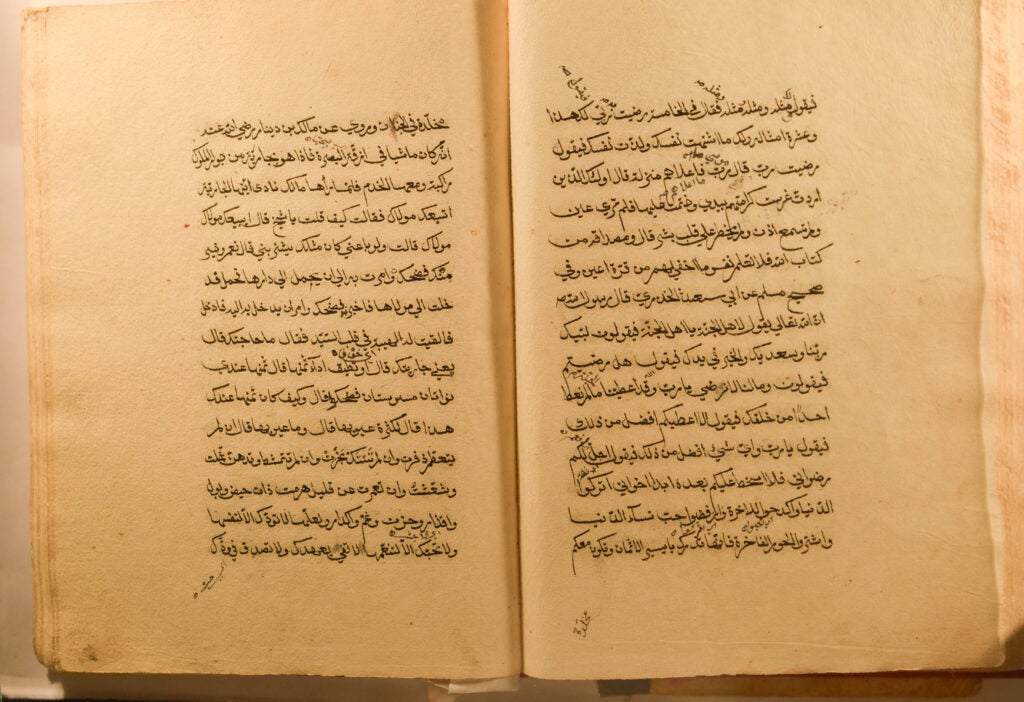
This manuscript presents a series of didactic verses on Arabic philology, as set out in al-Tuḥfa al-Wardiyya. The primary poetic text has been extensively curated and explained by subsequent scholars across a range of linguistic treatises, attesting to its enduring pedagogical value. These verses condense complex philological principles into memorable form, covering grammar, morphology, lexicography, and rhetorical usage. For researchers, the work is significant not only for its original context but also for its reception history. The many commentaries, glosses, and supercommentaries produced by later scholars reveal how successive generations engaged with, refined, and transmitted this foundational text. The manuscript thus offers insight into the commentarial tradition itself, documenting the evolution of Arabic linguistic pedagogy through layered scholarly engagement.