

Arabia Asia Archives
Arabia Asia Archives is a flagship project of the Arabia Asia Studies Programme. Since its establishment, our Programme has collaborated with researchers, affiliates, and students to build an archive of primary materials in Arabia Asia studies. We have jointly scanned manuscripts and documents from important, yet previously neglected indigenous sources held in private collections, including mosque libraries, institutions, and overlooked locations across Arabia and Asia. Unsurprisingly, we have found rich historical troves in places off the global arteries of major cities connected by air travel -sites once linked to distant regions by the sea, deserts, and mountain passes. We have also conducted ethnographic fieldwork, collected materials, and recorded inscriptions found at tombs, monuments, and mosques. More...>
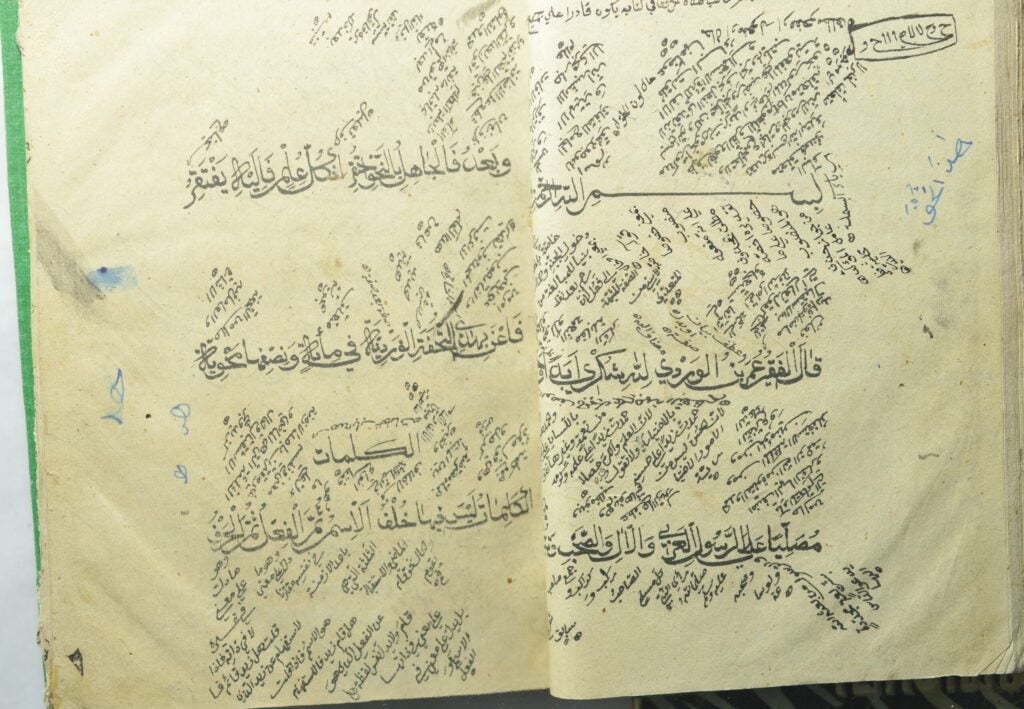
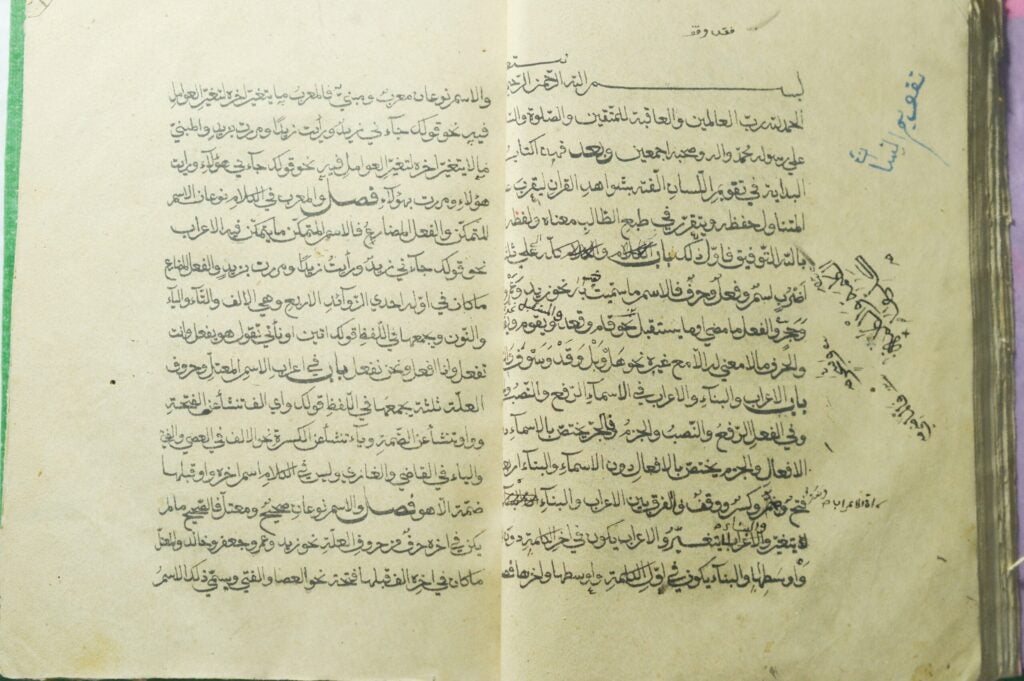
This concise manual addresses Arabic nouns and verbs and is designed to enhance students’ linguistic proficiency and mastery of eloquent Arabic. It systematically categorizes noun types according to definiteness, gender, number, and case marking, alongside verb classifications according to tense, mood, and root structure. The text presents paradigms and usage examples to support the accurate construction of phrases and sentences. For researchers, this manual serves as a pedagogical tool that bridges basic morphology and applied eloquence (balāghah). Its focus on noun-verb interplay reveals how classical Arabic grammatical instruction prioritized functional competence in both comprehension and composition for learners advancing toward rhetorical excellence.
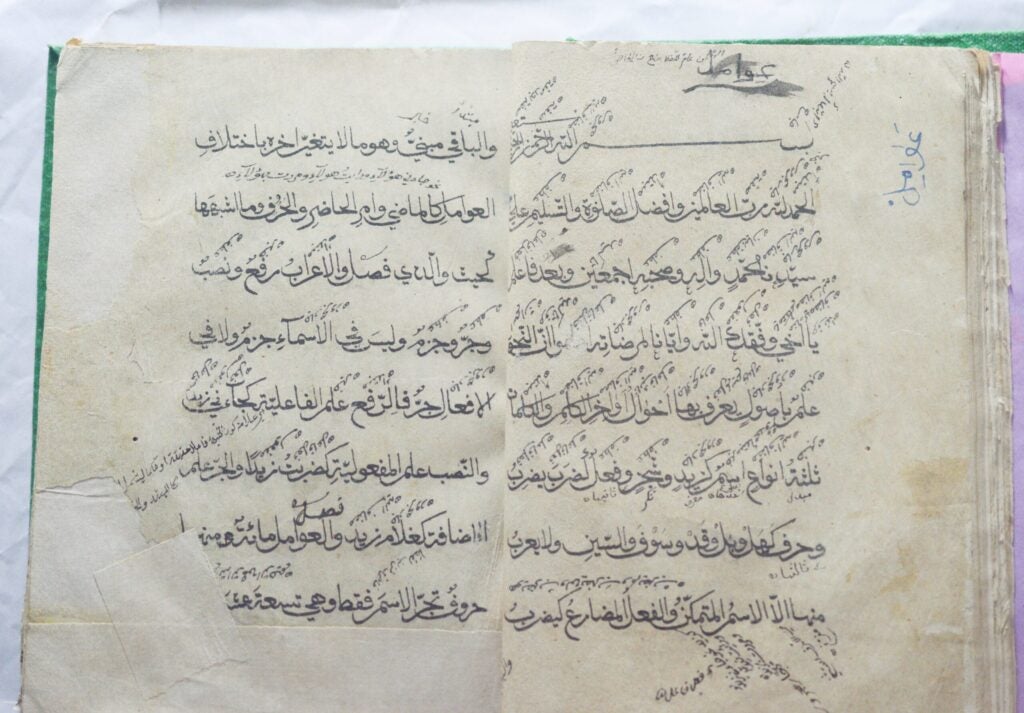
This concise summary addresses Arabic conjunctions and prepositions, along with their syntactical relationships with verbs. The text systematically lists connecting particles that link words, phrases, or clauses, as well as prepositional particles that govern noun cases. It further explains how these particles affect verb syntax, including shifts in tense, mood, or meaning when certain conjunctions or prepositions precede verbal constructions. For researchers, this manual provides a practical reference for understanding the functional role of particles in Arabic sentence structure, demonstrating how conjunctions and prepositions serve as critical markers of grammatical relationships between verbs and other sentence elements.
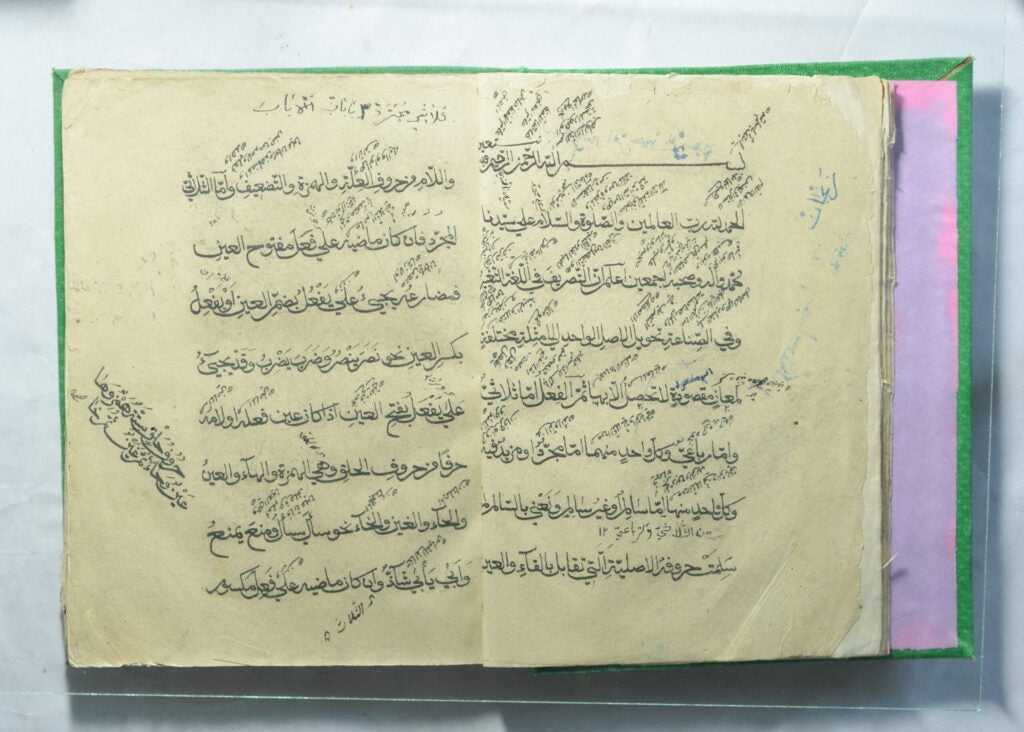
This detailed exposition of ʻIlm al-ṣarf, or Arabic morphology, focuses on the structural transformation of verbs and the linguistic rules governing their inflectional endings. The text systematically examines how verb forms change across tense, mood, voice, and person through predictable morphological patterns. It also analyzes the rules that determine final vowel markings and their grammatical significance. For researchers, this work offers an advanced treatment of verb morphology, moving beyond root classification to explain the dynamic processes of taṣrīf, or morphological transformation. Its systematic presentation of inflectional rules provides essential tools for parsing and generating correct verbal forms in Arabic.
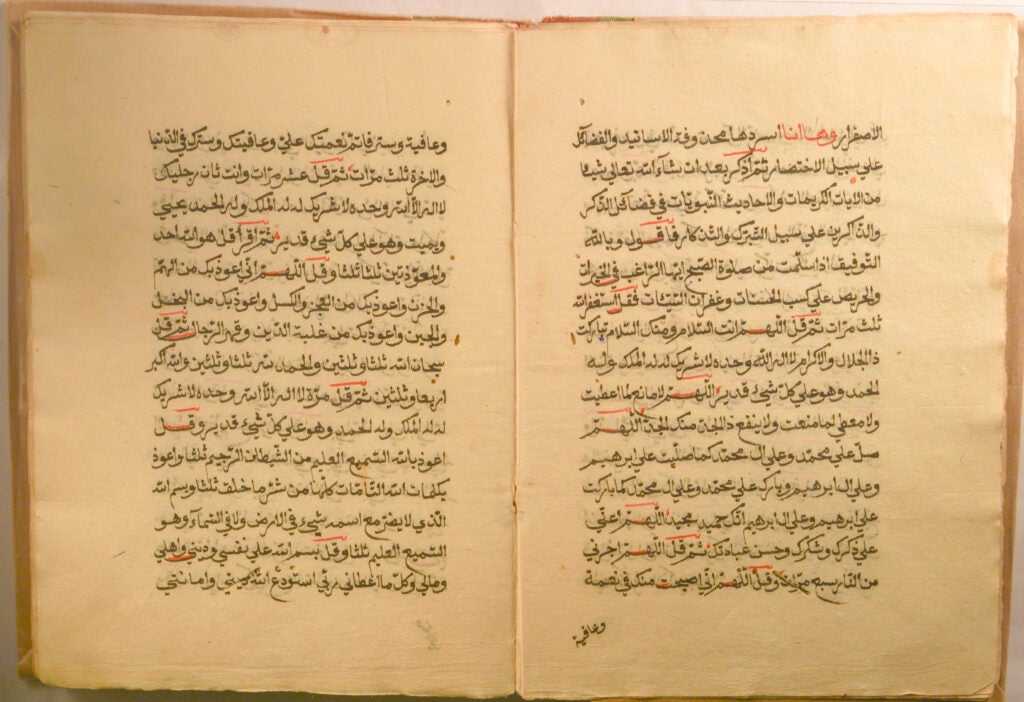
This concise treatise addresses ʿIlm al-ṣarf (Arabic morphology) and verbal derivation, detailing the classifications of triliteral and quadriliteral verbs. The text systematically distinguishes between three-letter and four-letter root verbs, outlining their respective conjugation patterns, morphological transformations, and derived forms. It explains how additional letters augment the root to modify meaning, such as intensity, reciprocity, or causation. For researchers, this manual provides a foundational reference for understanding how Arabic verbs are systematically derived from roots, demonstrating the predictable, rule-based nature of morphological generation across both triliteral and quadriliteral verb categories.
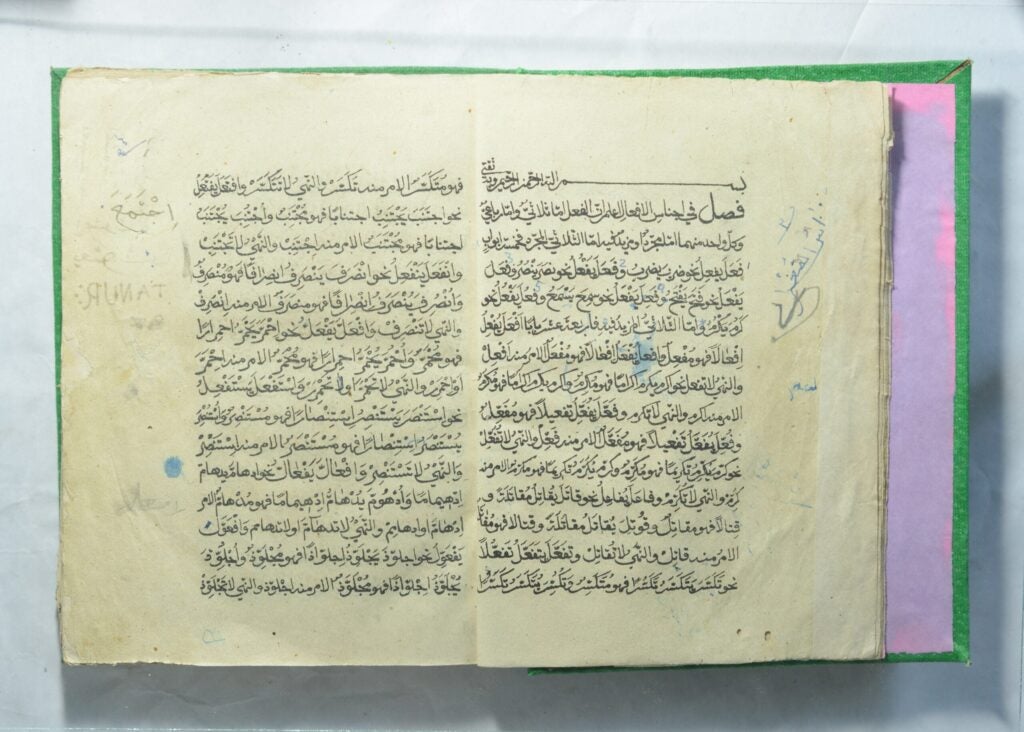
This concise treatise addresses ʻIlm al-ṣarf (Arabic morphology), detailing the classification, conjugation patterns, and structural derivations of verbs. The text systematically presents verb types based on root radical composition, outlines paradigmatic conjugations across tenses and moods, and explains how derived verbal forms extend meaning from basic roots. This manual serves as a foundational reference for understanding the internal structure of Arabic words, demonstrating how morphological rules govern lexical generation and semantic nuance through predictable, rule-based transformations of triliteral and quadriliteral roots.