

Arabia Asia Archives
Arabia Asia Archives is a flagship project of the Arabia Asia Studies Programme. Since its establishment, our Programme has collaborated with researchers, affiliates, and students to build an archive of primary materials in Arabia Asia studies. We have jointly scanned manuscripts and documents from important, yet previously neglected indigenous sources held in private collections, including mosque libraries, institutions, and overlooked locations across Arabia and Asia. Unsurprisingly, we have found rich historical troves in places off the global arteries of major cities connected by air travel -sites once linked to distant regions by the sea, deserts, and mountain passes. We have also conducted ethnographic fieldwork, collected materials, and recorded inscriptions found at tombs, monuments, and mosques. More...>
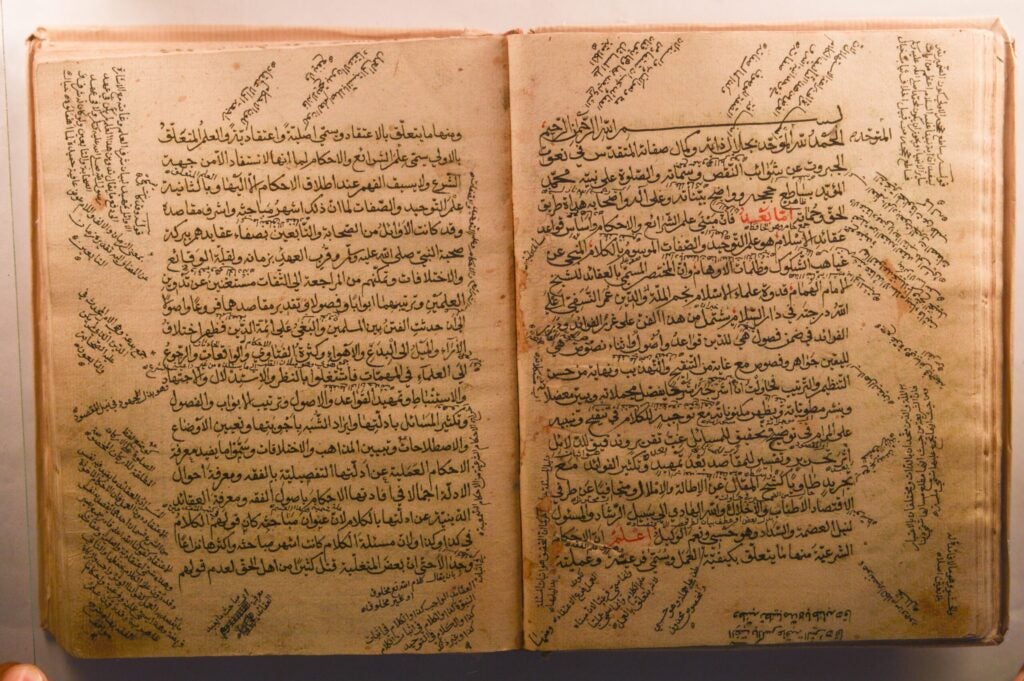
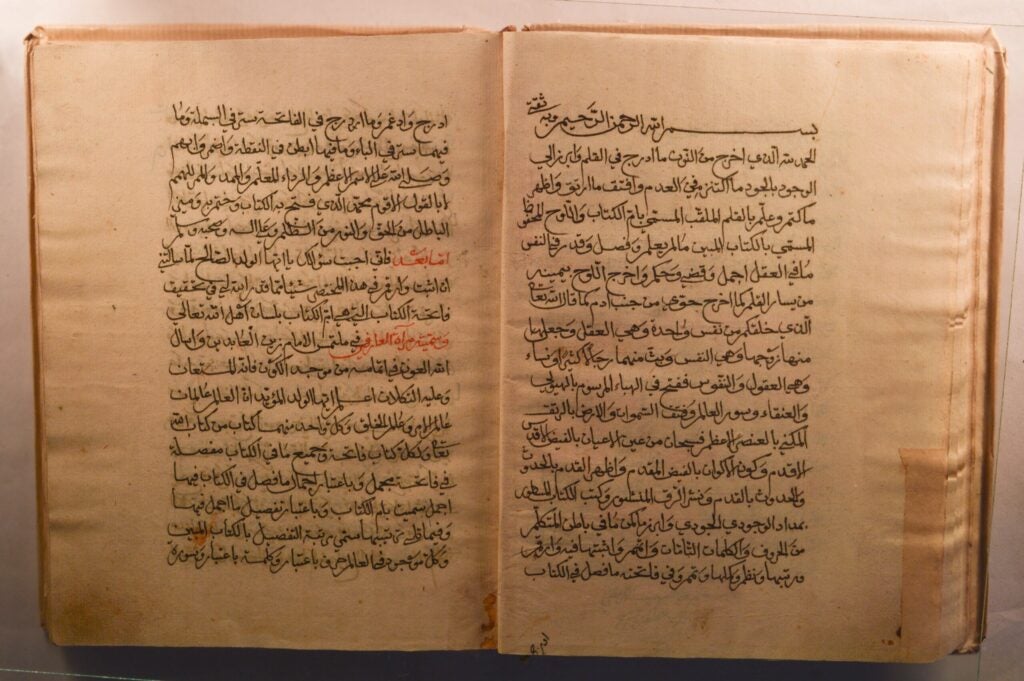
In this book, Ibn al-ʻArabī provides an extensive commentary on Sūrat al-Fātiḥa, offering a verse-by-verse analysis that explores both the exoteric (apparent) and esoteric (hidden) meanings of the text. The commentary moves between outward interpretations accessible to general readers and deeper, mystical dimensions reserved for spiritual adepts. Each verse is examined for its linguistic, theological, and metaphysical significance. This work exemplifies Ibn al-ʻArabī’s hermeneutical methods of ta’wīl (esoteric interpretation), revealing how the opening chapter of the Qur’an encapsulates the entirety of divine wisdom and ontological reality
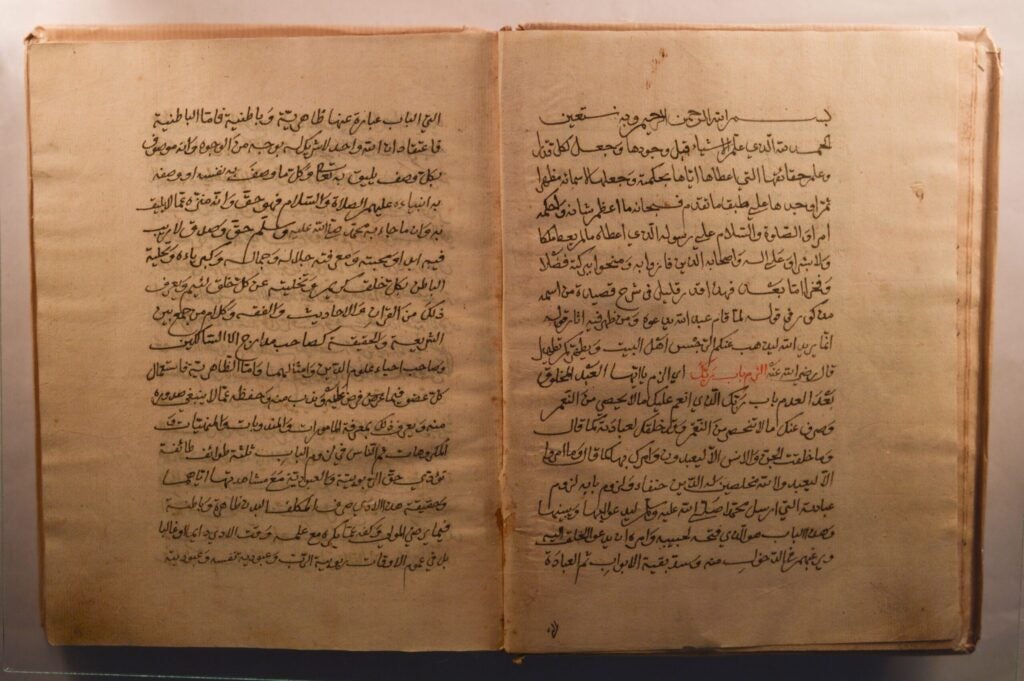
This commentary addresses the poem Ilzam Bāb Rabbik (Adhere to the Door of Your Lord), in which the author emphasizes the necessity of steadfast devotion to the Divine. The text explores how constant, unwavering commitment to God profoundly affects both worldly existence and the afterlife. Through line-by-line exposition, the commentary unpacks the poem’s central metaphor of the “door” as the point of access to divine mercy and guidance. This work illustrates how poetic imagery serves to convey theological imperatives, linking persistent devotion to tangible consequences in this life and the nex
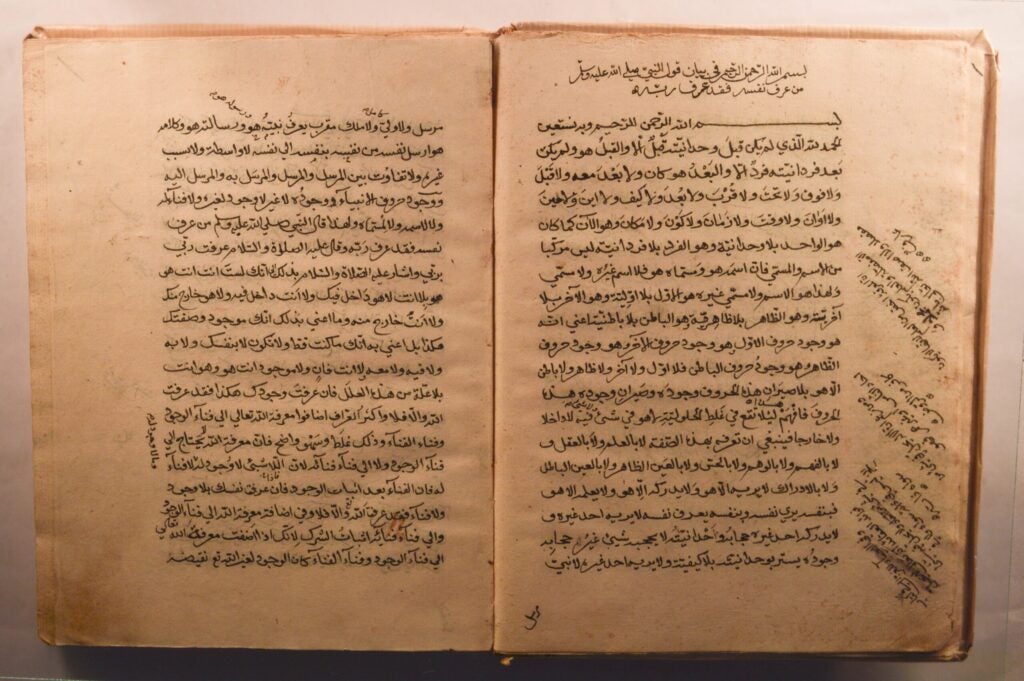
These abridged folios from al-Risālah al-wujūdīyah (The Existential Treatise) present the author’s exploration of fundamental ontological questions and spiritual matters. The text examines the nature of existence, the relationship between Creator and creation, and the path by which the believer may attain deeper recognition of the Divine. Through philosophical and spiritual inquiry, the treatise guides readers toward heightened awareness of ultimate realities. For researchers, these condensed folios preserve the core arguments of the original work, offering insight into how existential and theological themes were distilled into an accessible abridged form for wider circulation.
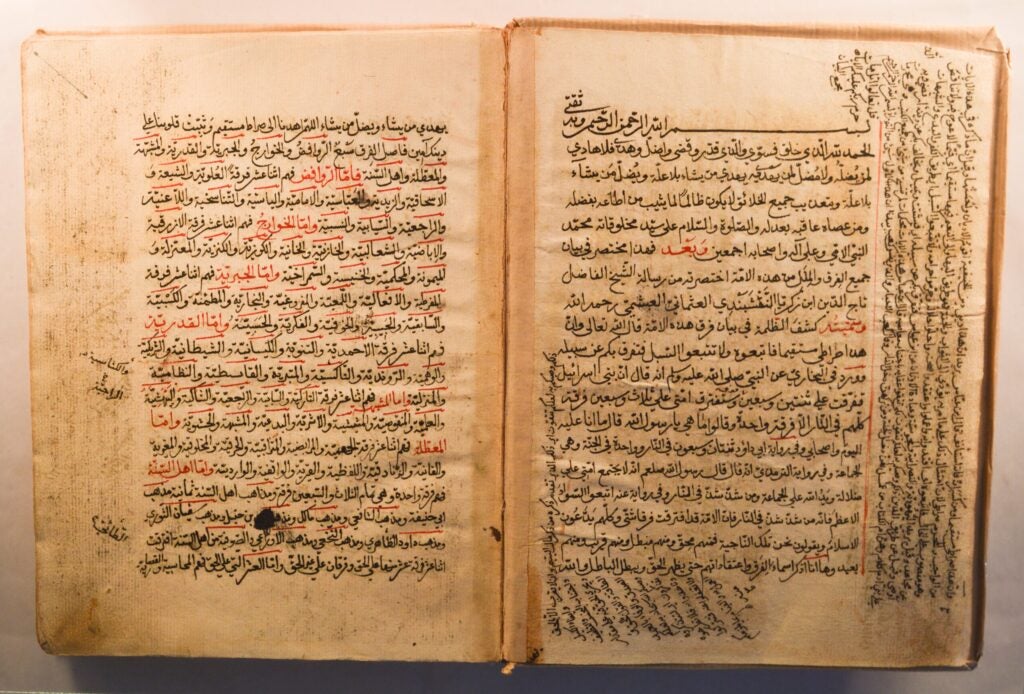
This concise summary presents a comprehensive study of religious sects, examining their origins, divisions, and the various narrations surrounding their development. It traces how different groups emerged from initial points of divergence, maps their subsequent fragmentation into subsects, and documents competing historical accounts of these processes. For researchers, this distillation offers a valuable reference for understanding the complex genealogies of theological factions, preserving multiple narrative traditions without endorsing any single perspective, while providing a structured overview of sectarian formation and evolution. The manuscript measures 19.9 cm in length, 15.2 cm in width, and 3 cm in height, with a total of 223 folios.
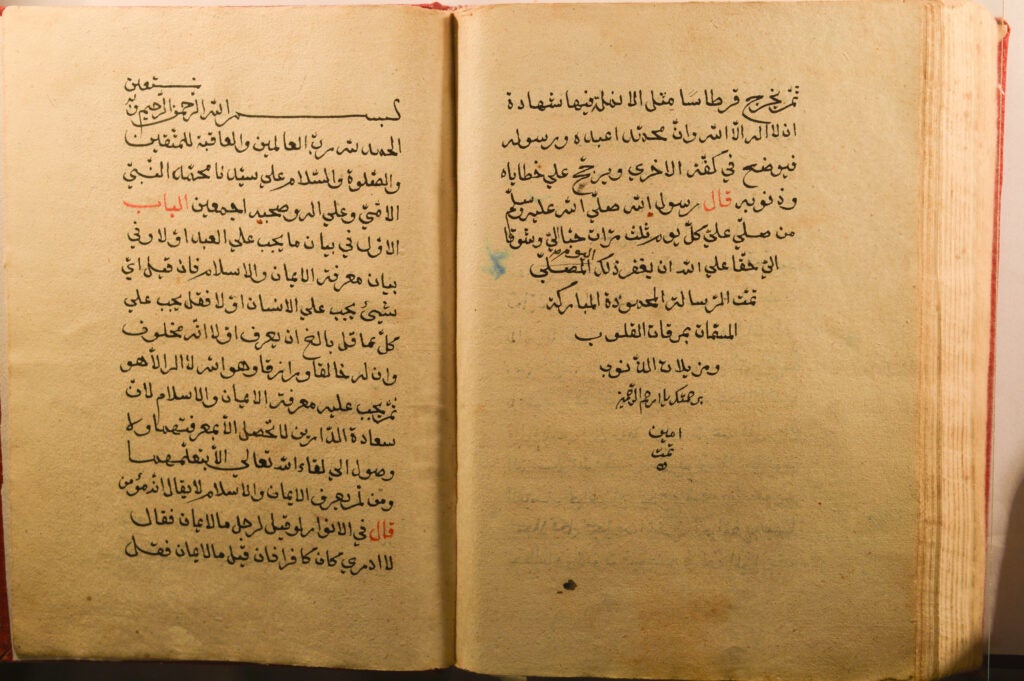
This concise summary defines the concept of al-Īmān (faith) through both its linguistic and theological meanings. Linguistically, the text explores the etymological roots of the term, while theologically, it presents faith as a core doctrine encompassing belief, confession, and inner conviction. The work then provides a detailed exposition of the six pillars of faith: belief in Allah as the sole Creator and Sustainer; belief in His angels as honored celestial beings; belief in His books as revealed scriptures; belief in His messengers as divinely appointed prophets; and belief in the Last Day, including resurrection, judgment, and the afterlife. For scholars, this summary offers a systematic presentation of Sunni creedal doctrine, distinguishing linguistic origin from technical theological application while enumerating the foundational beliefs that define orthodox Islamic faith.