

Arabia Asia Archives
Arabia Asia Archives is a flagship project of the Arabia Asia Studies Programme. Since its establishment, our Programme has collaborated with researchers, affiliates, and students to build an archive of primary materials in Arabia Asia studies. We have jointly scanned manuscripts and documents from important, yet previously neglected indigenous sources held in private collections, including mosque libraries, institutions, and overlooked locations across Arabia and Asia. Unsurprisingly, we have found rich historical troves in places off the global arteries of major cities connected by air travel -sites once linked to distant regions by the sea, deserts, and mountain passes. We have also conducted ethnographic fieldwork, collected materials, and recorded inscriptions found at tombs, monuments, and mosques. More...>
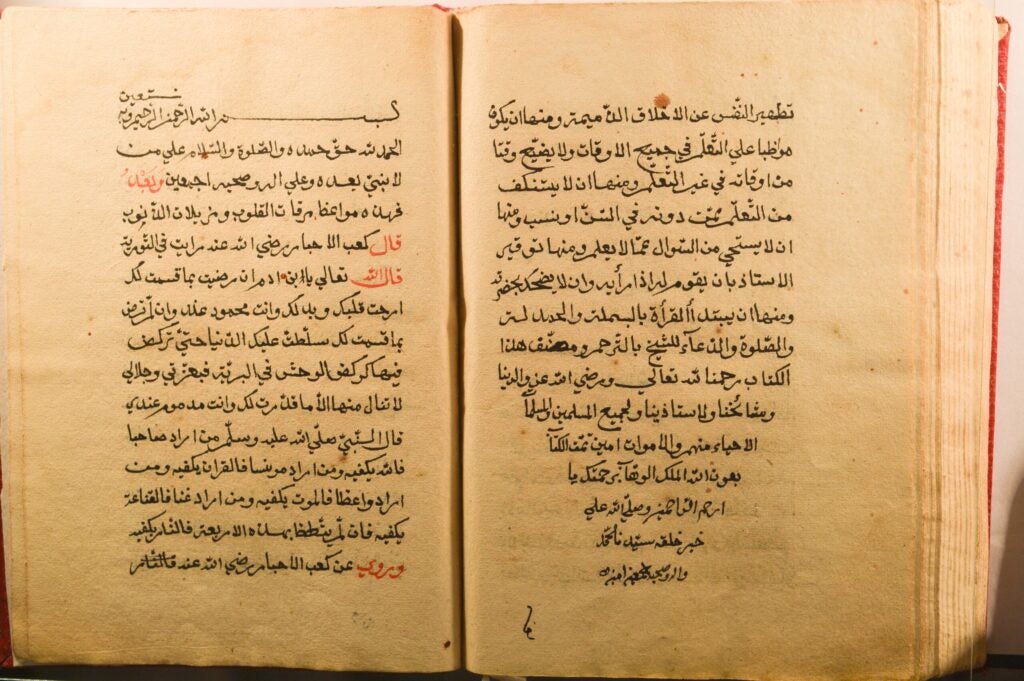
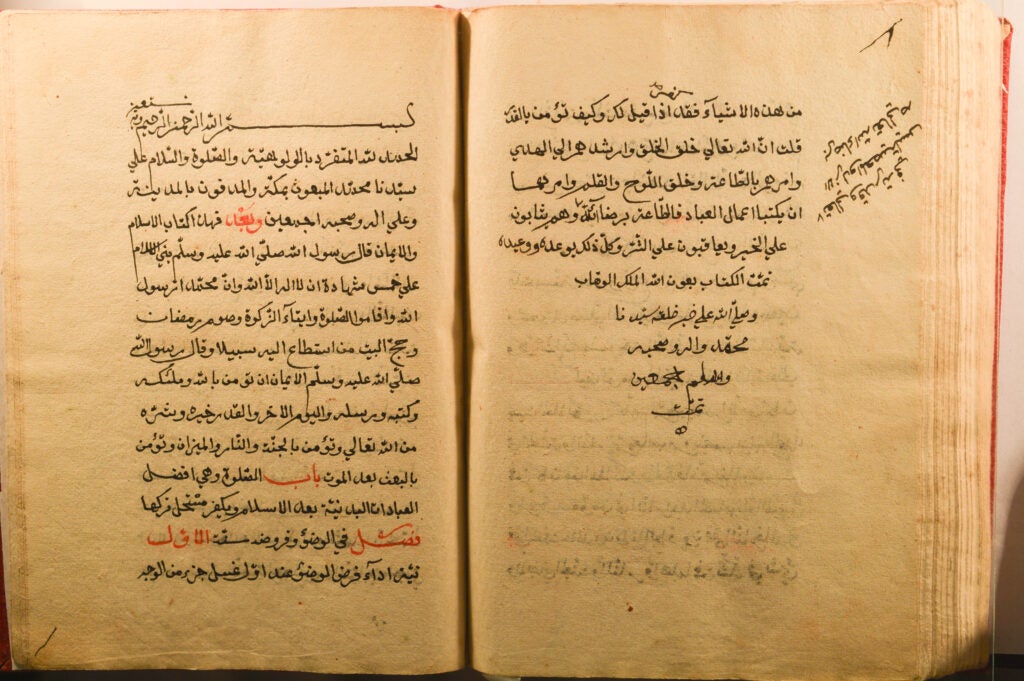
This concise manual outlines the performance of al-Ṣalāh (prayer), its prerequisite shurūṭ (conditions), and the actions that invalidate it (mubṭilāt). The text systematically presents each element, from the proper method of performance to the specific violations that nullify the act of worship. In addition to prayer, the manual contains brief, dedicated chapters on the jurisprudence of obligatory al-Zakāt (almsgiving), detailing the calculation and distribution of charitable dues; al-Ṣawm (fasting), covering its requirements and exemptions; and al-ʿUmrah (the minor pilgrimage), outlining its rituals and legal parameters. For scholars, this compact work functions as a practical reference guide, distilling essential rulings across the pillars of Islamic practice into an accessible format for students or lay practitioners seeking foundational knowledge of these core devotional obligations.
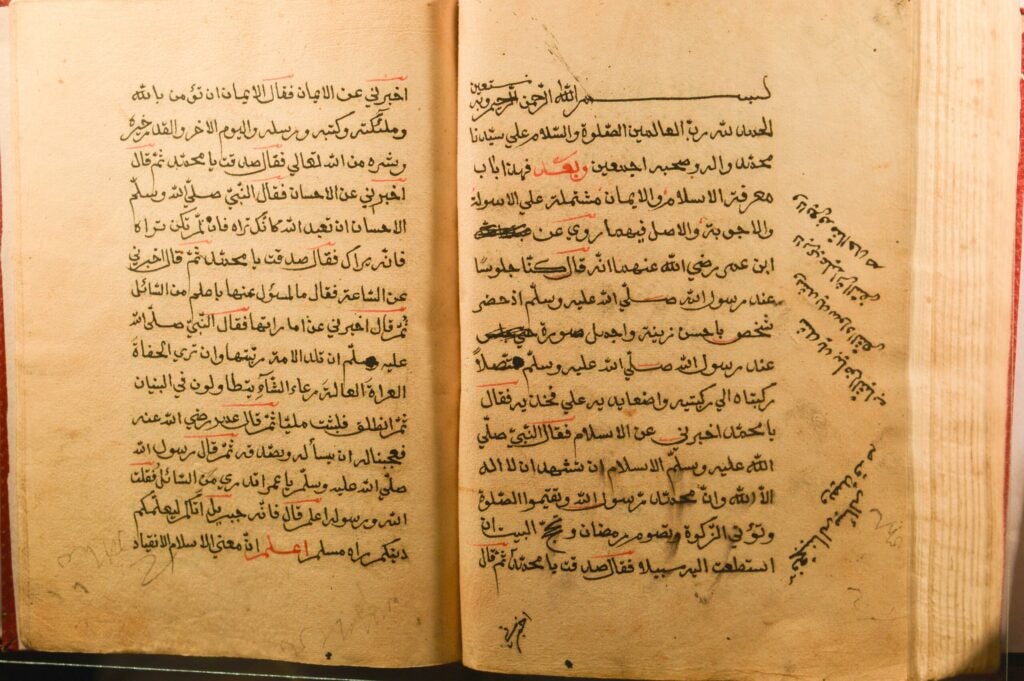
This collection of pages outlines the fundamental responses a Muslim gives regarding the tenets of Islam and īmān (faith). The text presents core beliefs and practices in a structured question-and-answer format, guiding the reader through essential doctrinal positions. It covers the pillars of Islam and the articles of faith, articulating what a Muslim professes when asked about religious obligations and beliefs. This compact manual offers insight into catechetical methods in Islamic education, distilling complex theological concepts into accessible, memorizable responses for instruction and personal reinforcement.
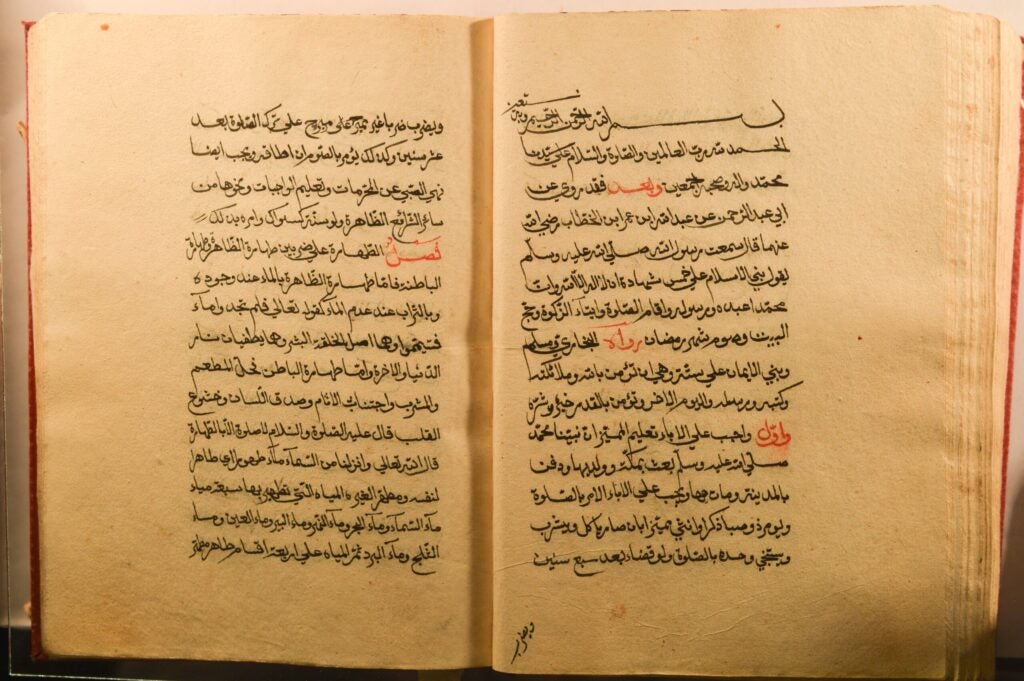
These pages detail the legal requirements for al-Ṭahārah (ritual purity) and al-Ṣalāh (prayer), two foundational pillars of Islamic practice. The text provides a comprehensive guide to purification rituals, including a detailed explanation of the procedures for cleansing bodily impurities. Regarding prayer, the work systematically outlines the necessary shurūṭ (conditions) that must be met before commencement, the wājibāt (obligations) to be fulfilled during the act, and the essential arkān (pillars) without which the prayer is invalid. For scholars, this text offers a structured legal manual that distinguishes between categories of requirements, conditions, obligations, and pillars, demonstrating the sophisticated jurisprudential frameworks developed to guide daily worship across schools of Islamic law.
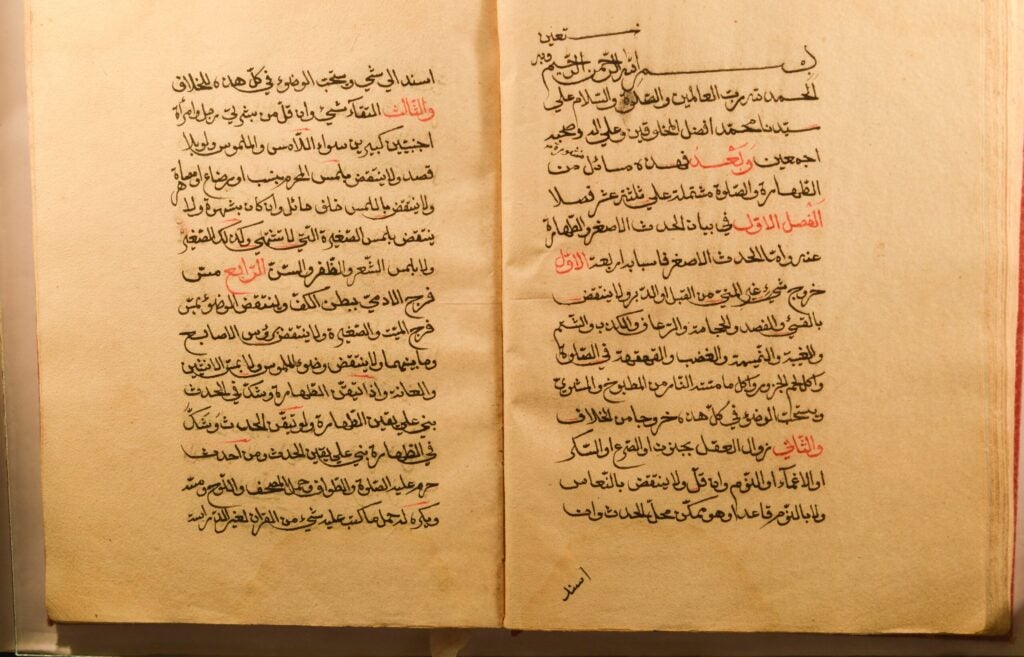
These pages detail the legal requirements for al-Ṭahārah (ritual purity) and al-Ṣalāh (prayer), two foundational pillars of Islamic practice. The text provides a comprehensive guide to purification rituals, including a detailed explanation of the procedures for cleansing physical impurities. Regarding prayer, the work systematically outlines the necessary conditions that must be met before commencing, the wājibāt (obligations) to be fulfilled during the act, and the essential arkān (pillars) without which the prayer is invalid. For researchers, this text offers a structured legal manual that distinguishes between different categories of requirements, conditions, obligations, and pillars, demonstrating the sophisticated jurisprudential frameworks developed to guide daily worship across schools of Islamic law.
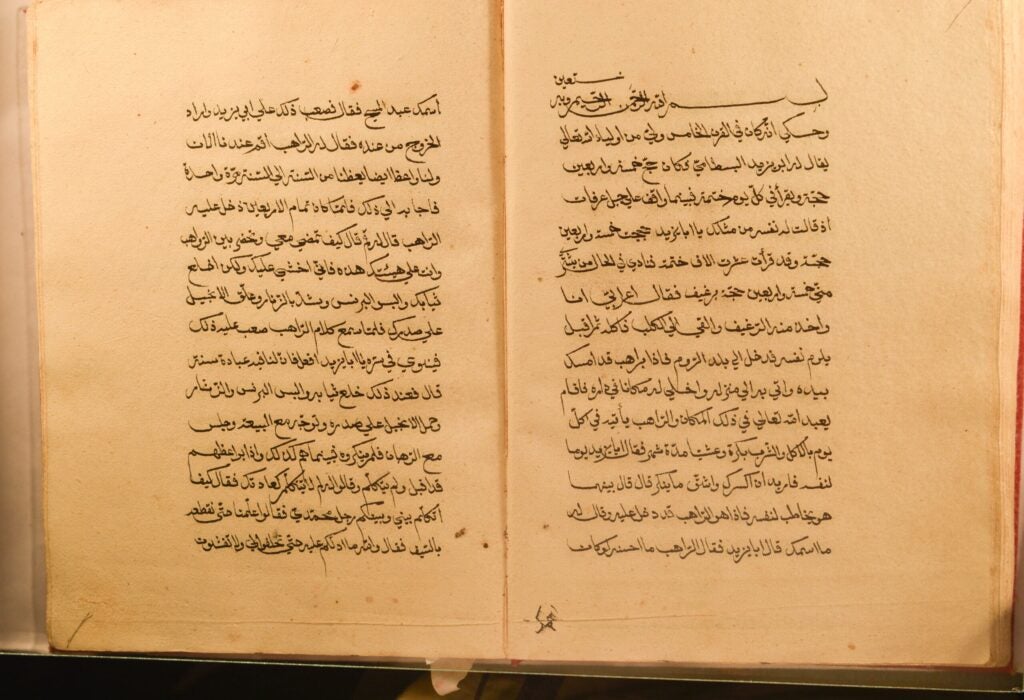
This section features a renowned Sufi hagiographical narrative concerning a celebrated walī (a friend of Allah). The account details his encounter with a rāhib (monk), focusing on a profound theological dialogue between the two figures. Through this exchange, the monk poses inquiries into the tenets and intricacies of Islam, seeking clarification on matters of faith, practice, and doctrine. The Sufi saint responds with explanations that illuminate Islamic teachings, presumably leading to moments of insight or transformation. For scholars, this narrative offers a window into how Sufi literature portrayed interfaith encounters, using the figure of the monk as a literary device to articulate and defend Islamic beliefs. The hagiographical genre elevates the walī as an authoritative spokesperson for the tradition, capable of addressing complex theological questions with spiritual depth.