
Roots of Connection: Exploring ASEAN Spice in Yogyakarta


Abstract
This article explores insights from the ‘ASEAN Spice: The Connecting Cultures of Southeast Asia’ program held in Yogyakarta in May 2024. Beyond conventional narratives of spices as commodities in maritime trade, it examines how plant knowledge reflects embodied cultural practices across Southeast Asia. Drawing on discussions with culinary experts and scholars from ten ASEAN nations, the program investigated the revival of historical cookbooks, the linguistic and cultural framing of botanical knowledge, and efforts to document shared culinary heritage. Through a historical case study of betel consumption, my own contribution to the event argued that Southeast Asian relationships with plants reveal complex and layered sets of relationalities that are not captured by Eurocentric historical perspectives. The program raised questions about how to understand botanical traditions as living cultural practices that transcend modern national boundaries.
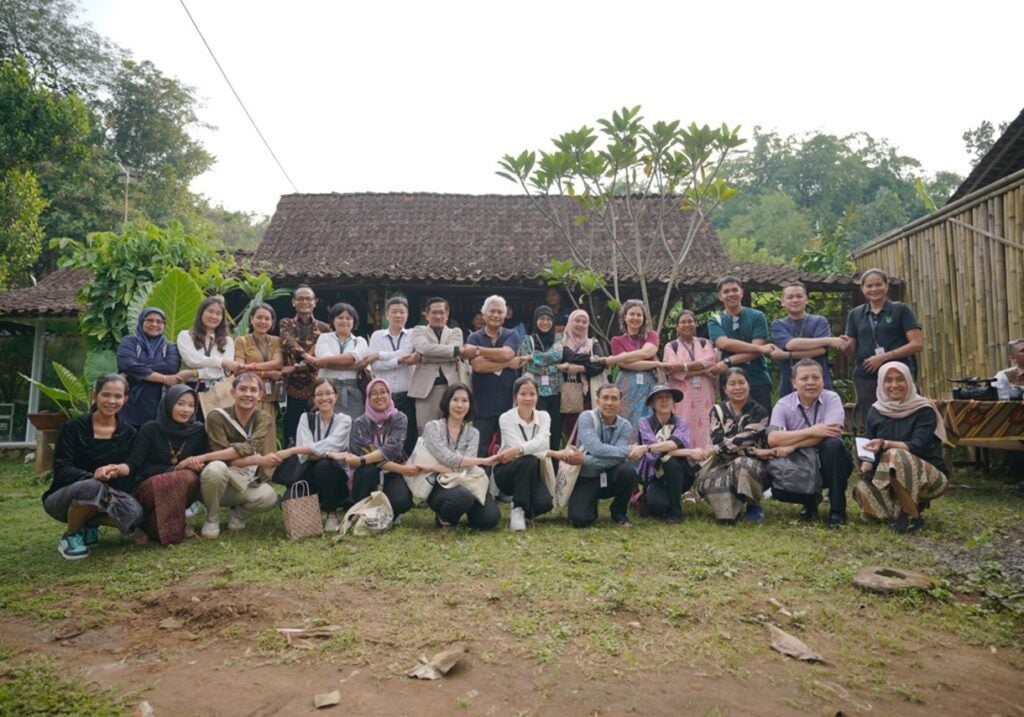
What is a spice? This is one of the many questions that preoccupied the participants of the program, ASEAN Spice: The Connecting Cultures of Southeast Asia. Hosted by the Indonesian government and the ASEAN secretariat in the vibrant city of Yogyakarta from 26-30 May 2024, the program convened cooks, scholars, and policy experts from each of the ten ASEAN member states. ASEAN is an inter-governmental organisation comprised of Indonesia, Malaysia, Brunei, Singapore, the Philippines, Thailand, Myanmar, Laos, Cambodia, and Vietnam, with Timor-Leste as an associate meaner. I attended as one of Singapore's two representatives alongside celebrated Chef Devagi, at the invitation of Singapore's National Heritage Board.
The program gave participants insights into plants, ecologies, and their social and cultural meanings in central Java. Knowledge about plants is often embodied. It comes to us in stories, experiences, and sensing the world around us. Increasingly, ASEAN governments are working to document these knowledges, usually within the framework of ‘national’ heritage. This raises an important question: can such frameworks adequately capture the region's rich and often shared botanical diversity? This was one of the provocations the ASEAN Spice program. Indonesia’s Ministry of Education and Culture is leading a push to codify the ‘ASEAN Spice Route’ as trans-regional heritage under the auspices of the United Nations Education and Scientific Organisation.
While mulling over these questions, we met with communities who reinterpret Indonesia’s botanical and culinary past. As a scholar of historical cookbooks, I was particularly fascinated to see how one Indonesian cookbook was being reanimated for new audiences: Hartini Sukarno’s Mustika Rasa: Resep Makanan Indonesia, first published in 1967. While not the first printed cookbook in Indonesia, it is probably the most comprehensive. At over a thousand pages long, some commentators suggest that it embodies the modern Indonesian state’s principle of ‘unity in diversity’ by showcasing Indonesia’s regional cuisines. From bringing historical recipes to life at a restaurant in Yogyakarta to a multidisciplinary project led by a prominent Indonesian filmmaker, the Mustika Rasa of Indonesia’s post-independence era has captured the imagination of many of today’s artists. We did not have the opportunity to discuss the conditions of production of this wide-ranging text – including who were the actors involved in contributing, collecting, and codifying recipes.
So, what about spice? And why ASEAN spice? Participants had a lively discussion about the origins and use of this term. In the English language, the origins of ‘spice’ can be traced to Latin: the noun species, which in classical Latin, denoted a ‘sort or kind’. By the medieval period, the meanings of the Latin term species had expanded to include ‘goods, wares’, which already gestured to the idea of spice as commodity. Therefore, already embedded in this term is the idea of purchase or barter, not necessarily capturing plants that were freshly foraged, or part of subsistence cultures. Implied, too, is the idea that spices travelled some distance before they were commodified. We have, therefore, a fairly good idea about what assumptions and notions Europeans had when they talked about ‘spice’. But what were Southeast Asians’ own imaginaries of the nutmeg, mace and cloves of eastern Indonesia, or the pepper of Sumatra, so fervently sought after by foreign merchants – Chinese, Arab, Persian, Indian, and, finally, European? The written historical records to answer this question are unfortunately rather thin. We can imagine that a variety of conceptualisations existed among Indigenous cultivators and foragers, traders, and cooks and eaters in distant corners of the Indian Ocean littorals. Participants discussed what categories existed in their languages. A diversity of concepts emerged, not necessarily reconcilable with one other, but demonstrative of the multitudinous ways that Southeast Asians have engaged with plants, far beyond any one singular association with maritime trade.
My own contribution was a historical case study of betel consumption in Southeast Asia. Betel nut and betel leaf are terms often used in English to refer to the areca catechu fruit and the piper betle leaf, respectively. Historically, Southeast Asians consumed these two plants together, wrapping the fruit in the leaf and adding other aromatic plants to enhance their flavour. These practices had a variety of social, cultural and spiritual meanings, one of which was signalling hospitality and relationality. Betel was probably far more important to early modern Southeast Asians than the ‘spices’ of nutmeg, mace, cloves and pepper – the first three of which grew only, and the latter in Sumatra – but it has received far less scholarly attention than any of those plants. Like ‘spice’, the category of betel in English has a Eurocentric legacy from the age of European maritime empires: it derives from the Malabar coast where the Portuguese first encountered these plants. The English language borrowed the Portuguese transliteration of this term from Malayalam.
Thinking with betel allows us to the probe the multiple social, cultural, and symbolic meanings that Southeast Asians attached to these plants. While the archaeobotanical evidence is inconclusive, the practice of consuming betel may have originated in Southeast Asia and travelled across the Indian Ocean, perhaps through Austronesian migrations. If this is the case, then Southeast Asian cultural practices had a profound impact on shaping the shared ecumene of the Indian Ocean, gesturing towards the multidirectional nature of cultural exchange in this vibrant and multi-polar world.
Betel played central role in social and cultural life in Southeast Asia. Offering betel to guests signalled hospitality and relationality – to ancestors, spirits, along with beings in the material world. Betel leaves were widely used in medicine or as a container for meals. Chewing the same betel, meanwhile, was a sign of sexual intimacy. Ibn Battuta, a lettered man of Arabic law who travelled the Indian Ocean in the fourteenth century, describes a couple sharing the same betel at a marriage ceremony in Sumatra [4:912]. Many participants at ASEAN Spice shared their own experiences with preparing and consuming betel – including fascinating continuities in some of these meanings and associations.
The ASEAN program offered me an opportunity to reflect on my own work and its significance to historical debates. In my current book project, Hearth of Empire, I offer a new take on historical foods of Southeast Asia that departs from a traditional focus on ‘spices’, foods as commodities, or mobile men. I show that women and enslaved cooks created cuisine in the colonial homes of the Dutch East India Company’s empire in the Indian Ocean, challenging the authority of European men and highlighting their most intimate vulnerabilities. These women had histories of enslavement, as well as Indonesian histories, challenging bounded notions of Indigeneity in today’s quest to project ‘nation’ and ‘national cuisines’ onto the past. Instead, the story of cuisine reveals a more multidimensional story of different actors competing for power and authority in colonial kitchens – using their knowledge about ‘spices’ to assert their own epistemological notions of what is food.
On a personal level, I enjoyed learning from fellow participants from ASEAN countries. We were treated to a sumptuous array of food that showcased cooking and eating practices across central Java. I discovered that when harvesting fresh ginger—a rhizome popular throughout Southeast Asia—some cooks select the youngest shoots, called ‘anak-anak’ (children) of the larger ‘ibu’ (mother) root. These linguistic details might seem, at first glance, insignificant, but I would argue that reveal fascinating insights into how gendered ideologies of care shape, and are shaped by, certain culturally situated relationships with plants. Participants shared their own stories of cooking with familiar plants that transcend national boundaries. These rich personal exchanges remain my most treasured memories of this event.
 All Photo credits: ASEAN Spice Committee
Further Reading:
Dawn Rooney, Betel chewing traditions in South-East Asia. Oxford: Oxford University Press, 1993.
Ibn Battuta. 1962– 94. The Travels of Ibn Battuta AD 1325– 1354. Translated with annotations by H. A. R. Gibb and C. F. Beckingham. 4 vols. London: Taylor and Francis.
Thomas J. Zumbroich, “The Origin and Diffusion of Betel Chewing: A Synthesis of Evidence from South Asia, Southeast Asia and Beyond,” EJournal of Indian Medicine 1, no. 3 (2008): 96.
The views expressed in this forum are those of the individual authors and do not represent the views of the Asia Research Institute, National University of Singapore, or the institutions to which the authors are attached.

Kathleen Burke
Postdoctoral Fellow
Asia Research Institute
Dr Kathleen Burke is an historian of food, gender, and maritime empires in the Indian Ocean World. Her first book project, 'Hearth of Empire: A History of Indian Ocean Cuisine', shows how colonial kitchens were important, but overlooked, spaces of power, knowledge production, and cultural exchange in the Dutch East India Company's empire in the Indian Ocean. Her current project at ARI, 'Cultivating Connections,' examines an even greater diversity of historical actors who produced knowledge about plants in the early modern Indian Ocean, focusing on how American plants challenged, changed, or were absorbed into Indigenous cosmologies and ecologies in the Indian Ocean. Her latest publication, ‘Recultivating Connections across the Indian Ocean’, appeared in Slavery and Abolition.
https://doi.org/10.25542/31et-2d97