
Refashioning a Strategic Partnership: Canada and China in a Fragmenting World Order
Paul Evans is Professor Emeritus at the University of British Columbia.
Co-published with The Diplomat: https://thediplomat.com/2026/03/refashioning-a-strategic-partnership-canada-and-china-in-a-fragmenting-world-order/
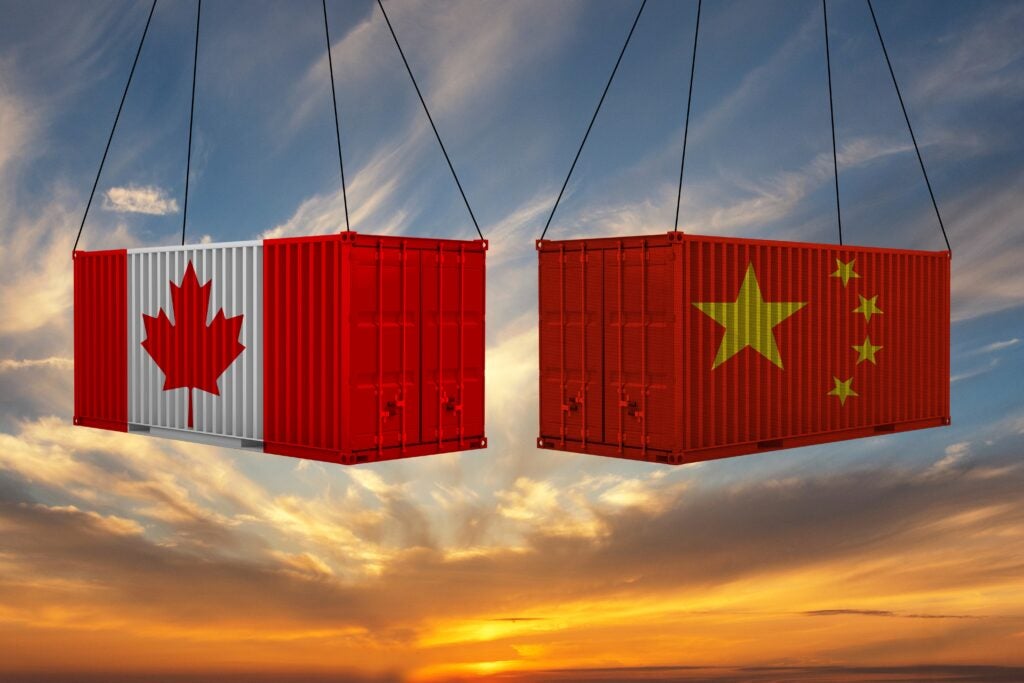
China and Canada have reset their relationship after eight years of frosty diplomacy. This energetic diplomatic reversal follows a pathway that a few other countries have already trodden and that many others may find instructive at the current turbulent moment in our world, something PM Mark Carney accurately described as a “rupture”.
As widely reported, the detention of a Huawei CFO by Canada at the request of the US in December 2018 and the subsequent arrest of two Canadians in Beijing a few days later sent the relationship into a tailspin that did not end when all three returned back to Canada in September 2021. The incident cast a long shadow, with public opinion on both sides souring. Ottawa banned Huawei from its 5G rollout and focused on Chinese interference and influence activities, the Canadian parliament passed resolutions condemning Chinese “genocide” in Xinjiang, university partnerships withered, tourism declined, high-level visits and exchanges came to a virtual standstill, and trade disputes erupted without resolution.
Against the backdrop of these seven difficult years, Prime Minister Mark Carney’s visit to China in January for meetings with top Chinese officials produced a remarkable reset in the tone and direction of bilateral relations,
The meetings concluded with 21 agreements in fields including clean energy, agriculture, public safety and security, wood products, cultural exchanges, food safety, and animal and plant health. They widened a forward-looking set of possibilities on two-way investment and economic complementarities, taking a more welcoming approach to Chinese capital, technology, and supply chain integration. They identified the importance of an expanded range of people-to-people connections, including visa-free entry into China, student recruitment and university partnerships. Crucially, they also produced a pathway to settle two contentious and politically sensitive tariff disputes related to canola and electric vehicles.
Beyond these bilateral agreements, the meetings also produced a constructive discussion on global governance, climate competitiveness, UN and WTO reform, and financial and macro-economic stability important to both countries.
The tone was positive, optimistic and forward looking. The new strategic partnership was grounded on the principles of co-existence and mutual interest, rather than on shared values, economic or political systems. The agreements were realistic—both sides were aware of the differences in their political systems and values, without expectation of change in the other’s political and economic systems. They spoke of limits as well as possibilities, with guardrails surrounding investment in some sensitive technological sectors. They did not add up to any kind of strategic alliance or free trade agreement, and they did not signal a new geo-political alignment
The speed and the scope of the rapprochement were particularly surprising. How was a political relationship in the deep freeze for seven years so quickly thawed? Clearly, this was propelled by two leaders who recognized how far and fast the international context was changing. The speech Carney gave at Davos shortly after he left Beijing presented the analytical frame in stark relief. He pointed to a rupture in the rules-based international order that would not heal, due to the irreversible diminution of its principal norms and institutions. Recognising that Canada can no longer rely on old assumptions about alliances, global rules, predictability, or insulation from geopolitical shock. He identified the need to diversify Canada’s trading partners and to radically reduce its economic and security dependence on one hegemon. His speech powerfully signalled a more independent Canadian foreign policy in response to fundamental shifts in the global economic and security order—one that would be founded on a “variable geometry” of issue-based partnerships based on shared interests. In this context, a refurbished relationship with China could be a key element of diversification and a catalyst for economic growth and transformative innovation in key sectors including electric vehicles, green energy and agriculture.
He did all of this without using the words Donald Trump or the United States, the Voldemort deception that is hard to miss.
While Chinese officials had been cool to Canadian overtures to recast relations in the late Trudeau and early Carney periods, there was a positive turn after the meeting between President Xi and PM Carney at the APEC summit in October in Seoul. This expedited the pace and scope of intensive negotiations between officials on both sides. Beijing may have seen in Carney’s diagnosis of the collapse of the multilateral system a reflection of its own worries about preserving the global rules-based order, which has delivered enormous benefits to both China and Canada. In addition, while Canada’s relationship with its southern ally had long seemed unshakeable, it is now beset by massive tariffs and threats of annexation.
For Canada, the costs of simultaneous economic conflict with its two largest trading partners would be devastating. There is a clear tactical advantage for Beijing to strengthen its ties with middle powers like Canada at a time when their relationships with its great power rival are under deep strain.
On the Chinese side, the durability of the new Strategic Partnership will also depend in large part on whether the door is opened wide enough for investment opportunities in Canada and on how far expanded partnerships reduce the scope of national security criteria being applied against them.
On the Canadian side, opposition to the new arrangement is likely to be significant for three reasons. First, American reactions are already negative with a volley of threats focused on retaliation in the auto-sector, new tariffs, and dissolution of the CUSMA.
Second, Carney was out in front of public opinion. While public attitudes in Canada about China have warmed somewhat in the past twelve months along with efforts by business, academics, and provincial leaders to improve relations with China, significant forces in the media, parliament, and civil society oppose deeper connections. Their abiding concerns with China are based on the nature of its communist regime, its domestic repression, its threats to Canadian democratic institutions, and its external ambitions and behaviour. Specific interest groups, including in the automotive industry, are deeply worried about the economic consequences of new openings to Chinese manufacturers and investment.
Third, it remains to be seen if the agreements will produce material benefits. Can Canadian business and universities take advantage of the diplomatic opening to work with Chinese counterparts?
Those interested in how states shift from enmity to cooperation will immediately see the critical ingredients of committed leadership, material circumstances, and the ripe moment. Since there continue to be many bilateral relationships that are mired in enmity it is useful to have case studies of countries that could quickly find grounds for a cooperative agenda.
This is why the China-Canada case is worth studying. The improvement in the relationship between Carney and Xi was driven by geopolitics and the fear and uncertainty generated by a faltering yet powerful third party, namely the USA. The China-Canada breakthrough may have made things easier for other middle powers, like the UK and Germany, who have also stepped up their links with China recently. It could also potentially inspire others, including Japan and India, to adjust their ties with China. While it takes two to tango, the music of a turbulent era may be making a somewhat closer embrace irresistible.
The views and opinions expressed in this article are those of the author(s) and do not necessarily reflect those of the Asia Research Institute, National University of Singapore.
Latest
Who will save the world from a US-China AI arms race?
by Alex Capri
The Thailand-Cambodia conflict: A Thai and Cambodian perspective on peace
by In Sokhuon and Pattharapong Rattanasevee
ASEAN Between China and the US: Navigating a 'No Single Power' Global Order
by Lili Yan Ing
Breaking the Loop: Why India and China Need Political Imagination to Rebuild Trust and Relationship
by Tansen Sen
Building Resilience for a New World
by Arunabha Ghosh
India, Pakistan, and Breaking out of the 'Continent of Circe'
by Akbar Ahmed
Southeast Asia's "Anatomy of Choice" Between the Great Powers
by Joseph Chinyong Liow & Yuen Foong Khong
Integrated Supply Chains - A Possible Citadel for Peace in Southeast Asia
by Cameron Johnson
How to Fix the Cracks in the Nuclear Dam
by Adam Thomson
Persuading for Peace, Protecting Its Interests: China’s Conflict Diplomacy
by Andrew Cainey and Chengkai Xie
US ASEAN Policy Must Be Rooted in Economics, Not Just Defense
by Abhinav Seetharaman
South Korea: Is it time for a more balanced strategy?
by Soon Ok-Shin
A nuclear war started by AI sounds like sci-fiction. It isn’t
by Sundeep Waslekar
Ports, politics, and peace: The engineering of stability
by Guru Madhavan
It's Time for Europe to Do the Unthinkable
Kishore Mahbubani
Can Young Americans and Chinese Build Bridges Over Troubled Waters?
Brian Wong
Trump 2:0: Getting US-China ties right despite the odds
Zhiqun Zhu
How Malaysia can boost Asean agency and centrality amid global challenges
Elina Noor
Why India-Pakistan relations need a new era of engagement
Farhan Hanif Siddiqi
Reconceptualizing Asia's Security Challenges
Jean Dong
Asia should take the Lead on Global Health
K. Srinath Reddy and Priya Balasubramaniam
Rabindranath Tagore: A Man for a New Asian Future
Archishman Raju
Securing China-US Relations within the Wider Asia-Pacific
Sourabh Gupta
Biden-Xi summit: A positive step in managing complex US-China ties
Chan Heng Chee
Singapore's Role as Neutral Interpreter of China to the West
Walter Woon
The US, China, and the Philippines in Between
Andrea Chloe Wong
Crisis Management in Asia: A Middle Power Imperative
Brendan Taylor
America can't stop China's rise
Tony Chan, Ben Harburg, and Kishore Mahbubani
Civilisational Futures and the Role of Southeast Asia
Tim Winter
US-China rivalry will be stern test for Vietnam's diplomatic juggle
Nguyen Cong Tung
Coexistence: The only realistic path to peace
Stephen M. Walt
Cyclone Mocha in conflict-ridden Myanmar is another warning to take climate security seriously
Sarang Shidore
Doubts about AUKUS
Hugh White
Averting the Grandest Collision of all time
Graham Allison
India Can Still Be a Bridge to the Global South
Sanjaya Baru
U.S.-China Trade and Investment Cooperation Amid Great Power Rivalry
Yuhan Zhang
Managing expectations: Indonesia navigating its international roles
Shafiah F. Muhibat
Caught in the middle? Not necessarily Non-alignment could help Southeast Asian regional integration
Xue Gong
It’s Dangerous Salami Slicing on the Taiwan Issue
Richard W. Hu
Navigating Troubled Waters: Ideas for managing tensions in the Taiwan Strait
Ryan Hass
The EU and ASEAN: Partners to Manage Great Power Rivalry?
Tan York Chor
Countering Moro Youth Extremism in the Philippines
Joseph Franco
India-China relations: Getting Beyond the Military Stalemate
C. Raja Mohan
America Needs an Economic Peace Strategy for Asia
Van Jackson
India-Pakistan: Peace by Pieces
Kanti Bajpai
HADR as a Diplomatic Tool in Southeast Asia-China Relations amid Changing Security Dynamics
Lina Gong
Technocratic Deliberation and Asian Peace
Parag Khanna
Safer Together: Why South and Southeast Asia Must Cooperate to Prevent a New Cold War in Asia
Sarang Shidore
Asia, say no to Nato: The Pacific has no need of the destructive militaristic culture of the Atlantic alliance
Kishore Mahbubani
Can Biden bring peace to Southeast Asia?
Dino Djalal
An India-Pakistan ceasefire that can stick
Ameya Kilara
An antidote against narrow nationalism? Why regional history matters
Farish A Noor
Can South Asia put India-Pakistan hostilities behind to unite for greater good?
Ramesh Thakur
Nuclear Deterrence 3.0
Rakesh Sood
The Biden era: challenges and opportunities for Southeast Asia
Michael Vatikiotis