
The Thailand-Cambodia conflict: A Thai and Cambodian perspective on peace
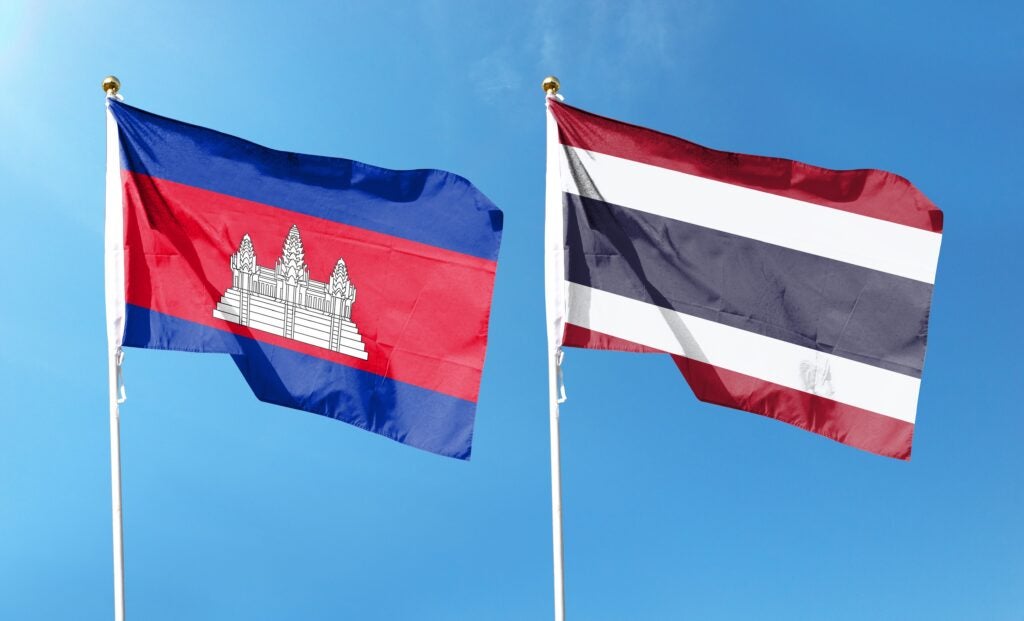
The recent escalation along the Cambodia-Thailand border stands out as one of the most serious threats to peace in Southeast Asia today. While securing a ceasefire is essential, it is only a first step. Lasting stability requires addressing the deeper social, economic, and political factors that can prevent future conflict.
The Asian Peace Programme (APP) separately invited a Thai scholar – Dr. Pattharapong Rattanasevee, a lecturer at Mahidol University – and a Cambodian scholar – Dr. In Sokhuon, a research fellow at the Institute for Contemporary Chinese Studies (ICCS) in India – to each contribute an essay exploring strategies for durable and long-term peace in the region.
Their voices are clear and resolute in advocating for lasting peace beyond the ceasefire. Though Thailand and Cambodia may have their own versions of how the conflict began and who is to blame, both scholars converged on key recommendations for the long-term peace: ASEAN must play a stronger, more effective role as a mediator; cross-border economic and cultural cooperation should be expanded; and people-to-people engagement across the border must be strengthened.
Heeding these two perspectives is crucial, not only for Thailand and Cambodia but for ASEAN as a whole, to transform a cycle of recurring tensions into a foundation for lasting regional stability. What follows is the piece by Cambodian scholar In Sokhuon and Thai scholar Pattharapong Rattanasevee.
Turning Conflict into Cooperation: Cambodia–Thailand Peace and ASEAN Regional Stability
In Sokhuon
In Sokhuon, a PhD scholar in International Relations and Politic, and a research fellow at the Institute for Contemporary Chinese Studies (ICCS), Mahatma Gandhi University, India.
Republished in The Diplomat: https://thediplomat.com/2026/01/a-blueprint-for-cambodia-thailand-peace-a-cambodian-perspective/
13 January, 2026
The Cambodia-Thailand border has long oscillated between uneasy coexistence and open confrontation, from colonial-era boundary disputes to deadly clashes around Preah Vihear in 2011 and again in 2025. Yet beneath these recurring crises lie deep-rooted similarities between the neighboring states: a shared Hindu-Buddhist heritage, intertwined economies, and a joint commitment to ASEAN. These similarities can be the basis of achieving lasting peace in the region.
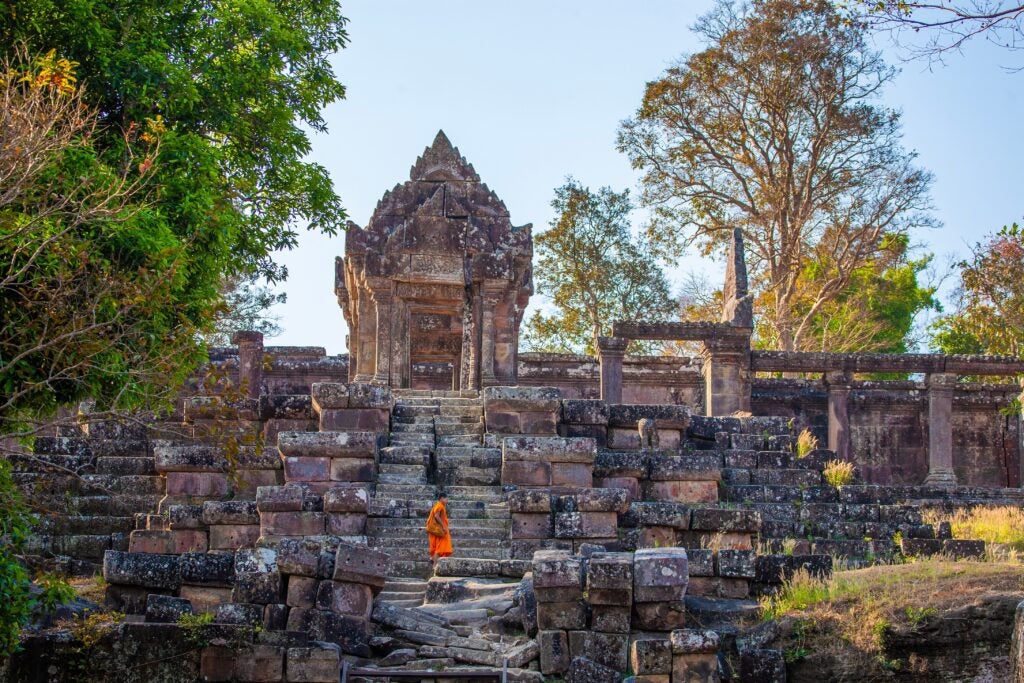
Violence broke out in July and December 2025 in multiple places across the Cambodian-Thai border and destroyed civilian homes, bridges, schools, and cultural sites such as Buddhist monasteries, Hindu statues and ancient temples, including the Preah Vihear temple, a UNESCO World Heritage site that has been fought over by the two countries for centuries. The fighting, which was caused by nationalist rhetoric and military provocations, killed dozens of people and forced nearly a million people to leave their homes.
Cambodia and Thailand signed a seemingly historic peace deal on October 26, 2025. However, by early December, military clashes resumed along the border, with both countries accusing each other of violating the ceasefire. The situation continues to remain tense, even as a new ceasefire came into effect on December 27, 2025.
If Thailand, Cambodia, and ASEAN are to achieve long-term stability in the region, it is imperative that they jointly bolster the factors that can bring the two countries and the region together. Here are seven ways in which they can do so.
1. Strengthening ASEAN’s Mediation Framework
The 2025 conflict brought back calls to make ASEAN’s peace mechanisms more formal. To enhance ASEAN’s capacity to prevent conflicts and address crises, the bloc should establish a dedicated body to handle disputes, guided by ethical values from Southeast Asian cultures like empathy, non-violence, and collaborative stewardship. The body would comprise representatives from each state, independent mediators, and civil society members.
To improve its credibility, ASEAN’s dispute resolution body should seek legal and technical advice from the International Court of Justice (ICJ) and the United Nations as it sets up its own settlement mechanisms. It should also grow its capacity by training mediators, running conflict simulations, and working with regional think tanks.
ASEAN’s decision-making system could also be updated so that resolutions can be made by a majority vote in cases of a deadlock, making sure that action is taken quickly. These steps would turn ASEAN from a reactive group into a proactive mediator that is respected around the world.
2. Addressing Domestic Politics and Taking Technical Approaches to Border Disputes
The 2025 clashes were not just about land; they were also caused by political pressures and nationalist goals within the country. Both governments faced internal pressures to demonstrate strength, complicating their ability to engage diplomatically.
Rather than attempting to resolve disputes through political and military action, which tend to raise and renew tensions, countries should consider resolving border disputes with the expertise of cartographers, historians, and legal advisers, and with help from neutral groups like UNESCO and the ICJ. ASEAN, with the help of its external partners, are beginning to use satellite imagery to keep an eye on disputed cultural sites along the Thai-Cambodia border. This is a good example of how to manage disputes based on facts and science.
Both countries can get a fair and peaceful resolution that protects border communities by avoiding political rhetoric and focusing on technical cooperation.
3. Upholding Human Rights During and After Conflict
The 2025 conflict forced almost a million Cambodian migrant workers to leave Thailand, which led to widespread abuse and economic problems. Even though the government exhorted people not to use violence, rights groups reported that Cambodian workers in Bangkok and border provinces were attacked and harassed. A bilateral human rights task force should be set up to keep an eye on incidents, help victims, and make sure that everyone is treated fairly. This task force should be overseen by both ASEAN and the U.N. The recent release of 18 Cambodian soldiers by Thailand is a good first step towards respecting the ceasefire agreement and restoring trust between the two countries.
4. Transforming Preah Vihear Into a Beacon of Reconciliation
UNESCO’s oversight of joint preservation and cultural projects could turn the Preah Vihear and other temple sites into a place of healing instead of a site of conflict.
Some possible avenues for cooperation at Preah Vihear include yearly cross-border cultural festivals, student exchanges, and joint restoration projects. The Lumbini model, where Nepal and India work together to manage the birthplace of the Buddha, serves as an example for these efforts. Such an approach would encourage tourism and respect for other cultures.
A proposed Preah Vihear Cultural Council, made up of people from both governments and UNESCO, could be put in charge of protecting the site, making sure that tourism benefits everyone, and getting the local community involved.
5. Economic Collaboration and Cross-Border Integration
Working together to keep the peace would also have important economic dividends as Cambodia and Thailand depend on each other economically. For Thailand, losses from the disruption to cross-border trade could total $3.1 billion by the end of 2025. Cambodia’s GDP growth is also likely to take a significant hit due to severe drops in remittances and tourism.
Both sides should protect and honor their existing commitments to build resilience by making it easier to trade across borders, lowering tariffs, and initiating joint ventures in sectors such as agriculture, ecotourism, and vocational training under ASEAN frameworks like the ASEAN Free Trade Area (AFTA) and the Regional Comprehensive Economic Partnership (RCEP).
Pilot projects in agriculture, ecotourism, and vocational training near Preah Vihear are trying to turn former battlefields into shared economic zones. Such projects can make sure that benefits are shared fairly and that the region stays integrated over time with the help of ASEAN and donors.
6. Civil Society and Grassroots Peacebuilding
Civil society organizations (CSOs) have been playing a crucial role in fostering peace in the midst of the present conflict by helping to organize community discussions, youth exchanges, peace education workshops, and community peace committees. They have been working to reduce the spread of misinformation and nationalist feelings by lobbying against disinformation, propaganda, and hate speech, as well as by providing media literacy training. They have also been pushing for inclusive trauma support and recovery policies through the ASEAN People’s Forum. Women’s groups and youth movements have been promoting empathy through cross-border cultural events and joint markets.
Rather than relying on negotiations between elites to keep the peace, these grassroots networks help to reduce the impetus for war by protecting hearts and minds, strengthening the bonds between the ordinary people who live near the border.
7. Buddhism and Cultural Exchange as Spiritual Diplomacy
Cambodia and Thailand have a powerful cultural connection as both have strong Theravada Buddhist traditions. Focusing on this connection could help bring the two countries together spiritually. In 2025, more than 2,500 Cambodian monks led peace marches calling for kindness and nonviolence. Thai temples held prayers for unity that included people of all faiths.
Exchanges between monasteries, Kathina festivals, and collaborative Buddhist cultural events have now become important means of uniting people. Scholars have suggested forming a Cambodia–Thailand Buddhist Cultural Alliance, backed by the World Alliance of Buddhists, to promote dialogue, exhibitions, and youth engagement across the region.
Such cultural exchanges can strengthen peace by building a shared moral and spiritual comprehension.
Toward a Sustainable Peace
A peace deal between Cambodia and Thailand is more than just the end of border fights – it is an opportunity to change the way we build peace in the region by focusing on soft power, partnership, and shared prosperity. Through ASEAN-led mediation, cultural diplomacy, human rights protection, and grassroots involvement, both nations can transform years of distrust into a foundation for enduring coexistence.
Toward Long-Term Peace Between Thailand and Cambodia: Small Steps for a More Stable Southeast Asia
Pattharapong Rattanasevee
Dr. Pattharapong Rattanasevee is Head of the Center for Asian Studies and a lecturer at the Faculty of Social Sciences and Humanities, Mahidol University, Thailand.
Republished in The Diplomat: https://thediplomat.com/2026/01/a-blueprint-for-cambodia-thailand-peace-a-thai-perspective/
13 January 2026
The clashes that erupted along the Cambodian-Thai border in 2025 underscore a recurring truth: relations between the two neighbors remain vulnerable to sudden escalation despite decades of attempted settlement. The recent skirmishes, widely reported across international media as among the most dangerous interstate confrontations in Southeast Asia in recent memory, revealed not only the fragility of ceasefires but also the brittleness of public attitudes in both countries.
Today, antagonistic sentiments among ordinary Thais and Cambodians are arguably at their highest point in a generation. Any durable pathway toward peace must therefore address not only military disengagement but also the deeper social, informational, and institutional factors that reproduce mistrust.
The conflict is also a direct challenge to ASEAN’s credibility as a regional peace mechanism. As one of my own earlier analyses argued, ASEAN’s silence in moments of intra-regional armed conflict is not neutrality – it is inaction that risks rendering the organization “little more than a ceremonial shell” if it cannot muster the will to prevent violence among its members.
A fresh framework for Cambodia-Thailand peacebuilding that situates bilateral cooperation within ASEAN’s evolving role as a normative stabilizer is necessary.
1. Acknowledge the Reality: Peace Requires More Than Ceasefire
The 2025 crisis made two realities visible. First, the military dimension of the dispute remains highly sensitive, influenced by long-standing disagreements over border demarcations and temple areas, as documented by multiple international outlets.
Second, and equally important, public opinion in both countries has hardened. Social media has amplified anger, circulated misinformation, and deepened nationalist narratives, turning local incidents into symbols of national pride or humiliation. Therefore, even the most carefully negotiated ceasefire will be fragile unless accompanied by measures that ease mutual hostility among populations. Managing this informational ecosystem is as important as managing troop movements. This is where peace building must begin.
2. “Freeze” the Sovereignty Debate: Shift from High Politics to Low Politics
Attempts to resolve the border on legal or historical grounds have repeatedly failed because the dispute touches the core of national identity in both countries. Sovereignty questions ignite deep emotional and symbolic attachments that cannot be easily settled by diplomacy. A more realistic approach is to “freeze” the sovereignty debate and instead establish a Joint Development Area (JDA) focused on shared economic and technical cooperation. Such a mechanism has been successfully applied in Southeast Asia, including the 1979 Malaysia-Thailand Joint Development Area and the 1992 Malaysia–Vietnam joint arrangement, where overlapping claims were set aside in favor of shared resource management without forcing either party to relinquish its sovereignty position.
For Thailand and Cambodia, a JDA could focus on shared energy security (grid integration, renewable projects), cross-border tourism routes, coordinated logistics, and supply chain linkages. The underlying logic is economic interdependence: as the two countries integrate their infrastructure and markets, the political and economic cost of conflict becomes prohibitively high. As I have noted in earlier work on regional cooperation in Southeast Asia, deeper economic and institutional interdependence tends to reshape state behavior more effectively than symbolic negotiations over sovereignty.
3. Reduce Misinformation and Build a Shared Informational Space
Military disengagement alone cannot produce lasting peace when public hostility is rising. A major source of recent tension has been the emergence of parallel informational universes. In moments of crisis, Thai and Cambodian citizens have received drastically different narratives, often circulating unverified battlefield footage, emotional commentary, or selective historical interpretations. This antagonism creates pressure on leaders to appear tough rather than conciliatory. Peacebuilding must therefore extend to the citizen level. A critical first step is ensuring that people in both countries receive the same set of factual information during crises.
Joint border information mechanisms providing synchronized updates on incidents, clarifying rumors, and correcting false reports could help defuse tensions before they spiral. Alternatively, a bilateral protocol for social media cooperation could be established, under which digital platforms would be encouraged (rather than compelled) to label disputed content and to highlight authoritative updates issued by both governments. In parallel, civil society organizations and journalism schools could collaborate to monitor emerging narratives and promote conflict-sensitive reporting practices, thereby reducing misinformation and preventing escalation.
These steps are not about censorship, but about transparency, accuracy, and trust. When citizens are less inflamed, governments have more room to pursue diplomacy.
4. Local Cross-Border Cooperation: The Quiet Foundation of Peace
Border disputes tend to dominate national headlines, but peace is ultimately lived at the local level. Communities on both sides of the Cambodian-Thai frontier share markets, kinship networks, and livelihoods. Local communities trade, work, and live alongside one another. These everyday interactions offer a foundation for peace that national politics often overlook.
Local communities’ interests are pragmatic: mobility, security, stable trade, and tourism. Thailand and Cambodia could therefore expand Local Cross-Border Cooperation Zones, focusing on small infrastructure projects (roads, checkpoints, markets), joint cultural events, educational exchanges between local schools, cooperative patrols against trafficking and illegal logging. These initiatives bypass political sensitivity and solidify peace through everyday interactions. When border communities prosper from stability, they become stakeholders in peace – pressuring national elites to maintain calm.
5. ASEAN’s Role: Normative Stabilizer, Not Judge
This conflict is not only a bilateral issue; it is a regional one. ASEAN’s credibility as a peacemaking community depends on its ability to prevent armed conflict among its members. ASEAN should not – and cannot – act as an arbiter of sovereignty. But it can stabilize norms, facilitate dialogue, and set expectations for peaceful conduct. ASEAN can deploy a small monitoring or liaison mission during crises, provide technical support for border demarcation and humanitarian coordination as well as reinforcing norms against the use of force. This requires rethinking non-interference – not as non-action, but as respectful engagement aimed at preserving regional stability.
Moreover, within ASEAN, Indonesia’s informal leadership is indispensable. History shows that when Jakarta exercises quiet, principled leadership – using persuasion rather than pressure – it can help de-escalate tensions and rally collective action. Indeed, the formal chairmanship rotates every year, but Indonesia’s influence does not. The chairmanship matters, but leadership in ASEAN has never been purely procedural. At moments of crisis, moral authority and diplomatic initiative matter more.
Thus, Jakarta should assume a more active mediator role – calling emergency meetings, dispatching envoys, and shaping diplomatic norms. A proactive Indonesia will reduce the burden on smaller states and increase ASEAN’s coherence.
A Long-Term Peace through Small Steps
If Thailand and Cambodia can take these small, pragmatic steps – freezing sovereignty disputes, promoting shared information, expanding economic interdependence, and working through ASEAN’s stabilizing framework—the region will gradually move from episodic crisis management to long-term structural peace. The ultimate goal should not be a dramatic peace treaty, but a gradual transformation of incentives. As Thailand and Cambodia deepen economic integration, coordinate infrastructure, and normalize cooperation, conflict becomes increasingly costly and increasingly unlikely.
In sum, peace between Thailand and Cambodia will not emerge from sweeping diplomatic breakthroughs or legal adjudications. It will emerge from quiet, incremental cooperation that simultaneously addresses military, informational, economic, and normative dimensions. The steps proposed here are deliberately modest – joint information sharing, local cooperation, ASEAN facilitation, and a JDA that sidesteps sovereignty debates. But they reflect a core insight: that is, peace is built not by resolving history, but by creating a shared future. If both sides commit to these small but steady efforts, and if ASEAN – backed by Indonesia’s moral and diplomatic weight – plays its role as a normative stabilizer, 2026 could indeed be the beginning of a more peaceful chapter in Cambodia-Thailand relations.
In a divided global landscape, Southeast Asia’s ability to manage its own disputes peacefully matters not only to the region, but to the world. The choice now is between repeating old cycles of confrontation—or quietly building a future in which such confrontations no longer make sense.
The views and opinions expressed in this article are those of the author(s) and do not necessarily reflect those of the Asia Research Institute, National University of Singapore.
Latest
The Busan silence: how great-power pragmatism is rewriting Taiwan’s future
by Robin Hu
ASEAN Between China and the US: Navigating a 'No Single Power' Global Order
by Lili Yan Ing
Breaking the Loop: Why India and China Need Political Imagination to Rebuild Trust and Relationship
by Tansen Sen
Building Resilience for a New World
by Arunabha Ghosh
India, Pakistan, and Breaking out of the 'Continent of Circe'
by Akbar Ahmed
Southeast Asia's "Anatomy of Choice" Between the Great Powers
by Joseph Chinyong Liow & Yuen Foong Khong
Integrated Supply Chains - A Possible Citadel for Peace in Southeast Asia
by Cameron Johnson
How to Fix the Cracks in the Nuclear Dam
by Adam Thomson
Persuading for Peace, Protecting Its Interests: China’s Conflict Diplomacy
by Andrew Cainey and Chengkai Xie
US ASEAN Policy Must Be Rooted in Economics, Not Just Defense
by Abhinav Seetharaman
South Korea: Is it time for a more balanced strategy?
by Soon Ok-Shin
A nuclear war started by AI sounds like sci-fiction. It isn’t
by Sundeep Waslekar
Ports, politics, and peace: The engineering of stability
by Guru Madhavan
It's Time for Europe to Do the Unthinkable
Kishore Mahbubani
Can Young Americans and Chinese Build Bridges Over Troubled Waters?
Brian Wong
Trump 2:0: Getting US-China ties right despite the odds
Zhiqun Zhu
How Malaysia can boost Asean agency and centrality amid global challenges
Elina Noor
Why India-Pakistan relations need a new era of engagement
Farhan Hanif Siddiqi
Reconceptualizing Asia's Security Challenges
Jean Dong
Asia should take the Lead on Global Health
K. Srinath Reddy and Priya Balasubramaniam
Rabindranath Tagore: A Man for a New Asian Future
Archishman Raju
Securing China-US Relations within the Wider Asia-Pacific
Sourabh Gupta
Biden-Xi summit: A positive step in managing complex US-China ties
Chan Heng Chee
Singapore's Role as Neutral Interpreter of China to the West
Walter Woon
The US, China, and the Philippines in Between
Andrea Chloe Wong
Crisis Management in Asia: A Middle Power Imperative
Brendan Taylor
America can't stop China's rise
Tony Chan, Ben Harburg, and Kishore Mahbubani
Civilisational Futures and the Role of Southeast Asia
Tim Winter
US-China rivalry will be stern test for Vietnam's diplomatic juggle
Nguyen Cong Tung
Coexistence: The only realistic path to peace
Stephen M. Walt
Cyclone Mocha in conflict-ridden Myanmar is another warning to take climate security seriously
Sarang Shidore
Doubts about AUKUS
Hugh White
Averting the Grandest Collision of all time
Graham Allison
India Can Still Be a Bridge to the Global South
Sanjaya Baru
U.S.-China Trade and Investment Cooperation Amid Great Power Rivalry
Yuhan Zhang
Managing expectations: Indonesia navigating its international roles
Shafiah F. Muhibat
Caught in the middle? Not necessarily Non-alignment could help Southeast Asian regional integration
Xue Gong
It’s Dangerous Salami Slicing on the Taiwan Issue
Richard W. Hu
Navigating Troubled Waters: Ideas for managing tensions in the Taiwan Strait
Ryan Hass
The EU and ASEAN: Partners to Manage Great Power Rivalry?
Tan York Chor
Countering Moro Youth Extremism in the Philippines
Joseph Franco
India-China relations: Getting Beyond the Military Stalemate
C. Raja Mohan
America Needs an Economic Peace Strategy for Asia
Van Jackson
India-Pakistan: Peace by Pieces
Kanti Bajpai
HADR as a Diplomatic Tool in Southeast Asia-China Relations amid Changing Security Dynamics
Lina Gong
Technocratic Deliberation and Asian Peace
Parag Khanna
Safer Together: Why South and Southeast Asia Must Cooperate to Prevent a New Cold War in Asia
Sarang Shidore
Asia, say no to Nato: The Pacific has no need of the destructive militaristic culture of the Atlantic alliance
Kishore Mahbubani
Can Biden bring peace to Southeast Asia?
Dino Djalal
An India-Pakistan ceasefire that can stick
Ameya Kilara
An antidote against narrow nationalism? Why regional history matters
Farish A Noor
Can South Asia put India-Pakistan hostilities behind to unite for greater good?
Ramesh Thakur
Nuclear Deterrence 3.0
Rakesh Sood
The Biden era: challenges and opportunities for Southeast Asia
Michael Vatikiotis