
The Busan silence: how great-power pragmatism is rewriting Taiwan’s future
Robin Hu is Asia Chairman at Milken Institute. He is an advisory senior director at Temasek, a Singapore-government-owned global investment firm, and former chief executive officer of the South China Morning Post.
First published in the South China Morning Post, https://www.scmp.com/opinion/china-opinion/article/3332430/busan-silence-how-great-power-pragmatism-rewriting-taiwans-future
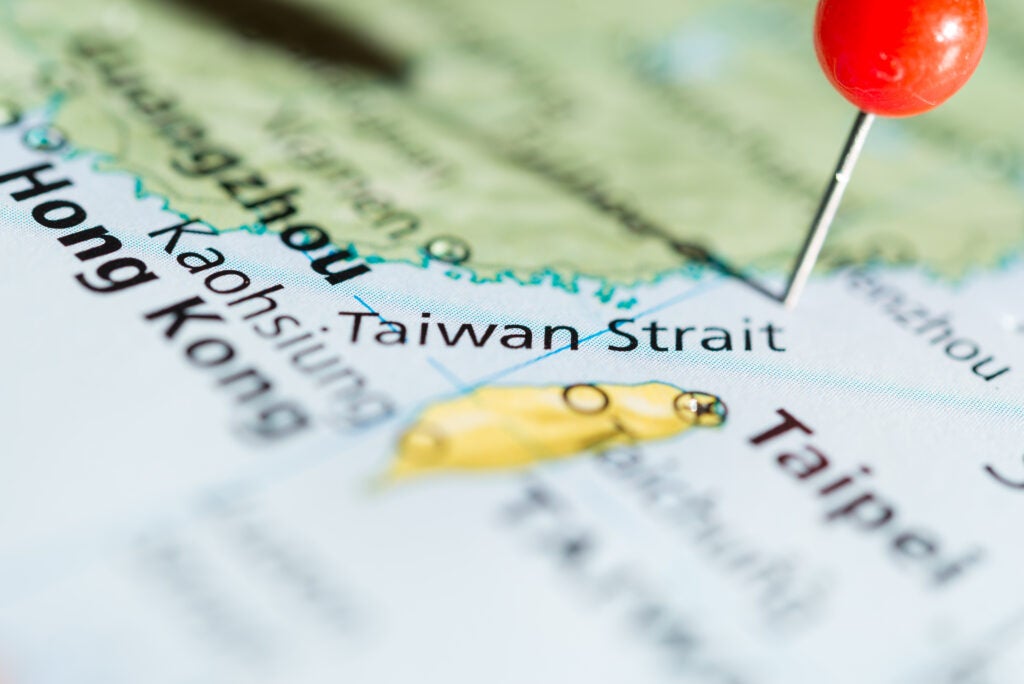
When Chinese President Xi Jinping and US President Donald Trump met in Busan, South Korea, on October 30, they spent nearly two hours discussing rare earths, fentanyl and trade. Taiwan, the one issue most likely to bring the world’s two largest powers into direct conflict, never came up. That silence was the message.
It revealed how both leaders prefer to manage rivalry through quiet understanding rather than confrontation. The approach reduces the risk of war but narrows Taiwan’s options. The question is whether that silence can hold, and what it will cost.
Trump treats alliances as business. In 2024 he framed Taiwan as an insurance policyholder that hadn’t been paying premiums. To him, protection is conditional; commitment depends on contribution. He has pressed Taipei to raise defence spending far beyond the current 2.5 per cent of gross domestic product. For Beijing, this creates an opening. Xi sees time, not tanks, as his advantage.
According to US intelligence, Xi has told the People’s Liberation Army to be ready for a Taiwan contingency by 2027 – readiness, not intent. Beijing’s headwinds – an ageing workforce, a fragile property sector and reliance on imported energy – make conflict costly. Patience promises better returns.
Trump seeks quick deals; Xi plays for time. Yet both want stability that keeps markets steady and their authority intact. What once relied on military deterrence now runs on mutual calculation.
Taiwan’s domestic politics are shifting in ways that make this managed stability easier. In October, former legislator Cheng Li-wun won the Kuomintang (KMT) chairmanship on a platform of restoring dialogue with Beijing. Xi promptly congratulated her, calling for joint efforts to promote national reunification.
That opening may widen. The KMT and the Taiwan People’s Party – which together already hold a legislative majority – are exploring cooperation ahead of the 2028 election. A coalition government led by them would likely take a more pragmatic line on cross-strait relations.
For Beijing, it would offer the most receptive counterpart since Ma Ying-jeou; for Washington, it would complicate efforts to frame Taiwan purely as a front-line democracy under siege.
Xi can afford to wait. Every flight resumed, every export restored, every meeting held under the 1992 consensus brings the two sides a step closer to what appears to be normal engagement but erodes separation. It is a strategy of administrative patience, not military force. For now, it appears to be working.
For three decades, Taipei’s dominance in advanced semiconductors, led by Taiwan Semiconductor Manufacturing Company (TSMC), the world’s largest contract chipmaker, has served as its strategic insurance. Any attack on those fabs would disrupt global supply chains. That shield is thinning.
TSMC’s Arizona fab is producing 4-nanometre chips. In October, TSMC and Nvidia revealed the first US-made Blackwell wafer. Samsung – including its US operations – is targeting 1.4-nanometre production by 2027, while Intel’s Ohio complex has been delayed until the 2030s. Within a decade, US fabs may be capable of supplying around one-quarter of leading-edge logic demand. This is enough to reduce Taiwanese dependence without ending it.
Technology, not geography, now defines leverage. As production disperses, Taiwan moves from irreplaceable to merely critical. In Washington, it looks less like a cause to defend and more like a partner expected to pay its share. For investors and businesses, risk is shifting from sudden conflict to gradual re-routing of supply chains. Watching tool installations in Arizona may soon matter as much as counting missiles in the strait.
Three timelines now converge. Xi must show progress on reunification by the 21st Party Congress in 2027. Taiwan votes for a president in January 2028. Trump’s term ends in January 2029. Within that window, quiet compromise could harden into routine.
If a coalition in Taipei opts for structured engagement and US onshoring reaches critical mass, both sides will prefer continuity. A change in the White House may not undo it. Once calm becomes profitable, few will disturb it.
Beijing needs no treaty; economics can do the work. Expanding the Cross-Strait Economic Cooperation Framework Agreement could give mainland firms broader access to Taiwan’s finance and digital sectors. Access to mainland markets can be granted or withheld, a quiet lever of pressure. Flights and tourism would further resume, binding commercial interests to stability. Over time, reliance breeds restraint.
Diplomatically, Beijing will keep limiting Taiwan’s space. Its interpretation of UN Resolution 2758 continues to exclude Taiwan from global forums. In May, World Health Organization members again declined to invite Taiwan to the World Health Assembly. Even during the Covid-19 pandemic, Taiwan was not allowed to participate. Democracy remains but reach shrinks.
The silence from Busan is more than diplomacy; it marks a quiet settlement between ambition and fatigue. Beijing gains time to draw Taiwan inward through politics and trade. Washington avoids confrontation while rebuilding its supply chains at home. Both can claim success without conflict, but only because Taiwan’s autonomy is being priced into the bargain.
Silence is not peace. It is the sound of slow realignment; a world adjusting to Chinese patience and American restraint. Each reopened flight, each trade resumption, each deferred statement becomes a step towards dependence disguised as stability.
This silence means deterrence has expired. Economics enforces the restraint that force once did. Taiwan’s future will not be decided on a battlefield but in boardrooms, elections and investment flows, shaped less by principle than by convenience.
For Asia, the lesson is clear: stop mistaking calm for safety. When silence becomes the organising principle, small states endure by diversification and cooperation, not by choosing sides. The question is no longer who will fight for Taiwan, but who will speak for it, when the world learns to live comfortably without noise.
The views and opinions expressed in this article are those of the author(s) and do not necessarily reflect those of the Asia Research Institute, National University of Singapore.
Latest
ASEAN Between China and the US: Navigating a 'No Single Power' Global Order
by Lili Yan Ing
Breaking the Loop: Why India and China Need Political Imagination to Rebuild Trust and Relationship
by Tansen Sen
Building Resilience for a New World
by Arunabha Ghosh
India, Pakistan, and Breaking out of the 'Continent of Circe'
by Akbar Ahmed
Southeast Asia's "Anatomy of Choice" Between the Great Powers
by Joseph Chinyong Liow & Yuen Foong Khong
Integrated Supply Chains - A Possible Citadel for Peace in Southeast Asia
by Cameron Johnson
How to Fix the Cracks in the Nuclear Dam
by Adam Thomson
Persuading for Peace, Protecting Its Interests: China’s Conflict Diplomacy
by Andrew Cainey and Chengkai Xie
US ASEAN Policy Must Be Rooted in Economics, Not Just Defense
by Abhinav Seetharaman
South Korea: Is it time for a more balanced strategy?
by Soon Ok-Shin
A nuclear war started by AI sounds like sci-fiction. It isn’t
by Sundeep Waslekar
Ports, politics, and peace: The engineering of stability
by Guru Madhavan
It's Time for Europe to Do the Unthinkable
Kishore Mahbubani
Can Young Americans and Chinese Build Bridges Over Troubled Waters?
Brian Wong
Trump 2:0: Getting US-China ties right despite the odds
Zhiqun Zhu
How Malaysia can boost Asean agency and centrality amid global challenges
Elina Noor
Why India-Pakistan relations need a new era of engagement
Farhan Hanif Siddiqi
Reconceptualizing Asia's Security Challenges
Jean Dong
Asia should take the Lead on Global Health
K. Srinath Reddy and Priya Balasubramaniam
Rabindranath Tagore: A Man for a New Asian Future
Archishman Raju
Securing China-US Relations within the Wider Asia-Pacific
Sourabh Gupta
Biden-Xi summit: A positive step in managing complex US-China ties
Chan Heng Chee
Singapore's Role as Neutral Interpreter of China to the West
Walter Woon
The US, China, and the Philippines in Between
Andrea Chloe Wong
Crisis Management in Asia: A Middle Power Imperative
Brendan Taylor
America can't stop China's rise
Tony Chan, Ben Harburg, and Kishore Mahbubani
Civilisational Futures and the Role of Southeast Asia
Tim Winter
US-China rivalry will be stern test for Vietnam's diplomatic juggle
Nguyen Cong Tung
Coexistence: The only realistic path to peace
Stephen M. Walt
Cyclone Mocha in conflict-ridden Myanmar is another warning to take climate security seriously
Sarang Shidore
Doubts about AUKUS
Hugh White
Averting the Grandest Collision of all time
Graham Allison
India Can Still Be a Bridge to the Global South
Sanjaya Baru
U.S.-China Trade and Investment Cooperation Amid Great Power Rivalry
Yuhan Zhang
Managing expectations: Indonesia navigating its international roles
Shafiah F. Muhibat
Caught in the middle? Not necessarily Non-alignment could help Southeast Asian regional integration
Xue Gong
It’s Dangerous Salami Slicing on the Taiwan Issue
Richard W. Hu
Navigating Troubled Waters: Ideas for managing tensions in the Taiwan Strait
Ryan Hass
The EU and ASEAN: Partners to Manage Great Power Rivalry?
Tan York Chor
Countering Moro Youth Extremism in the Philippines
Joseph Franco
India-China relations: Getting Beyond the Military Stalemate
C. Raja Mohan
America Needs an Economic Peace Strategy for Asia
Van Jackson
India-Pakistan: Peace by Pieces
Kanti Bajpai
HADR as a Diplomatic Tool in Southeast Asia-China Relations amid Changing Security Dynamics
Lina Gong
Technocratic Deliberation and Asian Peace
Parag Khanna
Safer Together: Why South and Southeast Asia Must Cooperate to Prevent a New Cold War in Asia
Sarang Shidore
Asia, say no to Nato: The Pacific has no need of the destructive militaristic culture of the Atlantic alliance
Kishore Mahbubani
Can Biden bring peace to Southeast Asia?
Dino Djalal
An India-Pakistan ceasefire that can stick
Ameya Kilara
An antidote against narrow nationalism? Why regional history matters
Farish A Noor
Can South Asia put India-Pakistan hostilities behind to unite for greater good?
Ramesh Thakur
Nuclear Deterrence 3.0
Rakesh Sood
The Biden era: challenges and opportunities for Southeast Asia
Michael Vatikiotis