
Asian Peace Programme - by Kishore Mahbubani
Indonesia-Timor Leste Reconciliation: ‘Through Memory Towards Hope.’
I Gusti Agung Wesaka Puja
I Gusti Agung Wesaka Puja is the executive director of the ASEAN Institute for Peace & Reconciliation (ASEAN-IPR). When the Indonesia–Timor-Leste Commission of Truth and Friendship (CTF) was established, he was the director of Human Rights at the Indonesian Foreign Ministry. At the time, he played a key role in facilitating the CTF process.
Co-published withThe Diplomat: https://thediplomat.com/2026/06/indonesia-timor-leste-reconciliation-through-memory-towards-hope/.
18 June, 2026
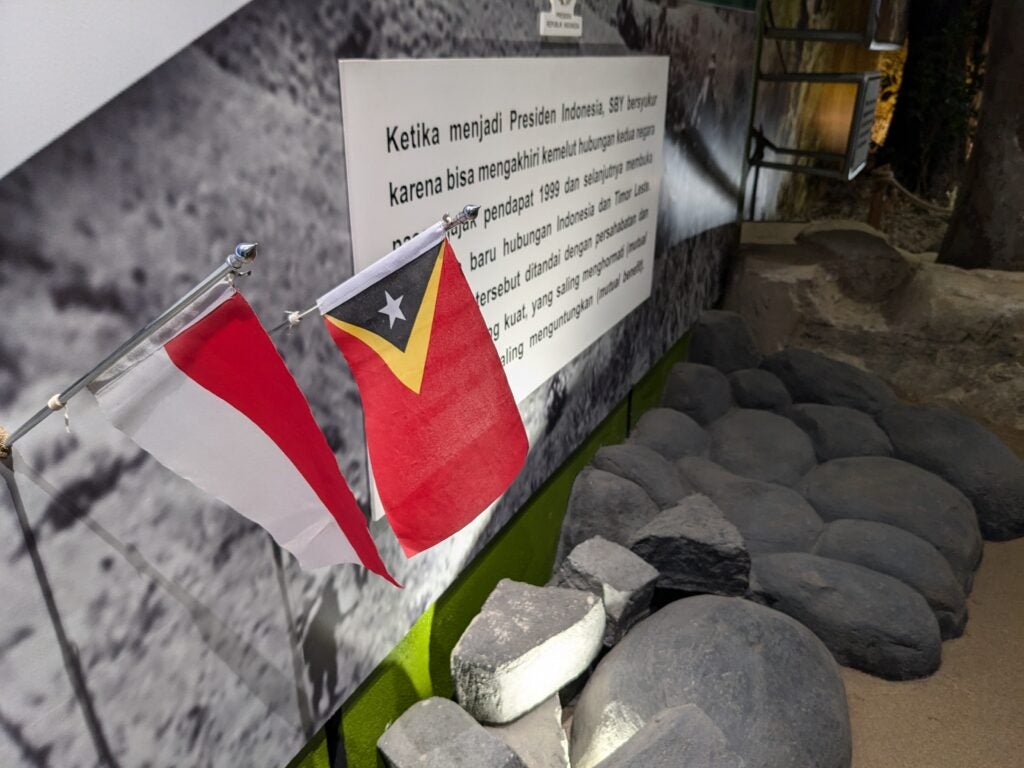
The wars in Ukraine, Gaza, and Iran have been a painful reminder of what a rare and difficult thing it is for conflicting parties to reconcile. When President José Ramos-Horta of Timor-Leste spoke at the Shangri-la Dialogue on May 30 about what the world needs to do to achieve peace, his words carried particular weight given his country’s own history. Just nine days after East Timor declared independence from Portuguese colonial rule, Indonesia invaded the new country and occupied it for 24 years, from December 1975 to October 1999. This occupation, and the resulting Indonesia-Timor conflict, led to large-scale civilian casualties. The fact that Indonesia and Timor-Leste managed to reconcile after this painful period is a true feat of diplomacy.
A key mechanism by which this reconciliation was achieved was the Indonesia–Timor-Leste Commission of Truth and Friendship (CTF), a truth commission established jointly by the governments of Indonesia and Timor-Leste. The CTF was tasked with finding out the conclusive truth behind the acts of violence that occurred around the independence referendum held in East Timor in 1999.
Where previous truth commissions were established within individual countries – such as Chile’s National Commission for Truth and Reconciliation, which investigated the abuses of the military dictatorship which ruled Chile from 1973 to 1990 – the CTF was the first truth commission in history to be established by two states.
The strong leadership, political will, and commitment displayed by both nations’ presidents and foreign ministers were key to the CTF’s success. The official launch of the CTF in August 2005 was preceded by a series of intense meetings between Ramos Horta, who was then the foreign minister of Timor-Leste, and his Indonesian counterpart, Dr. Hassan Wirayuda, who also made joint diplomatic statements on the issue in the United Nations in New York. Timor-Leste’s President Xanana Gusmão participated in the final reading of the text prior to the signing.
At the heart of the CTF was the common long-term goal of working toward a future of peaceful co-existence between the two nations. “The present generation owes the future generation to mend all broken relationships and lay a strong foundation for a future that shines and is full of hope,” noted the CTF Report, which was aptly titled “Per Memoriam Ad Spem” (meaning “Through Memory Towards Hope”).
However, as the Report documented, the difficult task of reaching an agreement on the conclusive truth required a shared commitment to overcoming obstacles such as short-term narrow interests and rigidity in perspective. The Report emphasized that “it requires moral courage, humility and wisdom to be able to release oneself from emotional ties and keep a distance from the violent events that took place in East Timor in 1999, in order to take a more objective and enlightened approach to build a better future between the two nations.”
AsRamos-Horta put it at the Shangri-la Dialogue last month:
“[Timor-Leste’s] independence was built through years of patient, practical diplomacy that gradually turned old wounds into new bonds. We never demonised the other side, we did not disrespect their faith … We show that history need not imprison our hearts and minds, history must not imprison nations, wise leadership and dialogue can turn conflict into coexistence, and coexistence into friendship and trust.”
He further echoed this sentiment in Jakarta on June 2, saying, “Reconciliation is not an act of forgetting the past. It is an act of courage to build the future.”
The Commission embodied a transitional justice approach, emphasizing institutional accountability, reconciliation, and forward-looking cooperation, while acknowledging the complex historical, political, and social challenges at play. The CTF also emphasized restorative justice, highlighting institutional responsibility rather than pursuing criminal prosecution. The experience of the CTF provides important lessons on balancing victims’ rights, domestic political considerations, and international diplomacy. The work of the CTF contributed toward peacebuilding efforts in Timor Leste as the new nation establishes its presence in the region.
An important lesson of the CTF is that the past must be accepted and agreed upon by both sides before they can begin a new chapter of their shared history. It is difficult to build a sustainable friendship between parties that have clashing narratives about their shared past. This also means that no reconciliation can be reached without considerable sacrifice and courage from all relevant parties, as they need to accept painful truths and to take responsibility for their past wrongs. It is only then that a shared historical record as painful as that of Indonesia and Timor-Leste can form the basis for a peaceful and prosperous future for the two countries and their people.
Naturally, the CTF is imperfect. It has received criticism, especially from NGOs. for prioritizing state and institutional responsibility over individual accountability; limited direct engagement with victims; and focusing more on diplomatic and political objectives over substantive justice. Nevertheless, it embodies a landmark in transitional justice, balancing the acknowledgement of human rights violations with diplomatic reconciliation.
At the Shangri-la Dialogue, Ramos-Horta drew a parallel between Timor-Leste’s experience and ASEAN’s, noting that ASEAN, too, was born from the ashes of war. He said, “Its success was not that it eliminated differences. It did something more modest, and perhaps more profound: it planted a Banyan tree, and under its foliage leaders gathered and plotted the end of wars.” Ramos-Horta added that ASEAN “affirmed principles that sound simple but were revolutionary when practiced: mutual respect; relentless, persistent negotiations leading to peaceful settlement of disputes; renunciation of the threat or use of force; and effective cooperation.”
These revolutionary principles, embodied by both ASEAN and the CTF, may be just what the world needs to move forward from the present violence and build a future full of hope.
The views and opinions expressed in this article are those of the author(s) and do not necessarily reflect those of the Asia Research Institute, National University of Singapore.
Latest
India’s Role in a Disordered World
By Shivshankar Menon
Why Japan-China ties can benefit from promoting people-to-people exchanges
By Akio Takahara
The Thailand-Cambodia conflict: A Thai and Cambodian perspective on peace
by In Sokhuon and Pattharapong Rattanasevee
The Busan silence: how great-power pragmatism is rewriting Taiwan’s future
by Robin Hu
ASEAN Between China and the US: Navigating a 'No Single Power' Global Order
by Lili Yan Ing
Breaking the Loop: Why India and China Need Political Imagination to Rebuild Trust and Relationship
by Tansen Sen
Building Resilience for a New World
by Arunabha Ghosh
India, Pakistan, and Breaking out of the 'Continent of Circe'
by Akbar Ahmed
Southeast Asia's "Anatomy of Choice" Between the Great Powers
by Joseph Chinyong Liow & Yuen Foong Khong
Integrated Supply Chains - A Possible Citadel for Peace in Southeast Asia
by Cameron Johnson
How to Fix the Cracks in the Nuclear Dam
by Adam Thomson
Persuading for Peace, Protecting Its Interests: China’s Conflict Diplomacy
by Andrew Cainey and Chengkai Xie
US ASEAN Policy Must Be Rooted in Economics, Not Just Defense
by Abhinav Seetharaman
South Korea: Is it time for a more balanced strategy?
by Soon Ok-Shin
A nuclear war started by AI sounds like sci-fiction. It isn’t
by Sundeep Waslekar
Ports, politics, and peace: The engineering of stability
by Guru Madhavan
It's Time for Europe to Do the Unthinkable
Kishore Mahbubani
Can Young Americans and Chinese Build Bridges Over Troubled Waters?
Brian Wong
Trump 2:0: Getting US-China ties right despite the odds
Zhiqun Zhu
How Malaysia can boost Asean agency and centrality amid global challenges
Elina Noor
Why India-Pakistan relations need a new era of engagement
Farhan Hanif Siddiqi
Reconceptualizing Asia's Security Challenges
Jean Dong
Asia should take the Lead on Global Health
K. Srinath Reddy and Priya Balasubramaniam
Rabindranath Tagore: A Man for a New Asian Future
Archishman Raju
Securing China-US Relations within the Wider Asia-Pacific
Sourabh Gupta
Biden-Xi summit: A positive step in managing complex US-China ties
Chan Heng Chee
Singapore's Role as Neutral Interpreter of China to the West
Walter Woon
The US, China, and the Philippines in Between
Andrea Chloe Wong
Crisis Management in Asia: A Middle Power Imperative
Brendan Taylor
America can't stop China's rise
Tony Chan, Ben Harburg, and Kishore Mahbubani
Civilisational Futures and the Role of Southeast Asia
Tim Winter
US-China rivalry will be stern test for Vietnam's diplomatic juggle
Nguyen Cong Tung
Coexistence: The only realistic path to peace
Stephen M. Walt
Cyclone Mocha in conflict-ridden Myanmar is another warning to take climate security seriously
Sarang Shidore
Doubts about AUKUS
Hugh White
Averting the Grandest Collision of all time
Graham Allison
India Can Still Be a Bridge to the Global South
Sanjaya Baru
U.S.-China Trade and Investment Cooperation Amid Great Power Rivalry
Yuhan Zhang
Managing expectations: Indonesia navigating its international roles
Shafiah F. Muhibat
Caught in the middle? Not necessarily Non-alignment could help Southeast Asian regional integration
Xue Gong
It’s Dangerous Salami Slicing on the Taiwan Issue
Richard W. Hu
Navigating Troubled Waters: Ideas for managing tensions in the Taiwan Strait
Ryan Hass
The EU and ASEAN: Partners to Manage Great Power Rivalry?
Tan York Chor
Countering Moro Youth Extremism in the Philippines
Joseph Franco
India-China relations: Getting Beyond the Military Stalemate
C. Raja Mohan
America Needs an Economic Peace Strategy for Asia
Van Jackson
India-Pakistan: Peace by Pieces
Kanti Bajpai
HADR as a Diplomatic Tool in Southeast Asia-China Relations amid Changing Security Dynamics
Lina Gong
Technocratic Deliberation and Asian Peace
Parag Khanna
Safer Together: Why South and Southeast Asia Must Cooperate to Prevent a New Cold War in Asia
Sarang Shidore
Asia, say no to Nato: The Pacific has no need of the destructive militaristic culture of the Atlantic alliance
Kishore Mahbubani
Can Biden bring peace to Southeast Asia?
Dino Djalal
An India-Pakistan ceasefire that can stick
Ameya Kilara
An antidote against narrow nationalism? Why regional history matters
Farish A Noor
Can South Asia put India-Pakistan hostilities behind to unite for greater good?
Ramesh Thakur
Nuclear Deterrence 3.0
Rakesh Sood
The Biden era: challenges and opportunities for Southeast Asia
Michael Vatikiotis