

Asian Peace Programme - by Kishore Mahbubani
Small states are the best bet for keeping world at peace
Danny Quah
Danny Quah is Li Ka Shing Professor in Economics, Lee Kuan Yew School of Public Policy, NUS.
A version of this essay was first published on CNA: https://www.channelnewsasia.com/commentary/war-peace-power-small-states-asean-6212086
2 July 2026
For decades, a reassuring belief has shaped international politics: Economic interdependence makes war costly. When capital flows freely and supply chains crisscross borders, nations should reject conflict because of the damage to themselves.
Yet, America’s experience of the “China shock” well illustrates how rivalry does not dissolve, but can sometimes intensify with integration.
Trade with China has generated enormous aggregate benefits to the US, but concentrated loss in specific parts of the population, displacing workers and hollowing out some US industries .
The anger of those sidelined by globalisation has fuelled populist movements and turned economic grievance into nationalism and protectionism.
Today, geopolitics and economics no longer jointly drive greater integration. They are working together to pull the world apart.
The United States, long the architect of the rules-based open global economy, is now actively redefining and bending the rules it urged the world to follow. Tariffs, sanctions, industrial policy, and technology restrictions have become central instruments of US international strategy.
The strategic reality is no longer about who has the most power to keep the system going but who has the most incentives to do so.
GULF STATES AND THE WAR ON IRAN
Small states do not have the luxury of going it alone when rules collapse. Unlike great powers, they cannot absorb higher costs of disruption, coerce others instead of using diplomacy nor reshape institutions to suit their interests.
A world governed by raw power rather than rules is an existential challenge for small states. This vulnerability creates a powerful incentive to preserve sufficient cooperation for stability.
Perhaps what encapsulates both this vulnerability and the agency of small states right now is the US-Israel war on Iran.
The security guarantees which are so important to the Gulf states’ economies have been severely challenged, but the countries cannot unilaterally determine the terms of engagement.
To be effective in the geopolitical arena, therefore, small states need to deploy a different strategic logic. Oman and Qatar demonstrated how small states exercise influence: Muscat mediated indirect nuclear talks between the US and Iran in 2025 and 2026 before the war started, while Doha is a key mediator of the prevailing US-Iran ceasefire agreement.
The strengths of small states lie in working with institutions, organising coalitions, and aligning on incentives. Such collective effort can confer legitimacy to actions that might otherwise come across as just great power unilateralism.
ASEAN’S SKILLFUL BALANCING ACT
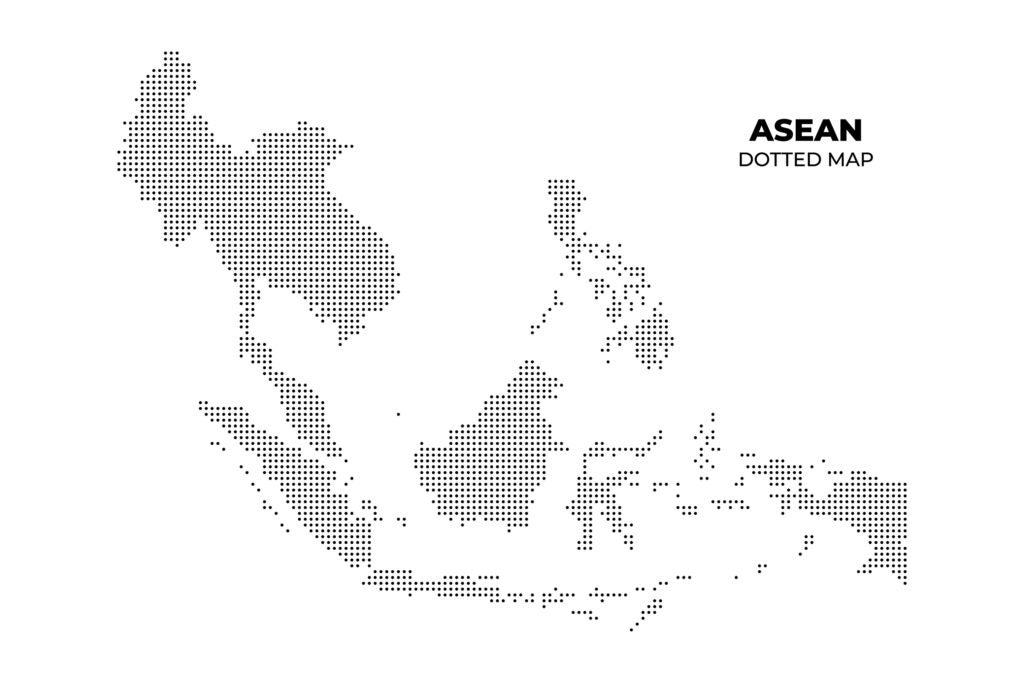
Southeast Asia provides some good examples of small states’ skilful manoeuvring.
The Association of Southeast Asian Nations (ASEAN), for instance, led the creation of the world’s largest free trade agreement, the Regional Comprehensive Economic Partnership (RCEP). In addition to bringing economic benefits, RCEP also increases rules-based engagement in the Asia-Pacific by deepening trade between China and several traditional US allies, namely Australia, Japan, South Korea, and New Zealand.
Southeast Asia worked equally hard to maintain US engagement in the region, by convincing the US to become a key architect of the Trans-Pacific Partnership (TPP) and thus maintain strategic influence in the region and balance a rising China. Even after US President Donald Trump pulled the US out, the revised deal – now the Comprehensive and Progressive Agreement for Trans-Pacific Partnership (CPTPP) – is still the fourth-largest free trade agreement in the world.
It is no mean feat that Southeast Asian countries have largely managed to avoid "choosing a side” in the US-China contest.
Almost half the ASEAN member states are party to the South China Sea dispute with China. Likewise, the region was badly hit by Mr Trump’s tariffs and is now being threatened with a new round of tariffs over allegations of forced labour. The US war in Iran has also put many key industries, from agriculture and manufacturing to tourism and healthcare, under acute strain.
Despite these considerable provocations and pressures, Southeast Asian nations have maintained good relations with both the US and China. The region’s economic growth will continue to depend on its ability to effectively strike that balance.
THREE REALITIES FOR SMALL STATES
The lessons go beyond Southeast Asia for all small states.
First, small states should abandon nostalgia for the postwar order and focus on what works. The goal is not to restore an idealised past, but to preserve enough openness and predictability to allow international engagement and security.
Second, small states should resist one-dimensional narratives of an ideological struggle between democracy and autocracy akin to that of the Cold War. More helpful is to acknowledge that the world faces a confluence of shocks: the China shock, the US shock and the increasing weaponisation of economic interdependencies.
Recognising this complexity creates strategic space. Smaller states need not define themselves through alignment with either camp and can focus on the deeper threat: the erosion of rules, diplomacy and cooperative norms.
Third, small states should build coalitions around shared incentives, rather than universal consensus. Durable cooperation does not necessarily require sweeping treaties, grand institutional redesigns or the elimination of great power rivalry.
More can be achieved through practical cooperation around shared interest.
Take the World Trade Organization (WTO) and its highest court for settling international trade disputes. The WTO Appellate Body has been paralysed without a quorum, with the US blocking new appointments since 2019. To bypass this deadlock, a subset of WTO members created the Multi-Party Interim Appeal Arbitration Arrangement (MPIA) as an alternative mechanism for dispute settlement. Provided they agreed to follow MPIA rules, others were welcomed to join but under no compulsion to do so. In five years, MPIA membership more than tripled.
Flexible and overlapping arrangements are often more resilient than formal structures that great powers abandon once interests diverge.
BEST BET FOR WORLD PEACE
The decades after 1945 were historically unusual. For a time, economic integration and geopolitical strategy appeared mutually reinforcing.
That convergence has ended. The same economic interdependence once expected to guarantee peace now fuels resentment and rivalry among major powers.
But incentives have not disappeared. They have shifted.
Today, it is small states, not great powers, that have the strongest incentive to defend cooperation and preserve peace. Small states cannot dictate outcomes but they can alter the odds. In today’s increasingly fractured international system, that makes small states the best feasible bet for keeping the world at peace.
The views and opinions expressed in this article are those of the author(s) and do not necessarily reflect those of the Asia Research Institute, National University of Singapore.
Latest
Indonesia-Timor Leste Reconciliation: 'Through Memory Towards Hope'
By I Gusti Agung Wesaka Puja
India’s Role in a Disordered World
By Shivshankar Menon
Why Japan-China ties can benefit from promoting people-to-people exchanges
By Akio Takahara
The Thailand-Cambodia conflict: A Thai and Cambodian perspective on peace
by In Sokhuon and Pattharapong Rattanasevee
The Busan silence: how great-power pragmatism is rewriting Taiwan’s future
by Robin Hu
ASEAN Between China and the US: Navigating a 'No Single Power' Global Order
by Lili Yan Ing
Breaking the Loop: Why India and China Need Political Imagination to Rebuild Trust and Relationship
by Tansen Sen
Building Resilience for a New World
by Arunabha Ghosh
India, Pakistan, and Breaking out of the 'Continent of Circe'
by Akbar Ahmed
Southeast Asia's "Anatomy of Choice" Between the Great Powers
by Joseph Chinyong Liow & Yuen Foong Khong
Integrated Supply Chains - A Possible Citadel for Peace in Southeast Asia
by Cameron Johnson
How to Fix the Cracks in the Nuclear Dam
by Adam Thomson
Persuading for Peace, Protecting Its Interests: China’s Conflict Diplomacy
by Andrew Cainey and Chengkai Xie
US ASEAN Policy Must Be Rooted in Economics, Not Just Defense
by Abhinav Seetharaman
South Korea: Is it time for a more balanced strategy?
by Soon Ok-Shin
A nuclear war started by AI sounds like sci-fiction. It isn’t
by Sundeep Waslekar
Ports, politics, and peace: The engineering of stability
by Guru Madhavan
It's Time for Europe to Do the Unthinkable
Kishore Mahbubani
Can Young Americans and Chinese Build Bridges Over Troubled Waters?
Brian Wong
Trump 2:0: Getting US-China ties right despite the odds
Zhiqun Zhu
How Malaysia can boost Asean agency and centrality amid global challenges
Elina Noor
Why India-Pakistan relations need a new era of engagement
Farhan Hanif Siddiqi
Reconceptualizing Asia's Security Challenges
Jean Dong
Asia should take the Lead on Global Health
K. Srinath Reddy and Priya Balasubramaniam
Rabindranath Tagore: A Man for a New Asian Future
Archishman Raju
Securing China-US Relations within the Wider Asia-Pacific
Sourabh Gupta
Biden-Xi summit: A positive step in managing complex US-China ties
Chan Heng Chee
Singapore's Role as Neutral Interpreter of China to the West
Walter Woon
The US, China, and the Philippines in Between
Andrea Chloe Wong
Crisis Management in Asia: A Middle Power Imperative
Brendan Taylor
America can't stop China's rise
Tony Chan, Ben Harburg, and Kishore Mahbubani
Civilisational Futures and the Role of Southeast Asia
Tim Winter
US-China rivalry will be stern test for Vietnam's diplomatic juggle
Nguyen Cong Tung
Coexistence: The only realistic path to peace
Stephen M. Walt
Cyclone Mocha in conflict-ridden Myanmar is another warning to take climate security seriously
Sarang Shidore
Doubts about AUKUS
Hugh White
Averting the Grandest Collision of all time
Graham Allison
India Can Still Be a Bridge to the Global South
Sanjaya Baru
U.S.-China Trade and Investment Cooperation Amid Great Power Rivalry
Yuhan Zhang
Managing expectations: Indonesia navigating its international roles
Shafiah F. Muhibat
Caught in the middle? Not necessarily Non-alignment could help Southeast Asian regional integration
Xue Gong
It’s Dangerous Salami Slicing on the Taiwan Issue
Richard W. Hu
Navigating Troubled Waters: Ideas for managing tensions in the Taiwan Strait
Ryan Hass
The EU and ASEAN: Partners to Manage Great Power Rivalry?
Tan York Chor
Countering Moro Youth Extremism in the Philippines
Joseph Franco
India-China relations: Getting Beyond the Military Stalemate
C. Raja Mohan
America Needs an Economic Peace Strategy for Asia
Van Jackson
India-Pakistan: Peace by Pieces
Kanti Bajpai
HADR as a Diplomatic Tool in Southeast Asia-China Relations amid Changing Security Dynamics
Lina Gong
Technocratic Deliberation and Asian Peace
Parag Khanna
Safer Together: Why South and Southeast Asia Must Cooperate to Prevent a New Cold War in Asia
Sarang Shidore
Asia, say no to Nato: The Pacific has no need of the destructive militaristic culture of the Atlantic alliance
Kishore Mahbubani
Can Biden bring peace to Southeast Asia?
Dino Djalal
An India-Pakistan ceasefire that can stick
Ameya Kilara
An antidote against narrow nationalism? Why regional history matters
Farish A Noor
Can South Asia put India-Pakistan hostilities behind to unite for greater good?
Ramesh Thakur
Nuclear Deterrence 3.0
Rakesh Sood
The Biden era: challenges and opportunities for Southeast Asia
Michael Vatikiotis