
Asian Peace Programme: by Kishore Mahbubani
Can a G2 order work in a multilateral world?
Kishore Mahbubani and Li Li
Kishore Mahbubani is a Distinguished Fellow at the National University of Singapore’s Asia Research Institute (ARI). Li Li is the Deputy Director of the Institute of International Relations at Tsinghua University, China.
The article is first published in the Straits Times: https://www.straitstimes.com/opinion/can-a-g2-order-work-in-a-multilateral-world.
6 November, 2026
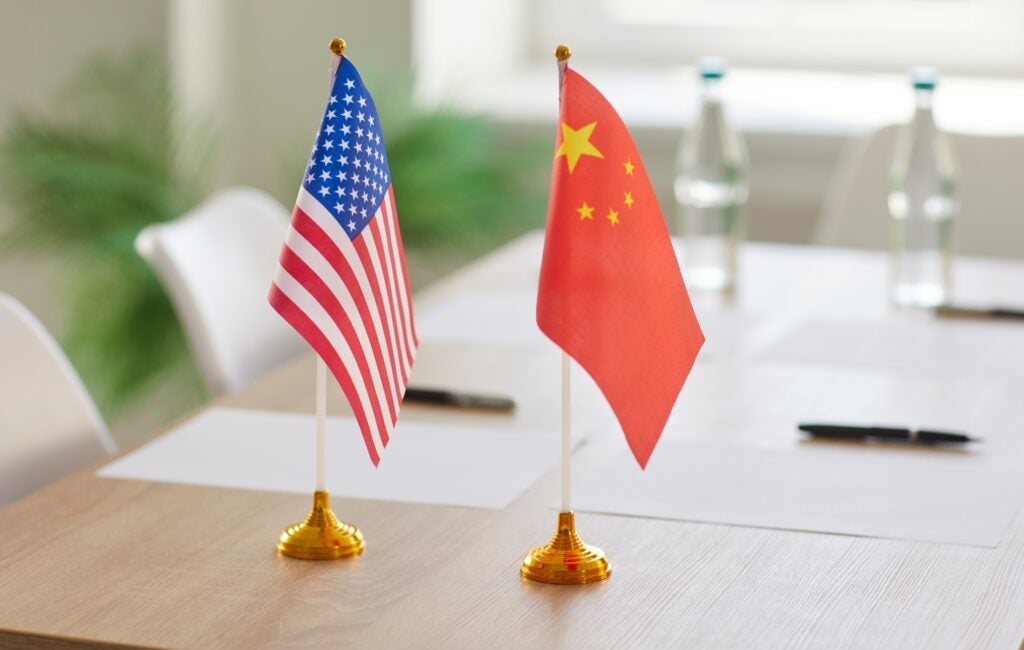
President Xi Jinping’s state visit to the United States in September concluded with the US and China pledging to build a constructive relationship of strategic stability. But what drew the most headlines was the grand reception accorded Xi by his host, US President Donald Trump.
Trump personally received Xi on the tarmac, had not one but two red carpets laid out, organised a welcome ceremony involving a military flyover, and hosted the Chinese leader to a state dinner. The pomp and circumstance of their Washington summit, to be followed by two more meetings before year’s end, has revived the debate over a “G2” world.
Are we moving towards a G2-led world order? What exactly does that mean? Crucially, what would such an order mean for the world?
Loose definition and divergent arguments
Trump embraced the G2 concept in his second term, branding his late-2025 meeting with Xi Jinping in Busan, South Korea, as a “G2 summit”. His frequent and enthusiastic use of the term signaled that he was taking China more seriously as a “near peer”. The message was reinforced at the Washington summit.
Amid the pageantry, the rest of the world, especially US allies and partners, appear to have more concerns than confidence as they keep tabs on this evolving relationship. In recent years, international anxiety has drifted from the possibility of “a new Cold War” to “G-Zero” world (i.e., no international leadership) to “G2”.
The anxiety is understandable in that while the international community certainly does not want to see a replay of the Cold War, a bipolar, G2, world could be even more challenging to navigate.
Small and middle powers retain some leverage in a cold war as they can play the two superpowers against each other to gain economic or security benefits. On the other hand, no country has the capacity to compete with either great power in military might, economic strength, technological leadership, or political influence — let alone both.
The US and China account for over 40% of the global economy in nominal GDP and possess uncontested supremacy in AI. If they were to coordinate with each other, they could simply divide the world into two spheres of influence and set the rules and norms of global governance through bilateral negotiation, bypassing the international community entirely. Multilateral institutions would become obsolete, and the rest of the world would have no choice but to follow the rules set by the US and China.
Such fears may explain why China remains lukewarm on the G2 idea and even rejects it publicly, citing its identity as a developing country and a member of the Global South; its non-aligned, independent foreign policy; and its commitment to multipolarity.
China is concerned that being bracketed with the US will isolate it from the wider world, especially the Global South.
After all, the Global South has long championed multilateralism with the United Nations as its backbone, emphasising equality among nations (regardless of their size or power), inclusive decision-making, and shared responsibility in addressing international issues.
However, whether or not China accepts or uses the term “G2”, a bipolar world is unmistakably emerging as China grows in strength and influence.
That said, bipolarity does not necessarily mean co-hegemony by the US and China.
Multilateralism can work in a bipolar world, and the international community expects the US and China to take the leadership in addressing global challenges. They would likely welcome the G2 framework if it meant greater collaboration between the US and China to improve global governance within the broader architecture of UN-centred multilateralism.
China-US coordination: Crucial in a Fragmenting World
China-US coordination on global governance can benefit the world in several important ways.
First, it can help stabilize China-US relations and lower the risk of Cold War-style confrontation. Increasing the number of bilateral dialogues and improving coordination on global issues can improve mutual understanding and trust, reduce the risk of miscalculations, manage differences, and prevent competition from escalating into confrontation or conflict. Regular China-US summits can play a significant role in this regard.
Second, it is essential for tackling global challenges, especially those in new domains such as AI. As the world’s two AI superpowers, China and the US must cooperate on AI governance. There are growing global concerns that the ungoverned development of artificial intelligence could, in the worst case, lead humanity towards destruction.
China-US competition may fuel technological progress, but only their coordination can shape the direction of this progress and ensure that AI is used for good. The formal announcement at the Washington summit of the China-US AI Dialogue and a bilateral communication channel for AI incidents is an important first step.
Third, the US and China can coordinate to help facilitate multilateralism rather than replace it.
One of the outcomes of Xi’s state visit was an agreement between the two presidents to support and attend each other’s G20 and APEC meetings. While this may seem like low-hanging fruit, true accommodation and coordination between the great powers could have a significant impact on the effectiveness of the world’s existing international architecture.
For example, they could work together to align the global governance goals of the G7, the club of developed countries, and BRICS, the platform of the Global South. They could foster dialogue and cooperation between developed countries and the Global South in multilateral fora such as the G20. China-US accommodation could even improve the effectiveness of the UN Security Council in maintaining international peace and security.
In short, even though great power competition between the US and China will continue, the international community does not need to accept that chaos and disruption is a given.
How we are to govern the emerging bipolar world is still an open question. Answering this question will be the defining test for the international community in the years ahead.
Given the many pressing transboundary crises we face in the 21st century, China-US collaboration in improving global governance will be a key factor in ensuring the peace and security of all.
The views and opinions expressed in this article are those of the author(s) and do not necessarily reflect those of the Asia Research Institute, National University of Singapore.
Latest
India-Pakistan ties: Going beyond deterrence
By Nirupama Rao
India-China ties are warming, the time to capitalise is now
By Sanjaya Baru
America and China can be allies against AI catastrophe
By Thomas Greminger
The East Asia Summit should take the lead to address the growing challenges of nuclear proliferation
By Peter Varghese
What Can Southeast Asia Get Out of China’s— and Everyone’s—Shift to the Region?
By Meg Rithmire
Small states are the best best for keeping world at peace
By Danny Quah
Indonesia-Timor Leste Reconciliation: 'Through Memory Towards Hope'
By I Gusti Agung Wesaka Puja
India’s Role in a Disordered World
By Shivshankar Menon
Why Japan-China ties can benefit from promoting people-to-people exchanges
By Akio Takahara
The Thailand-Cambodia conflict: A Thai and Cambodian perspective on peace
by In Sokhuon and Pattharapong Rattanasevee
The Busan silence: how great-power pragmatism is rewriting Taiwan’s future
by Robin Hu
ASEAN Between China and the US: Navigating a 'No Single Power' Global Order
by Lili Yan Ing
Breaking the Loop: Why India and China Need Political Imagination to Rebuild Trust and Relationship
by Tansen Sen
Building Resilience for a New World
by Arunabha Ghosh
India, Pakistan, and Breaking out of the 'Continent of Circe'
by Akbar Ahmed
Southeast Asia's "Anatomy of Choice" Between the Great Powers
by Joseph Chinyong Liow & Yuen Foong Khong
Integrated Supply Chains - A Possible Citadel for Peace in Southeast Asia
by Cameron Johnson
How to Fix the Cracks in the Nuclear Dam
by Adam Thomson
Persuading for Peace, Protecting Its Interests: China’s Conflict Diplomacy
by Andrew Cainey and Chengkai Xie
US ASEAN Policy Must Be Rooted in Economics, Not Just Defense
by Abhinav Seetharaman
South Korea: Is it time for a more balanced strategy?
by Soon Ok-Shin
A nuclear war started by AI sounds like sci-fiction. It isn’t
by Sundeep Waslekar
Ports, politics, and peace: The engineering of stability
by Guru Madhavan
It's Time for Europe to Do the Unthinkable
Kishore Mahbubani
Can Young Americans and Chinese Build Bridges Over Troubled Waters?
Brian Wong
Trump 2:0: Getting US-China ties right despite the odds
Zhiqun Zhu
How Malaysia can boost Asean agency and centrality amid global challenges
Elina Noor
Why India-Pakistan relations need a new era of engagement
Farhan Hanif Siddiqi
Reconceptualizing Asia's Security Challenges
Jean Dong
Asia should take the Lead on Global Health
K. Srinath Reddy and Priya Balasubramaniam
Rabindranath Tagore: A Man for a New Asian Future
Archishman Raju
Securing China-US Relations within the Wider Asia-Pacific
Sourabh Gupta
Biden-Xi summit: A positive step in managing complex US-China ties
Chan Heng Chee
Singapore's Role as Neutral Interpreter of China to the West
Walter Woon
The US, China, and the Philippines in Between
Andrea Chloe Wong
Crisis Management in Asia: A Middle Power Imperative
Brendan Taylor
America can't stop China's rise
Tony Chan, Ben Harburg, and Kishore Mahbubani
Civilisational Futures and the Role of Southeast Asia
Tim Winter
US-China rivalry will be stern test for Vietnam's diplomatic juggle
Nguyen Cong Tung
Coexistence: The only realistic path to peace
Stephen M. Walt
Cyclone Mocha in conflict-ridden Myanmar is another warning to take climate security seriously
Sarang Shidore
Doubts about AUKUS
Hugh White
Averting the Grandest Collision of all time
Graham Allison
India Can Still Be a Bridge to the Global South
Sanjaya Baru
U.S.-China Trade and Investment Cooperation Amid Great Power Rivalry
Yuhan Zhang
Managing expectations: Indonesia navigating its international roles
Shafiah F. Muhibat
Caught in the middle? Not necessarily Non-alignment could help Southeast Asian regional integration
Xue Gong
It’s Dangerous Salami Slicing on the Taiwan Issue
Richard W. Hu
Navigating Troubled Waters: Ideas for managing tensions in the Taiwan Strait
Ryan Hass
The EU and ASEAN: Partners to Manage Great Power Rivalry?
Tan York Chor
Countering Moro Youth Extremism in the Philippines
Joseph Franco
India-China relations: Getting Beyond the Military Stalemate
C. Raja Mohan
America Needs an Economic Peace Strategy for Asia
Van Jackson
India-Pakistan: Peace by Pieces
Kanti Bajpai
HADR as a Diplomatic Tool in Southeast Asia-China Relations amid Changing Security Dynamics
Lina Gong
Technocratic Deliberation and Asian Peace
Parag Khanna
Safer Together: Why South and Southeast Asia Must Cooperate to Prevent a New Cold War in Asia
Sarang Shidore
Asia, say no to Nato: The Pacific has no need of the destructive militaristic culture of the Atlantic alliance
Kishore Mahbubani
Can Biden bring peace to Southeast Asia?
Dino Djalal
An India-Pakistan ceasefire that can stick
Ameya Kilara
An antidote against narrow nationalism? Why regional history matters
Farish A Noor
Can South Asia put India-Pakistan hostilities behind to unite for greater good?
Ramesh Thakur
Nuclear Deterrence 3.0
Rakesh Sood
The Biden era: challenges and opportunities for Southeast Asia
Michael Vatikiotis